Planetary Shepherds 3: Rethinking Our Value as Human Beings
Planetary Shepherds Trilogy · Part III
When machines can tend the stars, why would human beings still go in person?
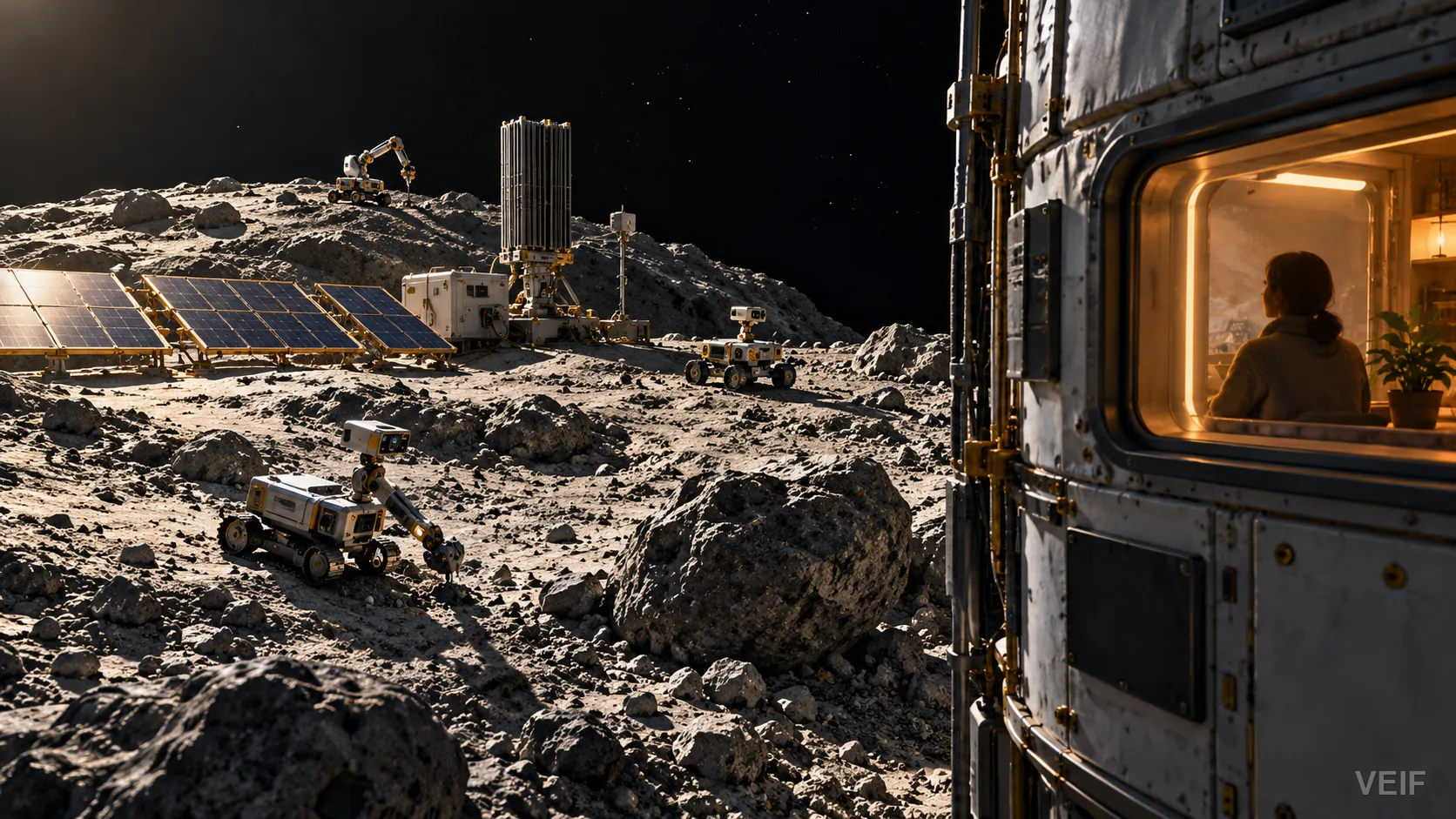
The machines keep working. The human begins to ask why they are here. Artistic concept.
I. When Machines Can Do Almost Everything
Imagine an asteroid.
It is far from Earth, perhaps on the opposite side of the Sun. There are no roads, no breathable air, and the rhythms of life differ from Earth’s days and seasons.
Yet its solar arrays operate steadily. Survey robots map the terrain along planned routes. Excavation machines deliver minerals to automated processing facilities, while maintenance robots inspect equipment that has been running for years. An autonomous system manages energy, production, communications, and fault response. Distance imposes transmission time; when the communication direction approaches the Sun, the link may also face temporary interference. In this imagined setting, the outpost can continue working within predefined operating limits.[6]
No human being stands on those rocks.
This is not necessarily a failed vision of the future. Quite the opposite: from an engineering and economic perspective, it may be a success—fewer life-support requirements, lower risks to personnel, and longer periods of uninterrupted operation.
This scene assumes that long-term reliability, funding, and supply have been adequately addressed. It is a thought experiment for examining human choice, not a prediction of imminent technical maturity.
Part II, A New Profession in the Spacefaring Age, considered why planetary shepherds might not need to be physically present. As autonomous machines improve, remote operation—or even entirely robotic operation—may be more sensible than a crewed presence in many situations.
But that raises a question.
If machines in this imagined setting can perform almost all the work, why would human beings still go there?
It sounds like a question about the necessity of space travel. In fact, it points toward an older puzzle: if the labor necessary for survival is greatly reduced, how will people understand their own value?
At least three questions must be distinguished: how a person earns an income, how that person finds meaning in life, and whether they deserve basic respect. Automation can change livelihoods and the conditions of life. Comparisons of efficiency cannot, by themselves, decide who deserves respect.
For a long time, people have been expected to demonstrate their worth through their usefulness. Those who could farm, manufacture, calculate, manage, or produce wealth were regarded as useful members of society. The more capable machines become, the more accustomed we grow to comparing human abilities with theirs.
But perhaps this comparison confuses two things from the outset.
How much work a person can perform and whether that person deserves a life of their own are not the same question.
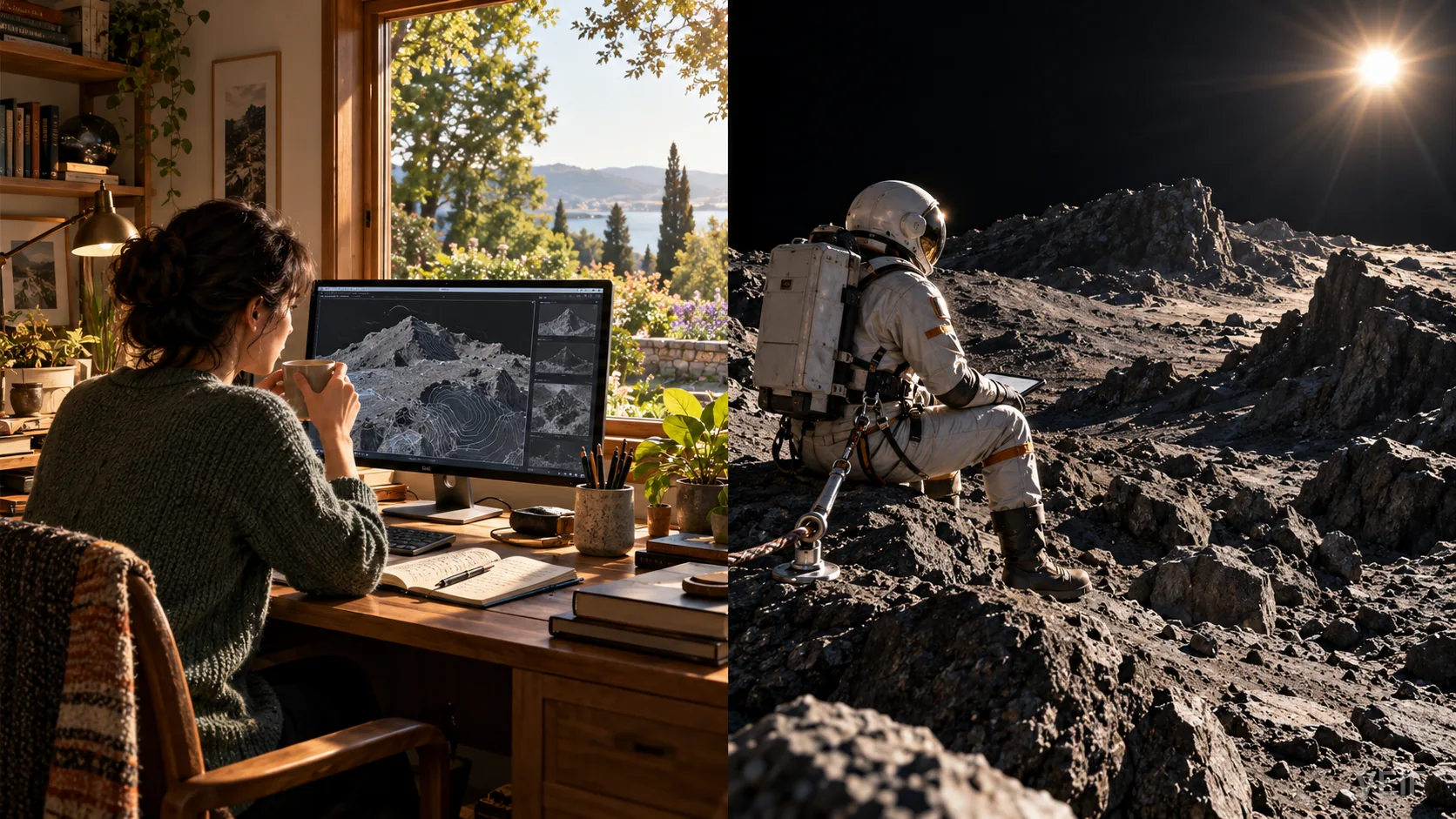
Remote and on-site participation are different relationships; both can be real and complete lives. Artistic concept.
II. Why Be There in Person?
We already live in an age when we can reach many places remotely.
Cameras let us watch the sunrise from a mountain summit. Satellites map oceans and continents. Space probes send us photographs and measurements from distant celestial bodies. For research and production, remote observation is often safer and more effective than sending people in person.
Yet when someone stands beside the sea, what they experience is more than information about the ocean.
They feel the dampness of the air, hear the waves, and watch the changing light through a long interval of waiting. Their memory of that place becomes bound to that particular day and to the state of their own life at that moment.
Knowing a place and having lived there are two different kinds of relationship.
The same might be true of a future planetary shepherd.
An operator on Earth could read every survey report on an asteroid, monitor every machine, and even experience a simulation of its surroundings through immersive technology. That person might know far more about the celestial body than someone standing on its surface.
And yet another person might still choose to cross that enormous distance, enter a cramped habitat, look out through a window at an unfamiliar rocky horizon, and spend part of a life there.
The choice might not be more efficient. It might not carry greater economic value.
They may simply want their life to have truly taken place there.
Remote observation, immersive experiences, and life on Earth are also real experiences lived by particular people. Physical presence and remote participation involve different bodily conditions, opportunities for action, and risks, but these differences do not establish a ranking. What matters to someone may be less the acquisition of more information than a wish to participate in that place through their own body, time, and choices.
Thus, wanting to be there can be a reason for choosing a life. It neither makes the traveler more valuable nor leaves the remote participant’s life incomplete.
When technology makes remote control almost universal, physical presence becomes more clearly a choice rather than merely a means of completing a task.
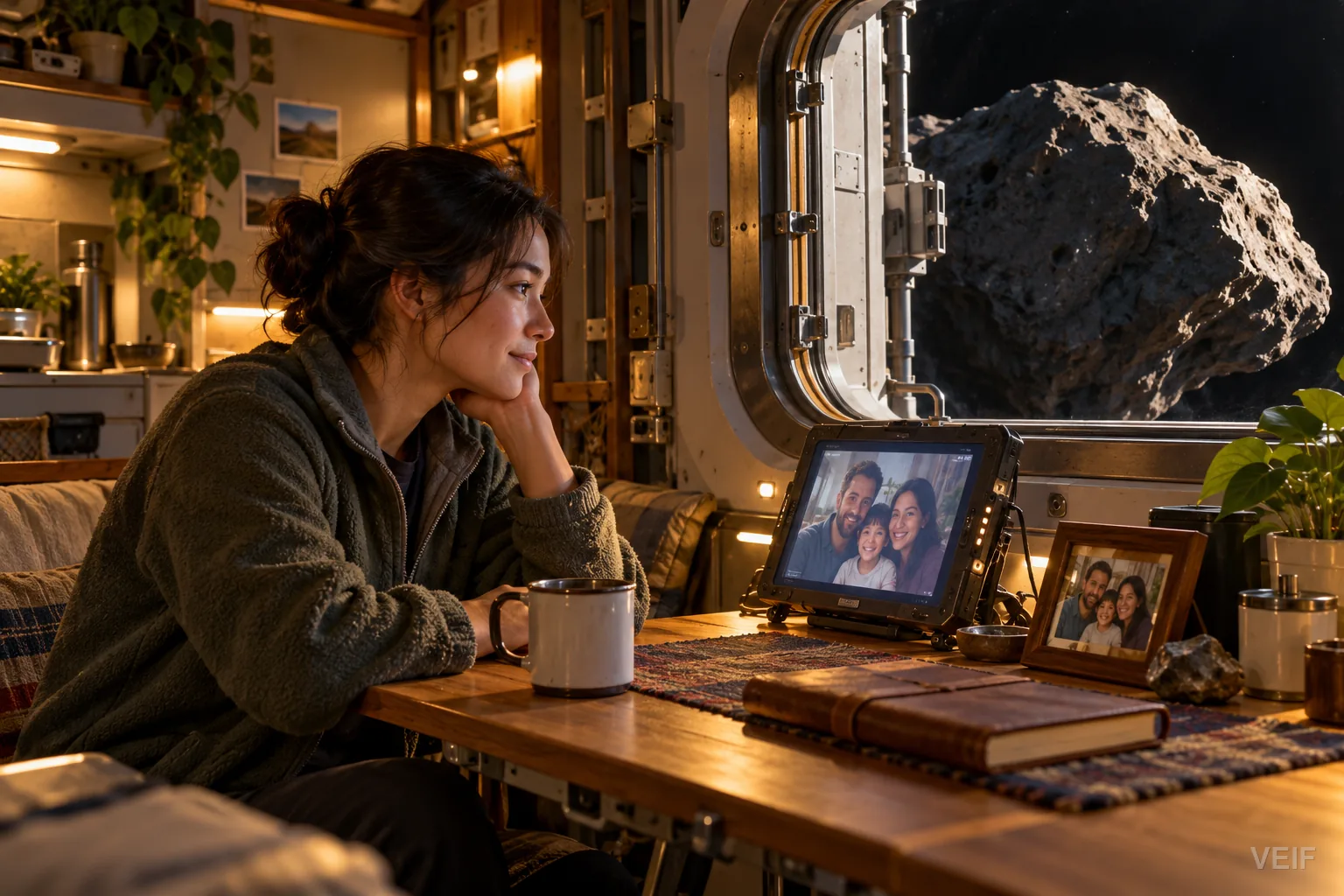
We long to travel, and we long for a place to belong. Artistic concept.
III. Going Away and Making a Home: Two Desires That Coexist
If human beings desired nothing but exploration, it would be difficult to explain why we build villages, cities, families, and lasting institutions.
If we desired nothing but security, it would be equally difficult to explain why some people choose to sail, climb, or venture into the unknown without any clear prospect of reward.
These impulses are not contradictory.
We want to know what lies beyond the mountain, but we also want to make a fire, rest, and share our lives with others in a familiar place. Travel opens possibilities; settling down allows life to accumulate meaning and continuity.
The planetary shepherd, therefore, should not be portrayed simply as a hero who forever turns their back on Earth.
They may miss ordinary rain, trees, and streets. They may wait for news from loved ones through long communication delays. They may return to Earth because of loneliness. Or they may discover that a distant asteroid has become a place they wish to care for over many years.
For some, the cosmos represents adventure. For others, it represents unacceptable risk. Some cherish solitude; others feel at home only amid rich human relationships.
These wishes should not be reduced to an exploratory impulse shared equally by everyone. Curiosity and safety, change and order, independence and connection can carry different weights for different people and at different stages of life.
Self-determination theory offers autonomy, competence, and relatedness as one set of concepts for understanding motivation.[4] They can help illuminate why people value activities and relationships they endorse. They do not prove that everyone desires adventure, much less turn a psychological need into an obligation to travel into space.
The development of civilization should not compel everyone to leave home. It should make different ways of living possible.
Moreover, space is not a naturally habitable garden. On celestial bodies far from Earth, radiation, low gravity, medical risks, and mental-health challenges may persist. Anyone choosing to go in person must confront genuine costs, not merely a poetic sky full of stars.
Precisely because such a choice is costly and difficult, it should be made autonomously and with a clear understanding of what it entails. Autonomy does not mean being left without support: reliable information, an understanding of risk, and practicable ways to change arrangements or end a stay all affect whether the choice is real.
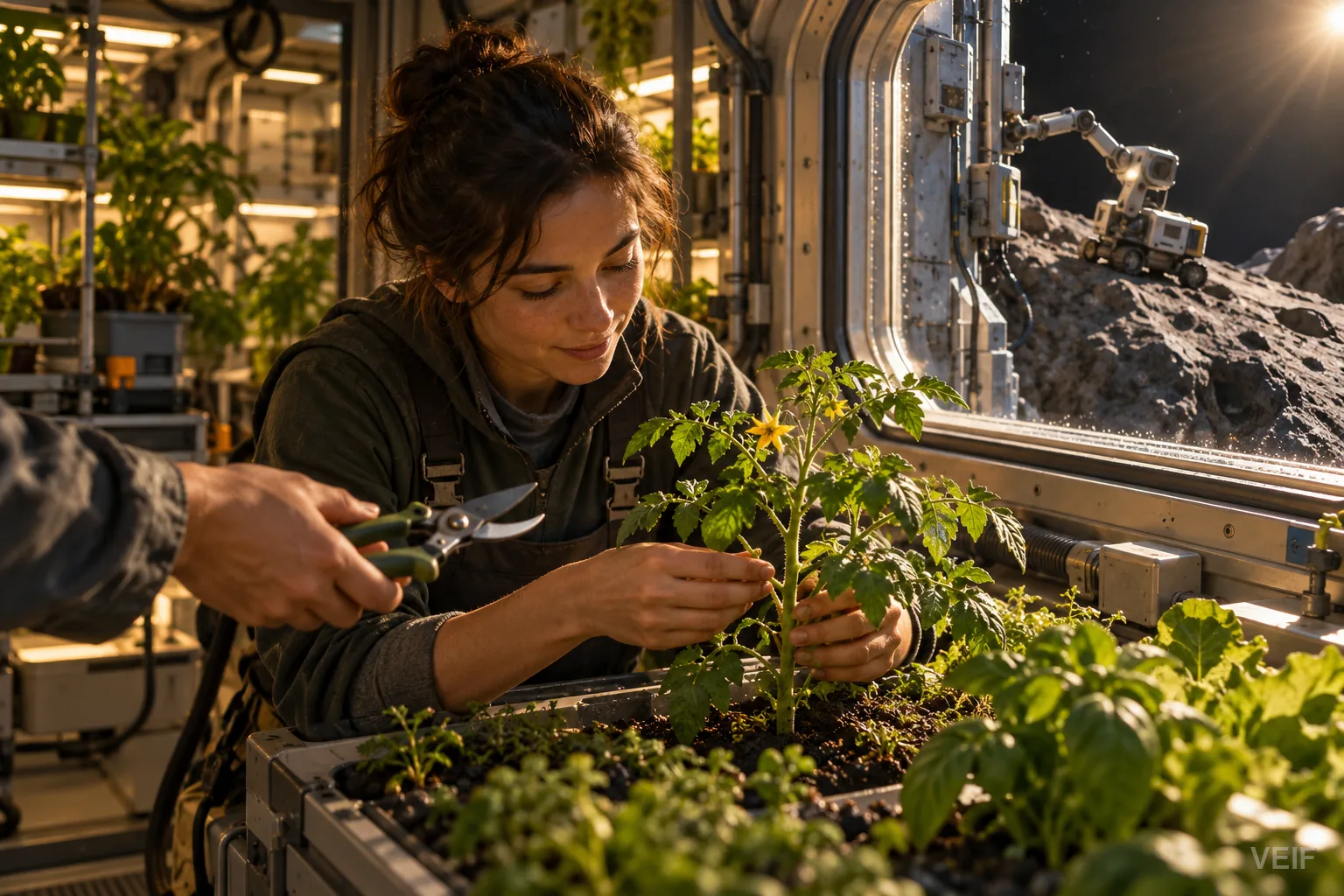
Time, feeling and care may make a place home; care also permits help and handover. Artistic concept.
IV. From Possession to Care: How Does a World Become Someone's World?
We are accustomed to understanding relationships with land in terms of ownership.
Who owns a house? How much is a field worth? What usable resources does an asteroid contain? These questions certainly matter in economic life.
Yet ownership cannot account for every relationship between a person and a place.
Someone may lovingly tend a garden they do not own. Another may spend a lifetime studying a river, maintaining a lighthouse, or preserving a disappearing historical site. The time and care they give are not always fully reflected in a price.
This is where the word shepherd becomes important.
Compared with “conqueror” or “owner,” “shepherd” suggests an enduring relationship. A shepherd must observe the surroundings, understand change, care for what is entrusted to them, and accept responsibility for their actions.
A future planetary shepherd might operate resource-extraction equipment on an asteroid, but might also decide to preserve a geological feature of exceptional scientific value. They might build processing facilities, or dedicate years to observation, maintenance, and record-keeping.
Here, “care” does not imply that an asteroid has human feelings or that every celestial body must be treated as a living creature. It means that human beings can establish long-term responsibilities toward places they use, beyond the logic of one-time extraction.
Such responsibilities need to be compatible with shared rules. Operating facilities, conducting research, or using resources does not automatically confer ownership of an entire celestial body. Public scientific value, environmental effects, and the interests of other users must also be considered. A person’s attachment to a place cannot, by itself, decide what forms of development or preservation everyone else must accept.
For a particular person, long-term care can produce another transformation: an unfamiliar location gradually acquires personal memories.
The first equipment failure, the first successful experiment, a long change in sunlight, a particular stretch of rock given a name—each may seem insignificant in isolation, yet together they compose a life.
Time, feeling, and responsibility can gradually make a place someone’s home.
Care also needs limits. People may become tired, ask for help, or leave after making appropriate arrangements to transfer their responsibilities. A relationship worth valuing need not be proved through limitless sacrifice. Nor must a person produce a particular result to make their life count.
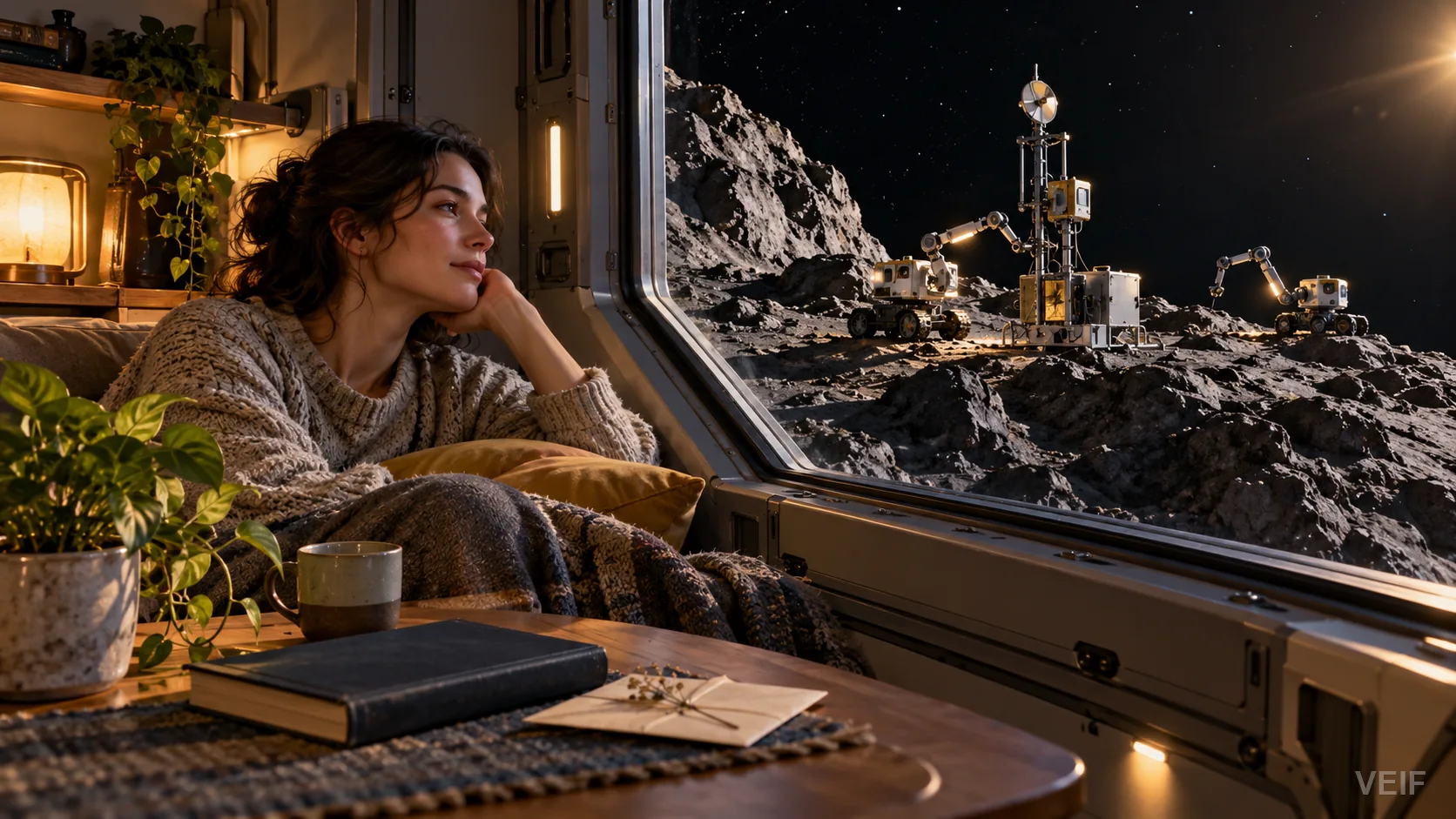
Human worth is not a list of tasks machines have yet to master. Artistic concept.
V. What Machines Cannot Replace
What this section defends is the principle that rankings of efficiency should not replace human dignity, rather than a list of skills machines will never learn.
Faced with technological progress, human beings often retreat to an ever-narrowing line of defense.
When machines learned to calculate, we emphasized human memory. When machines could store vast amounts of knowledge, we emphasized human judgment. When they began generating text and images, we emphasized human creativity. And as machines grew capable of handling increasingly complex tasks on their own, we started searching for the next supposedly irreplaceable human ability.
There is a problem with this approach.
If human value rests solely on what machines cannot yet do, every technological breakthrough will seem to diminish that value a little further.
But a child does not lose their worth because they cannot yet produce economic output. Nor must an older person outperform a machine to deserve respect.
Human beings deserve respect without first meeting a productivity threshold. The Universal Declaration of Human Rights takes equality in dignity and rights as a normative starting point. It concerns how people ought to be treated, rather than a claim about ability that machine performance could prove or disprove.[5]
We experience grief and joy, form relationships, remember particular moments, care about the circumstances of others, and take responsibility for our choices. People have different abilities, aspirations, and paths through life, but they should not therefore be ranked as more or less worthy of existence. These experiences are not an eligibility test for dignity either. A person who cannot express wishes, recall memories, or bear the same responsibilities still deserves care and respect.
Whether future artificial intelligence might possess subjective experience, moral standing, or value of its own remains an open question worthy of serious inquiry. Acknowledging that uncertainty does not prevent us from affirming human dignity and freedom.
The planetary shepherd, then, does not need to be portrayed as a supervisor whom machines will never be able to replace.
Perhaps machines really will be able to operate an asteroid better.
But a human being may still choose to live there, learn, build relationships, or simply watch a sunrise unlike any seen on Earth.
The value of being human does not have to be written on a list of tasks machines have not yet accomplished.
Technology should offer new capabilities. Whether and how those capabilities are used should, as far as possible, remain in the hands of the people whose lives they affect.
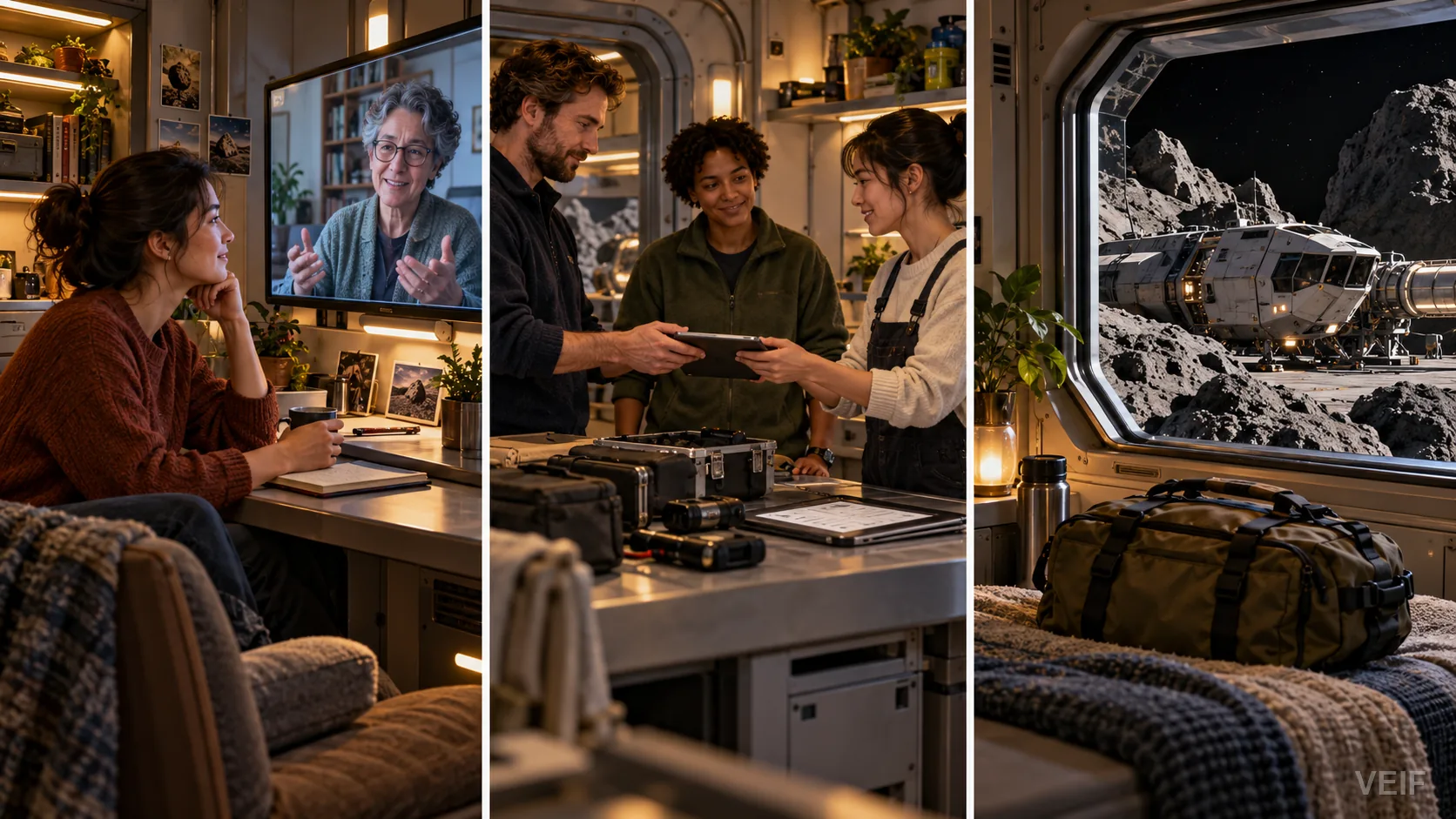
Meaningful choice also needs reliable information, basic security, and workable handover and departure arrangements. Artistic concept.
VI. Who Gets to Have a Place Among the Stars?
Freedom, however, cannot remain merely a literary ideal.
Imagine that an asteroid can one day be operated entirely by autonomous machines. Transport, energy, robotics, infrastructure construction, and long-term maintenance may still require enormous upfront investment.
Who, then, could become a planetary shepherd?
If only a handful of large institutions control transport networks, power facilities, essential data, and critical technologies, the dream of individual stewardship could ultimately become another highly concentrated industrial structure.
Technology can magnify individual capabilities. It does not automatically distribute those capabilities fairly. Nor does transferring more labor to machines automatically give everyone security or leisure. How the benefits of production are distributed still affects whether people choose a journey or are driven far away by the need to earn a living.
Agricultural machinery, industrial equipment, and information networks have all increased productivity while transforming the distribution of wealth, labor, and power. Future space infrastructure could likewise separate ownership from operating rights, put access under the control of a few platforms, and leave ordinary participants dependent on vast systems.
Whether planetary shepherding can gradually become a vocational choice rather than a privilege of the few will therefore depend on how open transport and infrastructure are, how much technology costs, what educational opportunities exist, and how commercial rules and public governance evolve.
For example, an operator may sign a voluntary residence contract while depending on a single platform for supplies, communications, and return travel. If leaving means losing housing, income, and the only way home, consent on paper may not mean that meaningful choice remains available. Predictable contracts, independent routes for seeking help, basic security, and workable arrangements for handover and departure are more concrete than an assurance that “you are free to choose.”
Choice also carries responsibilities toward others. A visit’s personal meaning does not oblige public funds to pay for every wish, or permit risks and environmental costs to be shifted onto other people. A legitimate choice must respect the individual, shared commitments, and those affected.
More important than the proposition that everyone might one day own an asteroid is the possibility that ordinary people could participate in scientific research, enterprise, and new ways of living without first having to own an entire celestial body.
We must also acknowledge that many people will have no desire to go to space. They may prefer to remain on Earth, care for their families, study plants, make music, or lead quiet, ordinary lives.
If technological progress merely drives humanity into more distant and more intense forms of competition, it has not truly answered why people need such progress in the first place.
Civilization should expand the lives people may choose, not continually raise the bar that everyone is expected to clear.
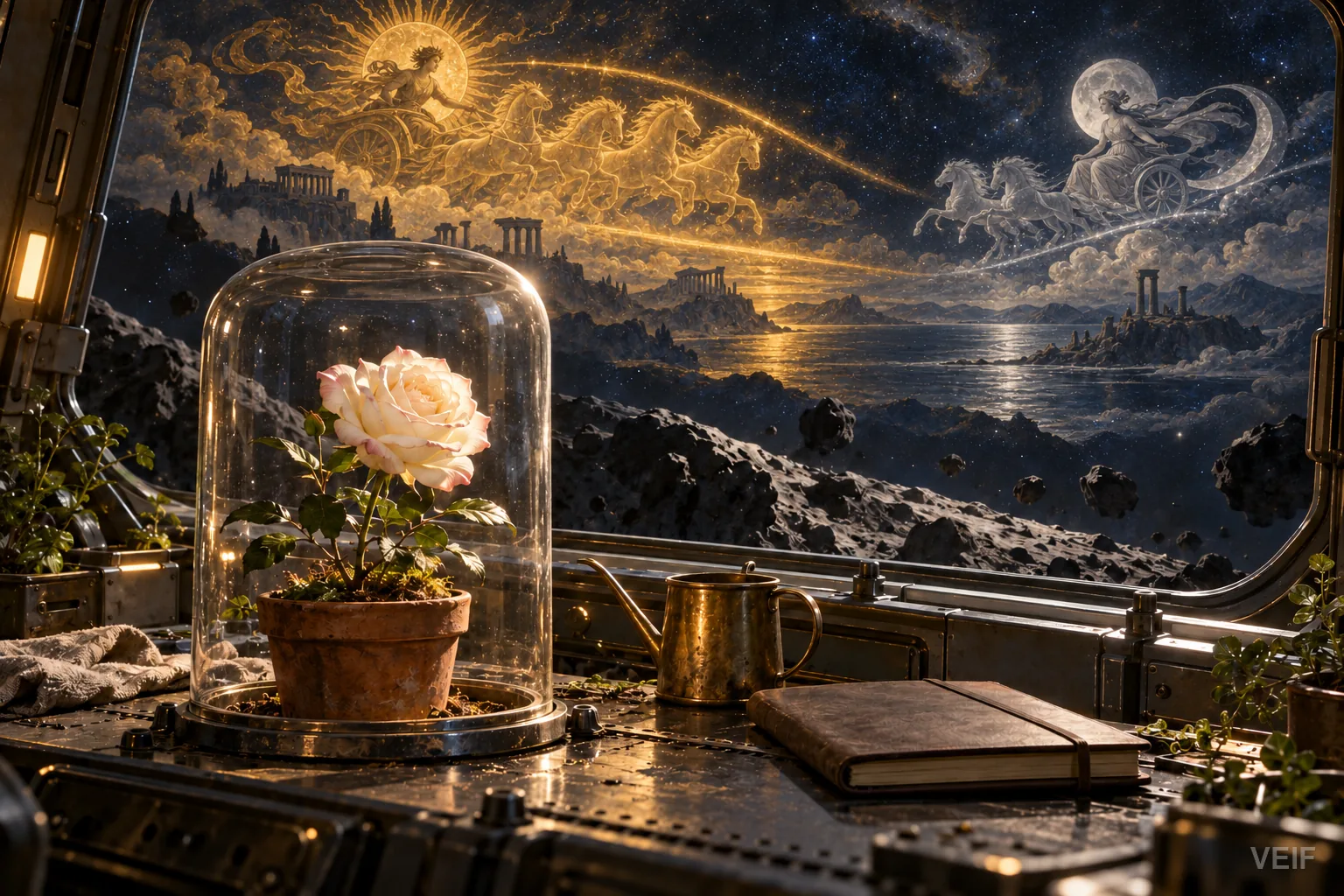
From the celestial paths of Helios and Selene to a flower someone chooses to tend. Artistic concept.
VII. The Little Prince's Rose, and the Stars of Myth
In The Little Prince, several small planets the prince visits are inhabited by figures guided by particular obsessions or duties.
The king is concerned with authority; the businessman is busy counting; the lamplighter faithfully performs his duty. These little planets become a miniature reflection of human society.
Yet what matters most to the little prince is not how many resources his planet possesses, nor how much profit he can make from it.
It is the rose he cares for.
In this essay’s reading, the rose matters not because it is rarer than every other flower, but because the prince has formed a relationship with it. His encounter with the fox helps him understand that attachment and its responsibilities anew.[1]
This gives the ancient word shepherd an unexpected connection to future space enterprise.
Managing a world is a capability. Caring for a world is an attitude.
The two do not necessarily go together.
In Part I of this series, we began with ancient stories of the heavens. In Greek mythology, Helios drives the Sun across the sky, while Selene travels her nightly course with the Moon. In these stories, celestial motion was given personality, purpose, and a place within an intelligible order. They were not scientific accounts of the modern universe, but cultural expressions of humanity's attempt to draw the distant heavens into a world of familiar actions and meanings.[2][3]
Today, science has explained many celestial phenomena that once belonged to myth, and machines are beginning to bring distant bodies within our practical reach.
Yet from the mythic journeys of the Sun and Moon, to the little prince's rose, to a greenhouse that may one day stand on an asteroid, one question remains:
When we finally acquire the power to approach, use, and transform a world, what kind of relationship will we choose to have with it?
Technology cannot answer this question on our behalf by itself.
Not because machines are necessarily incapable of making relevant judgments, but because the answer shapes the kind of people we want to become, the society we wish to build, and the world we leave to those who come after us.
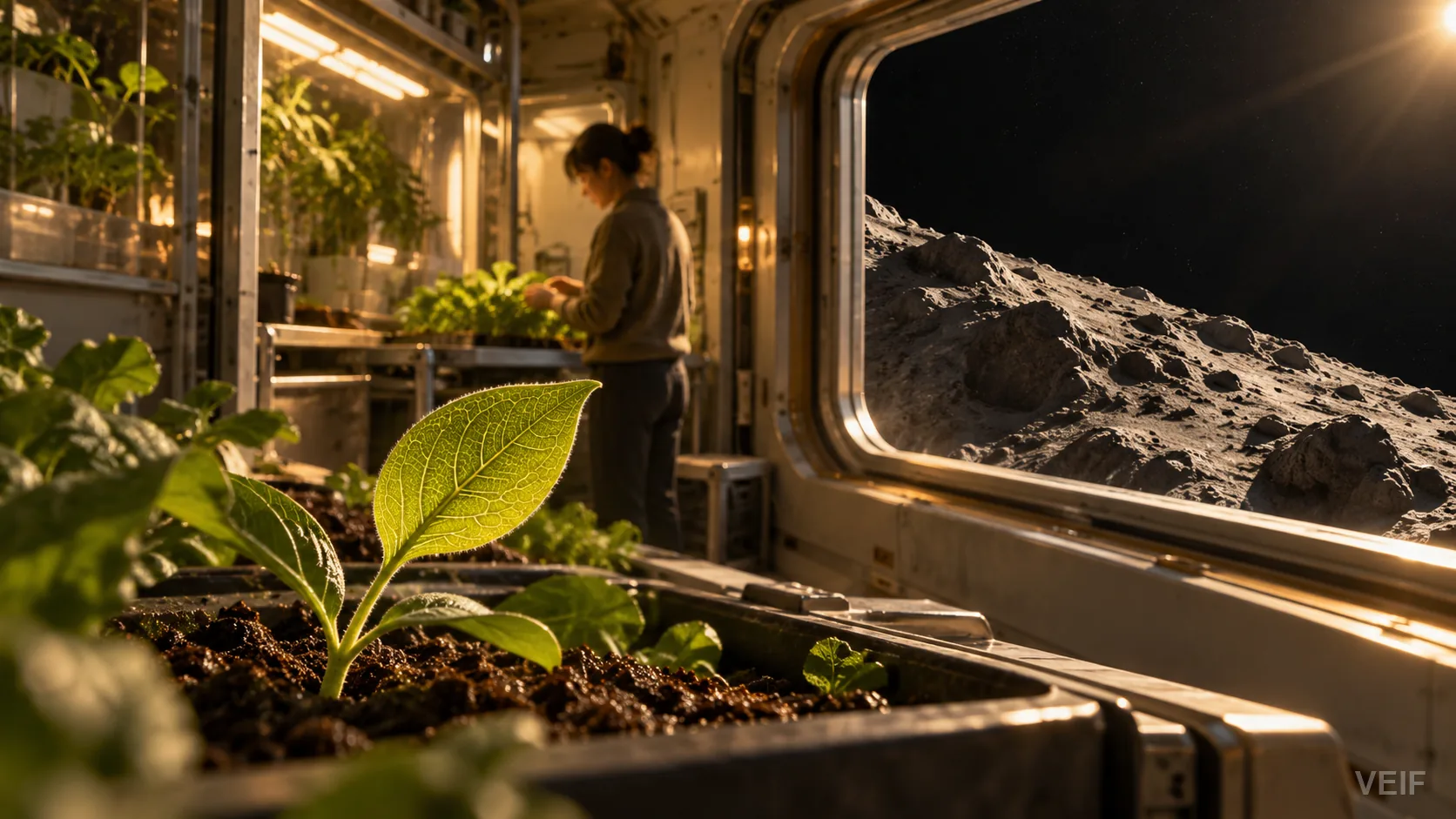
Traveling and staying can both be complete lives; tending a new leaf is one choice among many. Artistic concept.
VIII. Returning to the Place Where We First Looked Up at the Stars
Perhaps long ago, a shepherd lay in a field and watched the stars slowly move overhead.
He did not have the language of modern celestial mechanics, but might have known the stars, seasons, winds, the flock in the valley, and the path he would take the next day.
The area he could directly tend each day was limited.
But his gaze could travel beyond the mountains.
Later, human beings built cities, crossed oceans, and created machines that could leave Earth. The places we could reach grew more distant, the energy we could command more immense, and the enterprises we could manage more complex.
But what was all of this for?
If the answer is only to produce more, possess more, and expand farther, we may never reach an end.
There will always be another continent, another planet, another resource not yet used.
Perhaps a more worthwhile achievement of civilization would be to make it possible for human lives to be defined by more than the pressure to survive and the obligation to perform useful labor.
To let those who wish to explore do so; to give those who want to create the tools they need; to let those who long for home find a place to settle; and to allow those who wish to care for others and for the world to take on that responsibility.
When someone chooses to travel to a distant asteroid, not everyone needs to call them a hero. When someone chooses to stay on Earth, that decision need not be treated as a lack of courage.
Both can be complete lives.
Seen in this light, the “imprint buried deep in human memory” discussed in Part I acquires another meaning.
It is not an interstellar mission that everyone is destined to fulfill.
Perhaps it is a recurring possibility within human life: the desire to know a larger world while also finding a place for oneself within it.
Coda: Not Everyone Must Own a Planet
If future conditions permit, a planetary shepherd may finish a day’s work on an asteroid far from Earth.
Most of the equipment is maintained by autonomous systems. The power facilities continue to run. Robots proceed slowly along their assigned paths.
The shepherd closes the work interface and enters a small greenhouse, where an ordinary plant has put out another new leaf.
Beyond the walls of the habitat lie the silence of vacuum and the vastness of the solar system. Earth is not visible through the window; it may even be hidden beyond the Sun.
The shepherd knows that home is still there.
Having met their shared commitments, they need not also prove that traveling so far makes them more valuable than someone who stays on Earth, or that their work is more efficient than a machine’s.
They have simply chosen to spend part of a life here, tending a few things and getting to know an unfamiliar world.
That is enough to make the experience their own.
The story of Planetary Shepherds began with ancient human beings looking up at the stars. It passed through the expansion of civilization and the growing capabilities of machines, only to return, in the end, to the choice of an ordinary person.
Civilization gives humanity the ability to travel among the stars; freedom makes that journey a choice rather than a new obligation.
The future most worth hoping for is not one in which everyone owns a planet.
It is one in which every person, faced with a broader range of possibilities, can choose the world they wish to care for and the life they wish to live.
References and Further Reading
- Antoine de Saint-Exupéry, Le Petit Prince (The Little Prince, 1943). Literary themes: the inhabitants of small planets, the rose, the fox, care, and responsibility; see the official overview.
- Theoi Project, Helios, on the Greek Sun god and his celestial chariot: Helios source extracts
- Theoi Project, Selene, on the Greek Moon goddess: Selene source extracts
- Deci, E. L. & Ryan, R. M. (2000). The “What” and “Why” of Goal Pursuits: Human Needs and the Self-Determination of Behavior. Psychological Inquiry, 11(4), 227–268. Background on autonomy, competence, and relatedness: Author-hosted full text
- United Nations, Universal Declaration of Human Rights (1948). An international normative text concerning human dignity and rights: Declaration text
- NASA, What’s Mars Solar Conjunction, and Why Does It Matter?. Supports the possibility of temporary interference near the solar direction; Mars operations are not a universal model for asteroid communications.
These sources serve distinct purposes: literary and mythological imagery, theoretical context in psychology, and discussion of normative values. Depictions of future planetary shepherds' lives are thought experiments and literary projections, not verified predictions. No single psychological theory is presented as a complete account of human nature.
Read this series · Civilizational Frontiers · Planetary Shepherds
- Planetary Shepherds 1: An Imprint Buried Deep in Human Memory
- Planetary Shepherds 2: A New Profession in the Spacefaring Age
- Planetary Shepherds 3: Rethinking Our Value as Human Beings