Planetary Shepherds 2: A New Profession in the Spacefaring Age
Planetary Shepherds Trilogy · Part II
One person, a flock of machines, a world: from space exploration to operating celestial sites
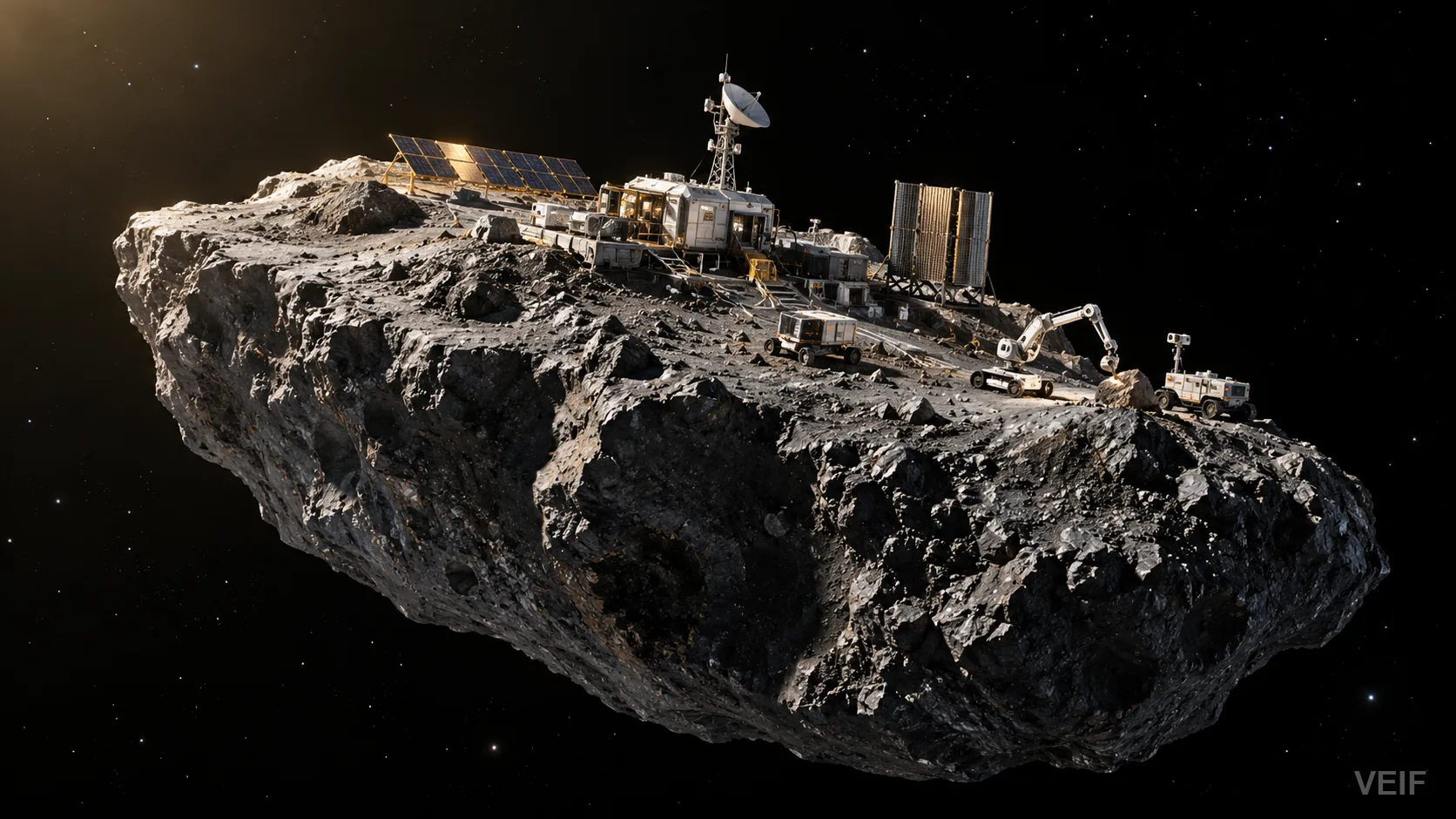
A celestial worksite may be uncrewed; operating responsibility still belongs to an accountable party. Artistic concept.
I. When Exploration Becomes Routine
Imagine a scene that has not yet become reality, and for which no reliable arrival date can be given.
An asteroid follows its orbit. Its surface has no towns, no roads, not even a path along which a person could walk freely. A few automated machines move slowly among the rocks. Nearby, relay equipment configured for the mission's trajectory transmits during communication windows. Power systems adjust operations to available sunlight and stored energy. Robots redistribute themselves according to terrain and task plans.
Somewhere on Earth, an operator opens a terminal and reads the latest operating records received: newly completed terrain surveys, sample analyses, equipment-life forecasts, and a prospecting area where a decision is needed about whether to proceed. The screen shows a timestamped remote state. After sending instructions, the operator must wait for returning data to confirm what happened.
There is no spectacular launch, no cheering at a first landing.
The meaningful change is that activity at a celestial body has moved from “reaching it once” to “work that continues every day.”
In the early years of space exploration, attention often centered on milestones: launch, orbit, landing, sampling, and return. Each extended a technical boundary.
In 2020, NASA's OSIRIS-REx spacecraft collected a sample from the asteroid Bennu; in 2023, the sample capsule reached Earth. The mission demonstrated precise proximity operations, observation, and collection of asteroid material. It was a scientific mission, however, rather than an established mining business.[1]
A considerable distance remains between one successful sampling operation and sustained operations.
Scientific exploration itself can last for years, and spaceflight already involves long-term mission control and facility maintenance. The change discussed here is therefore not humanity learning, for the first time, to work continuously. It is whether these capabilities can develop further into professional services that can be purchased, delivered, and held accountable over time.
A successful sample collection demonstrates a set of precise operations. A repeatable business or service must also connect equipment, power, communications, maintenance, supplies, and decisions across multiple operating cycles, with an identifiable client, delivery standards, and funding. One technical success cannot answer all those questions.
This is the first threshold for the planetary shepherd: work around a particular celestial body must support professional operations with continuing responsibility, continuing output, and continuing funding.
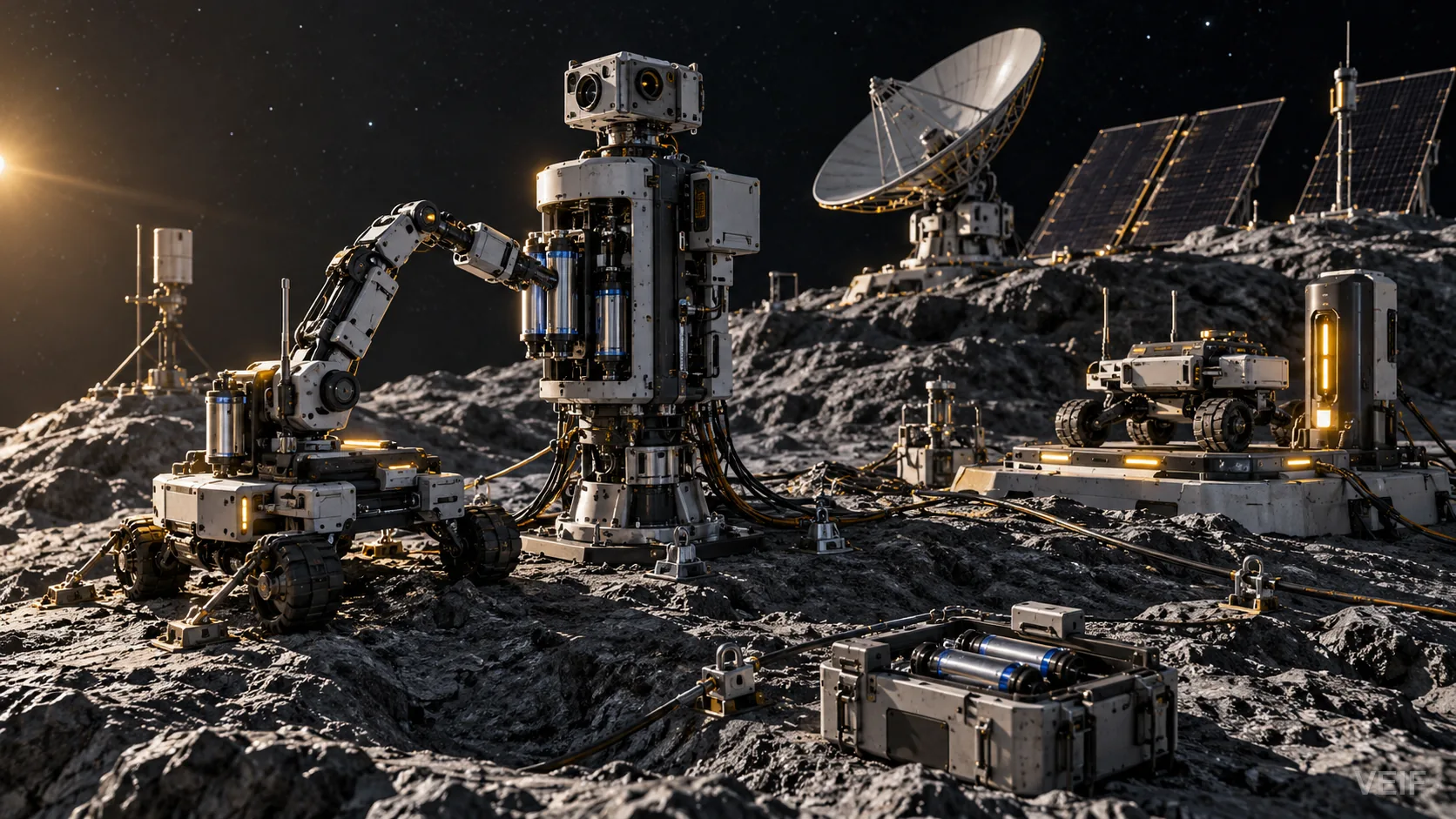
Repeated observation, routine maintenance and reliable delivery may turn a mission into a continuing service. Artistic concept.
II. The Space Gold Rush Comes First
On an old pastoral landscape, shepherds did not have to make every tool themselves, nor build an entire metallurgical industry to obtain a road.
They could work because a wider division of labor already existed: toolmakers, carriers, people providing markets and rules, and experience accumulated across generations.
Operating in space cannot begin with a solitary individual either.
Early participants are more likely to be national agencies, large aerospace companies, infrastructure operators, and resource-development organizations capable of bearing substantial investment, failure risk, and long development cycles.
They must solve much more than how to reach an asteroid:
- Can transport vehicles be reused, and cargo delivered reliably?
- Who supplies communications, navigation, positioning, and data relay between operating locations?
- How will distant power systems be deployed, and energy stored and allocated?
- When equipment fails, should it be replaced, repaired locally, or backed up by redundancy?
- Can the detection, processing, transfer, and use of celestial materials connect actual supply with actual demand?
Reusable answers to these questions could support a more specialized space industry.
Some companies might provide transport, others power systems, robots, mapping, communications, or infrastructure maintenance.
Earlier articles called the capital and companies that may participate in large-scale space-resource development “space prospectors.” These participants are not synonymous with planetary shepherds.
Within this pair of metaphors, the prospector emphasizes capital entry, industrial organization, and value capture; the shepherd emphasizes the continuing operation, maintenance, and care of particular facilities. Pioneering companies may also operate bases for decades. This is not a moral division between short-term profiteers and responsible long-term caretakers.
Both roles may exist in the same company, at the same time, or within the same team. They describe different emphases in industrial activity rather than mutually exclusive classes of enterprise.
The space gold rush creates entry points into a new economic frontier; planetary shepherds may emerge as activity there becomes a matter of everyday operations.
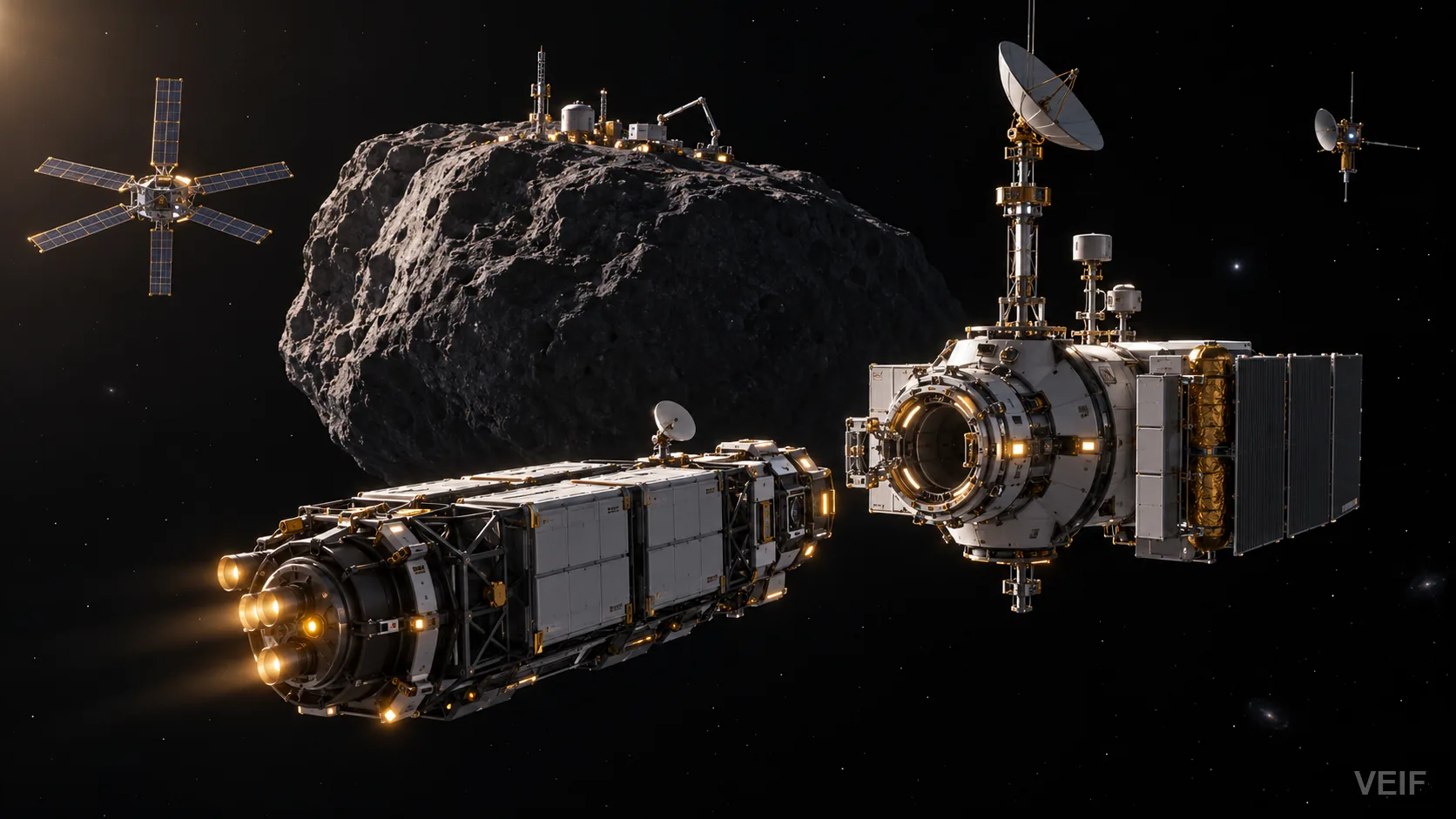
Individual operating reach rests on specialized transport, power, communications and maintenance. Artistic concept.
III. Why Machines Can Expand One Person's Operating Reach
Today, the factories, farms, and information systems one person can manage already exceed the work that person could perform with their own hands.
This reflects a continuing process: specific tasks become executable by tools, procedures, machinery, and software, while people increasingly set goals, organize work, and handle exceptions.
Space pushes this tendency further.
In distant, harsh places where transport is expensive, machines must do more than replace heavy physical labor. They need environmental sensing, path planning, equipment diagnosis, coordination, and some autonomous decision-making.
NASA's Jet Propulsion Laboratory is developing CADRE around three small lunar rovers to investigate cooperative mapping and distributed measurements. Its mission design is a technology demonstration lasting roughly one lunar daylight period, or 14 Earth days. This article refers to those design objectives, without claiming that the lunar experiment has been completed.[2]
Even a successful demonstration of this kind would not establish that robots can operate an asteroid site continuously for years. Short-duration cooperation, long-term reliability, and commercial returns require separate validation.
The approach explores higher-level task delegation: an operator sets objectives and constraints, while machines arrange some execution details. Spacecraft already possess varying degrees of automatic control and autonomy. What must expand is the scope of tasks that can be coordinated, together with reliability that remains verifiable under abnormal conditions.
An operator might no longer specify every turn or grasp. Instead, the instruction could be: “Complete a layered survey of this area within safe energy limits. If an anomalous structure is found, retain the samples, stop further disturbance, and await assessment.”
This requires at least four layers of capability.
The first is sensing. Remote observations, local sensors, close inspection, and terrain and material analysis build a continuing understanding of the environment.
The second is action. Robots move, drill, collect, carry, process, install, and repair, performing physical work.
The third is autonomy. Machines share maps, task states, and fault information, allocating limited power, time, and equipment.
The fourth is operational decision-making. Systems turn progress, equipment risks, resource value, and external demand into choices an operator can understand. Management software may schedule tasks within an approved scope. Changing work boundaries, committing to additional high-risk expenditure, or handling major anomalies requires a defined authorization process. Computing capability does not automatically transfer legal responsibility.
Together, these capabilities might extend one person's reach from a machine to a base, or even to facilities at several celestial sites.
Software coordination does not mean machines can make every spare part or repair every fault. An asteroid is not a miniature terrestrial construction site: movement, drilling, and handling in weak gravity require attention to attachment and reaction forces. Sunlight, thermal control, and radiation also constrain power systems and equipment life.
Bennu offers a reminder. During OSIRIS-REx sampling, surface material proved looser than anticipated, and the sampling apparatus sank farther than expected. This observation concerns one body and must not be generalized to every asteroid. It nevertheless illustrates why remote operations must accommodate conditions outside prior assumptions.[5]
These constraints suggest questions any operating system must answer: how to reach a safe state after loss of communication; how to isolate failed equipment; how long spares and replacement tools can support activity; and how to prevent commands that exceed their authority. Verified operating limits are what make individual reach useful. When exceptions exceed the capacity to handle them, managing more machines can amplify risk.
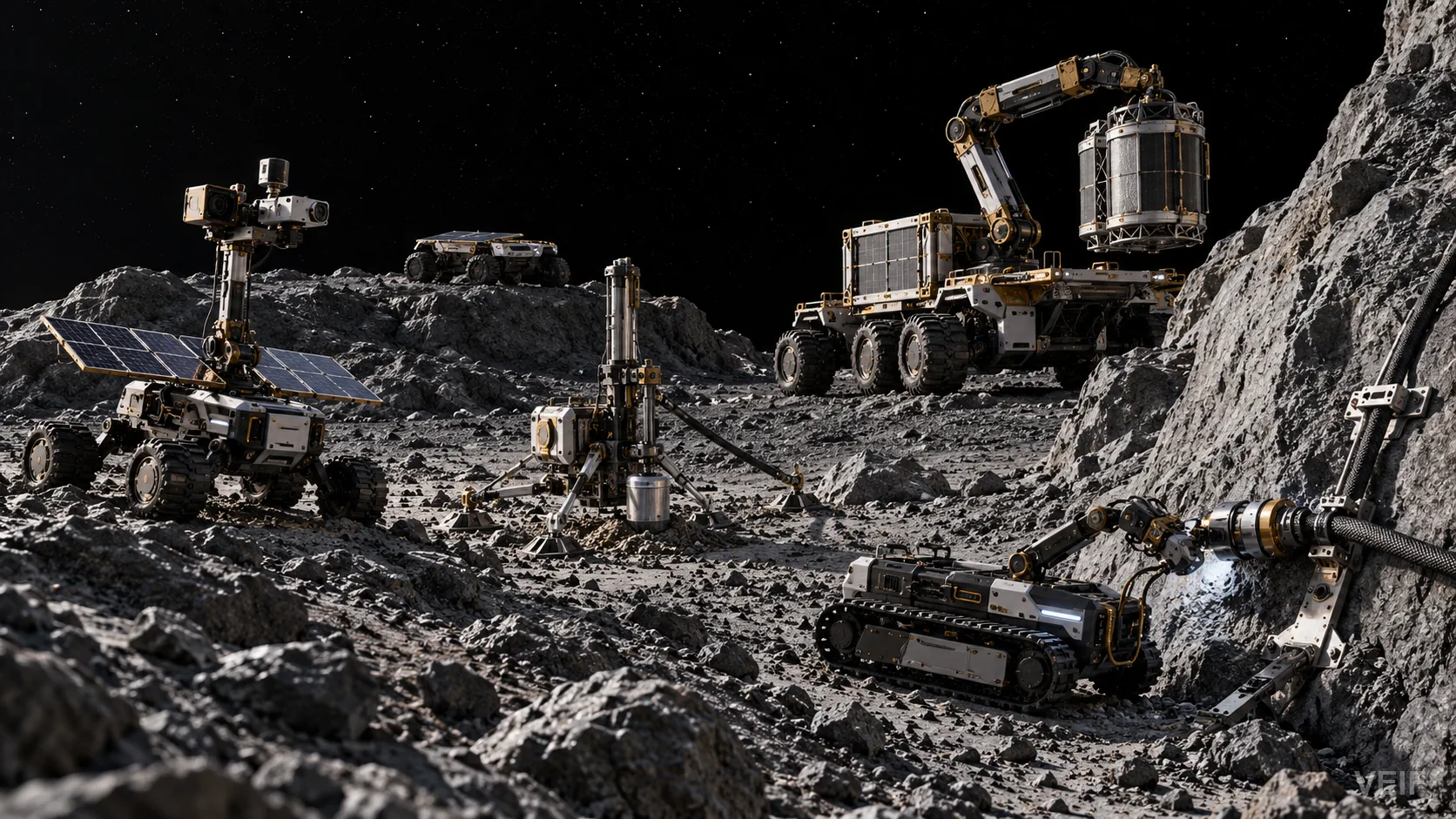
Coordinated machines remain constrained by reliability, spares and the capacity to handle exceptions. Artistic concept.
IV. One Person, a Flock of Machines, a World
“One person, a flock of machines, a world” can serve as a prototype for the planetary shepherd.
Here, a “world” need not be a planet, and does not imply private ownership of an entire celestial body. A more realistic operating object could be a worksite on an asteroid, a group of facilities, or equipment sharing an operating objective.
Nor does “one person” mean doing all the engineering, science, legal work, and accounting alone. That person might lead a specialist team or run an independent service supported by infrastructure providers.
This article defines the planetary shepherd as an operating role with continuing responsibility, under explicit authorization and contractual arrangements, for a celestial worksite's objectives, asset condition, and coordination of responses to anomalies. It has continuity with existing space-operations jobs. Its possible novelty lies in cross-equipment, cross-supplier responsibility for sustained delivery around a celestial worksite, rather than the sudden disappearance of existing work.
Consider a conceptual operating system.
The physical layer performs production and observation: probes, mobile robots, collection systems, processing modules, power, storage, and communication equipment.
The autonomy layer coordinates daily operations: robot tasks, power allocation, inspection schedules, risk detection, unsafe-operation suspension, and the reduction of large data streams into important information.
The management layer sets direction: selecting areas to investigate, replacing equipment, contracting services, assessing expenditure and output, and carrying safety and compliance responsibilities.
In this division of work, the planetary shepherd is defined by enduring knowledge of, and responsibility for, activity at a particular site, rather than personally handling every tool.
They must understand resources without necessarily drilling; understand machinery without writing every control routine; and understand risk without personally repairing every failure.
The role combines something of a remote farm operator, a systems engineer, and a facility manager.
“One person” describes only how concentrated operating responsibility might become. Shift coverage, leave, independent review, and emergency support still require a team. How much equipment an individual can oversee depends on how many exceptions arrive together, as well as normal workload.
Professionalization requires sufficient definition: assets have identifiable boundaries, responsibility can be assigned, tasks delegated, results measured, costs calculated, and services purchased over time.
Scientific projects can also support professional operations jobs. For planetary shepherds to become a more distinct profession, however, duties must be relatively stable, deliveries measurable, and purchasing relationships capable of continuing.
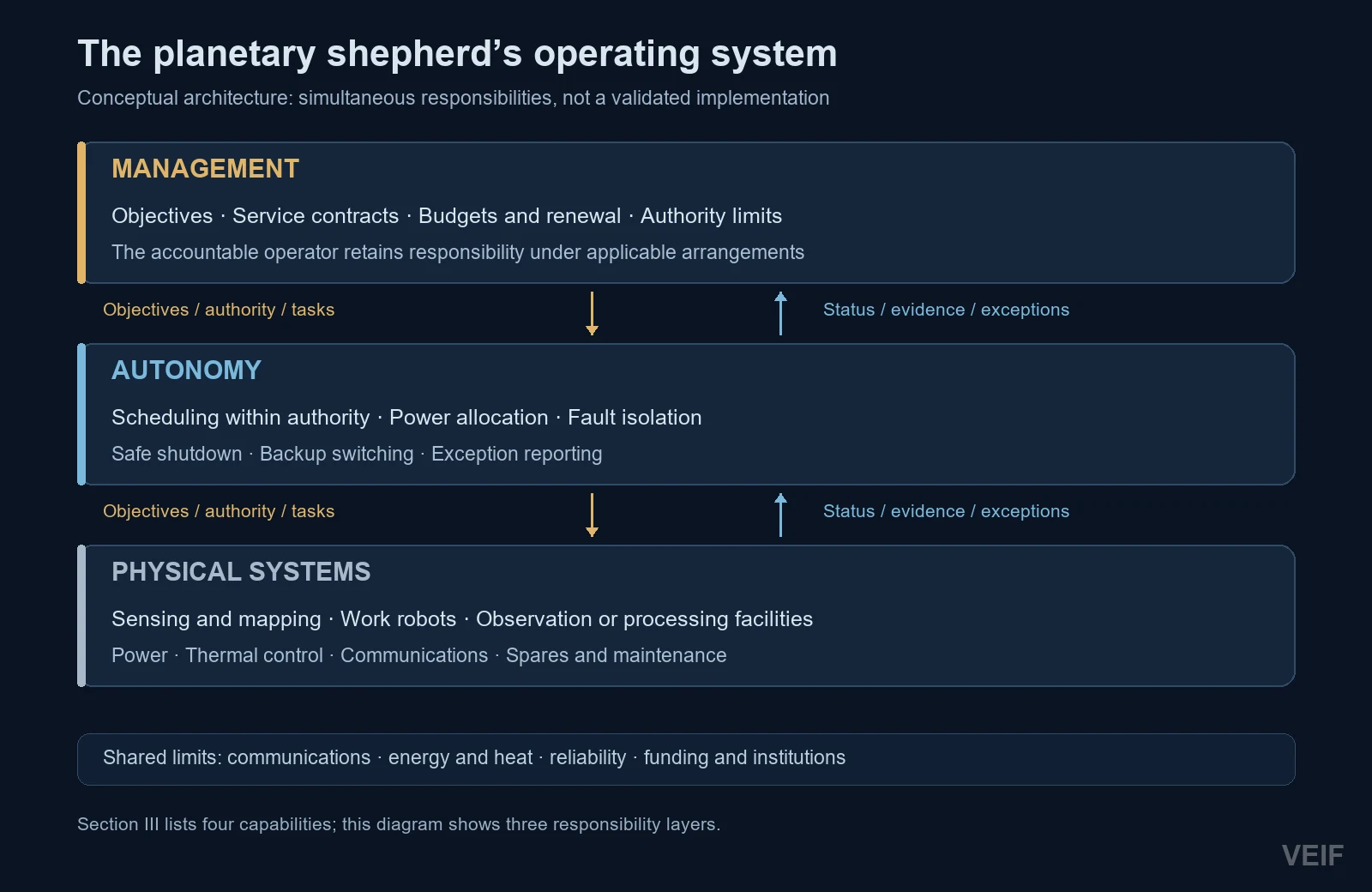
Execution may be automated; authority and accountable parties must remain explicit. Conceptual architecture.
V. Why Might People Still Be Needed on Site?
This is the part of the idea most easily romanticized, and most in need of careful examination.
If machines can survey, build, repair, and operate facilities, why expose people to long journeys, radiation, life-support requirements, and difficult rescue?
First, many celestial operations may never need people on site.
If tasks are sufficiently standardized, robots have appropriate fault isolation, redundancy, and safe shutdown, and some downtime or task loss is tolerable, keeping the operator on Earth may be preferable. Uncrewed operation does not require machines to repair every possible failure.
Human presence might nevertheless add value under particular conditions.
Distance and Decisions
Communication is limited by the speed of light. Using Mars as an example, NASA describes roughly four to 24 minutes of one-way transmission time. A round trip requires another such transmission interval, before allowing for human judgment and processing queues.[3]
This range must not be applied to every asteroid. Delay, available bandwidth, and communication windows depend on the target's trajectory, Earth's position, the links, and any relays. Far from Earth does not necessarily mean far from the Sun; communication directions close to the Sun may introduce temporary link constraints.
The first implication is a need for greater machine autonomy, not proof that people must be present.
Presence adds practical value only when flexible judgment is needed, available autonomous systems cannot safely complete the task, and a person on site can significantly improve the outcome.
New Sites and Unknowns
An established base handles many well-defined tasks. A new site may encounter poorly understood material, unexpected equipment feedback, and conditions that cannot be fully anticipated.
An engineer on site might be better able to recombine tools, adjust objectives, or recognize a problem outside the design assumptions.
That advantage must be compared with improving robotic capabilities. It cannot rest on an assumption that machines will never handle unknowns.
System Failure and Responsibility
Long-lived facilities must consider lost communications, declining power, damaged parts, and simultaneous failures.
An on-site team might offer additional routes to diagnosis and recovery. People, however, depend on more complicated life-support systems, and may not improve reliability as much as additional robotic redundancy.
Decisions about human presence must therefore compare the complete risks of both approaches, rather than concentrating on machines' shortcomings.
A Third Option Between Remote and Permanent Presence
Operations need not be a choice between “always uncrewed” and “permanently inhabited.”
Facilities might run uncrewed most of the time, with people visiting for planned construction, upgrades, or special research. “Short-term” here describes a visit relative to the facility's lifetime, not a quick journey. A distant fault often cannot wait for people to arrive. A small resident team serving several bases becomes worth considering only if travel and supply conditions permit it.
The three modes must be compared for the same task:
| Operating mode | Potentially suitable conditions | Costs or limitations that remain |
|---|---|---|
| Earth-based management, uncrewed site | Autonomous execution; waiting, shutdown, or loss of individual units is tolerable | Redundancy and spares, communication limits, losses that cannot be promptly recovered |
| Normally uncrewed, with planned visits | Concentrated construction or modification tasks justify human visits | Round-trip transport, habitation support, waiting for windows; no guarantee of emergency rescue |
| Long-duration human presence | Frequent, valuable on-site tasks justify continuing crewed activity | Life support, protection, medical care, rotation, evacuation, and ongoing supplies |
For a given task, the expected additional value of human presence—including avoided losses and increased useful output—should support its full additional cost relative to a stronger uncrewed alternative. Independent requirements for human safety must also be met. High returns do not automatically make a risk acceptable.
The occupational identity of a planetary shepherd need not therefore depend on physical residence.
Being able to go is a capability; needing to go is a cost-benefit judgment.
Why people might still want to go without an economic need is a different question. That belongs to Part III.
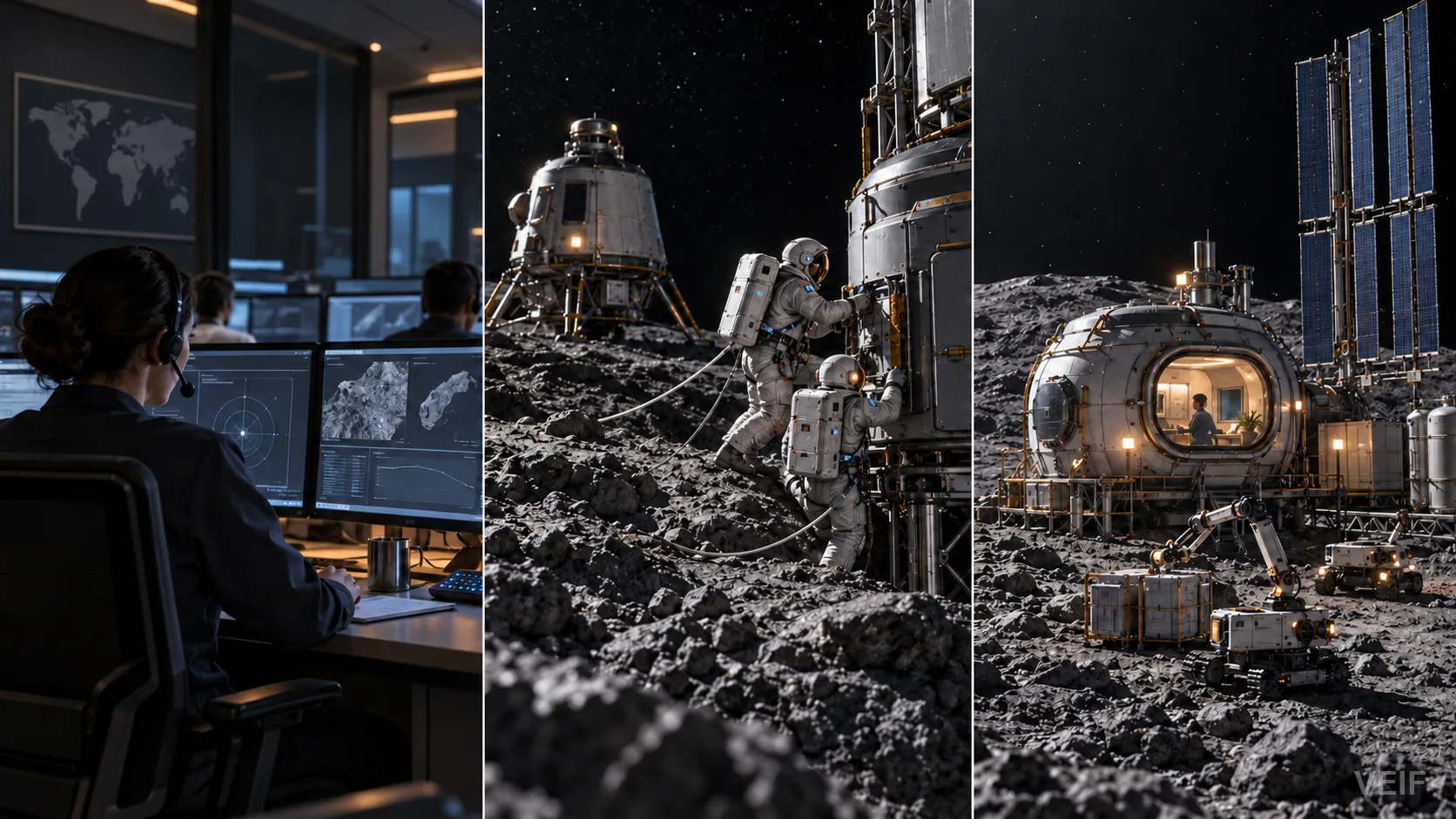
Remote operation, visits and residence are alternatives for the same task; visits do not imply prompt rescue. Artistic concept.
VI. What Would a Celestial Pasture Actually Provide?
A pasture cannot survive on poetry alone.
Continuing investment requires products, services, or public benefits that can be delivered over time.
One possibility is prospecting and data services.
Institutions may need updated terrain, composition, orbital-environment, and resource-distribution information. Persistent sensor networks could supply repeated measurements, but paying demand depends on the actual scale of scientific missions, infrastructure activity, and commercial customers.
A second is in-situ resource utilization.
Where technology permits, water, minerals, and other materials might support propellant production, manufacturing, or facilities in space. The first customers may be other space missions rather than consumers on Earth.
Yet water-bearing material is not the same as inexpensive, recoverable water. Material form, collection and processing difficulty, energy requirements, and delivery location affect usability. Finding resources does not guarantee that customers will appear at the required orbit, time, and volume.
A third is space infrastructure services.
A site with suitable orbital and facility conditions might offer communications relay, observation, energy replenishment, repair support, or temporary logistics storage. These services have a different value proposition from selling raw ore.
They need not be attached to an asteroid, however. Free-flying spacecraft, dedicated orbital facilities, or supply systems closer to Earth and the Moon could be better alternatives. An asteroid must earn a task through specific advantages in resources, location, or combinations of facilities; the image of “having a world” cannot create demand by itself.
A fourth is research and manufacturing under particular conditions.
Vacuum, microgravity, and radiation environments can serve certain experiments and materials research, but do not guarantee cheaper manufacturing than on Earth. A stable industry requires environmental benefits sufficient to offset transport, power, and maintenance costs.
A fifth is long-term support for scientific and public missions.
Long-duration observation, monitoring related to planetary defense, and basic research may support publicly funded or contracted work even without direct merchandise sales. Such operators would maintain specialist facilities rather than sell the equivalent of a farm's produce.
These models could coexist, but will not work equally well on every asteroid.
Orbit, resource type, access cost, sunlight, and customers' locations all affect the operating model.
A celestial body's value depends on more than how much ore it contains. It also depends on where it is, what it can provide, and who will pay for that capability.
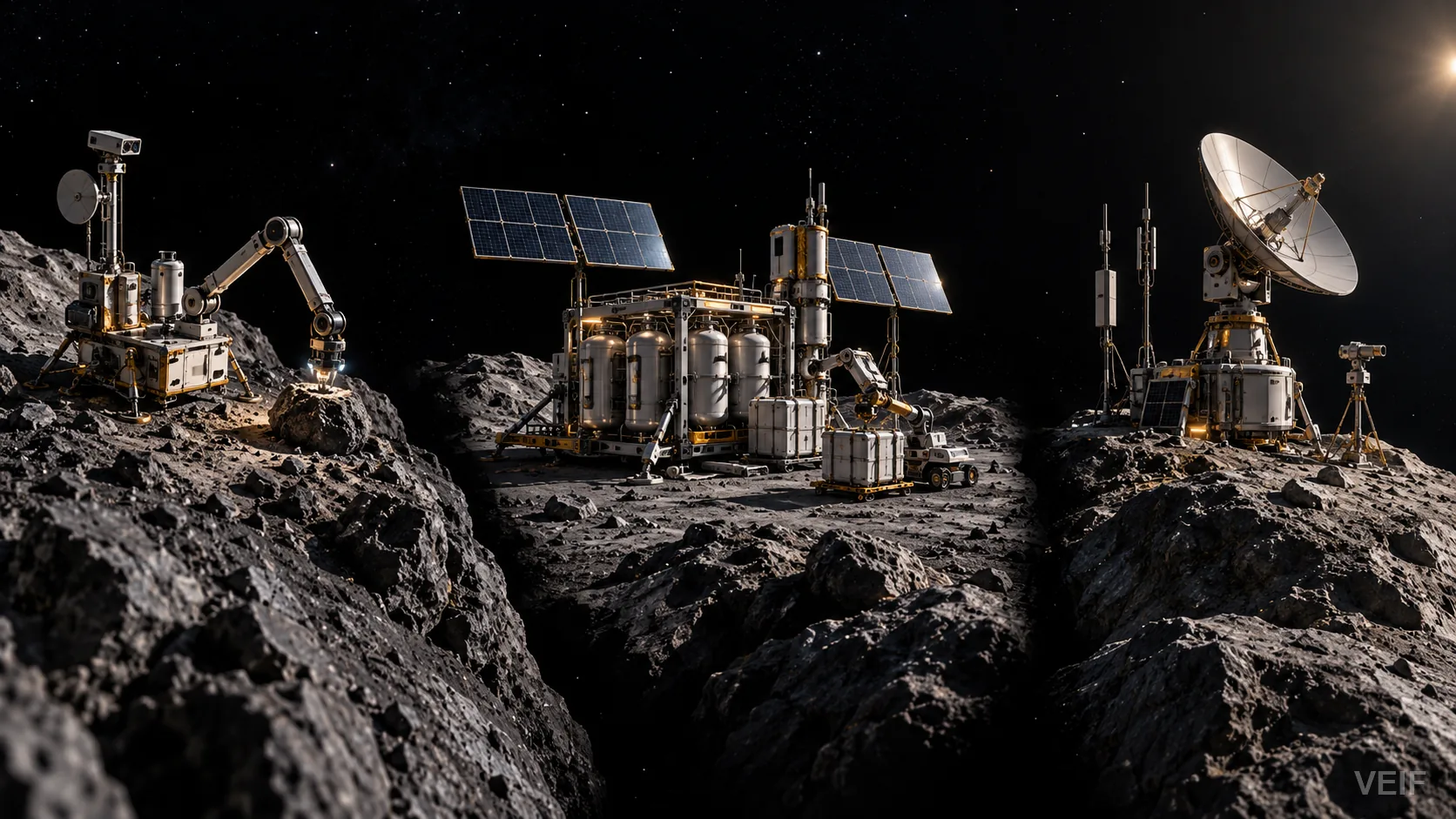
Data, material processing and relay are candidate services; demand and alternative platforms determine viability. Artistic concept.
VII. Who Bears the Cost, and Who Receives the Return?
This is the decisive question in moving from a speculative image to a real occupation.
On Earth, a pastoral business can sell meat, wool, or services, measuring income and expenditure in relatively developed markets.
In space, the operator must pay not only for equipment but also for delivery to the target trajectory, deployment, communications, fault response, and continuing supply.
A commonplace spare part can become extraordinarily expensive when delivery depends on transport windows and a long journey.
An apparently resource-rich project is therefore not necessarily commercially valuable. Mineral abundance, recoverability, transport cost, and market price are distinct issues.
A concise test for a supposed celestial pasture is:
A necessary condition for sustained operations: identifiable payers must fund deployment, operation, maintenance, asset renewal, financing and risk arrangements, and eventual exit or disposal, while keeping cash available during actual operations. Commercial projects must be compared with alternative suppliers and capital returns; public missions must be compared with alternative ways of achieving their objectives within budget.
Scientific and public value can explain why funding is worthwhile, but cannot substitute for funding itself. Research contracts, budget appropriations, and commercial orders have different payment arrangements. Expected future revenue cannot automatically bridge a cash shortage before the next supply delivery.
Differences among bodies, trajectories, transport methods, and technology maturity can be substantial. No universal cost per tonne or future profit margin can replace a project-specific assessment.
Three successive conditions can nevertheless be stated.
First, useful: does the service meet a real need?
Second, worthwhile: does it offer sufficient economic or mission advantage over other approaches?
Third, sustainable: have failure, repair, asset renewal, and the operating cycle been included?
Consider a specific but hypothetical case. A research institution hires a specialist team to maintain observation and sampling facilities on an asteroid. It buys validated data, equipment-condition reports, and task response over an agreed period, rather than an unproven mineral deposit.
The team receives operating funds under contract and bears the agreed costs of scheduling and maintenance. Transport, communications, and major replacements may be procured separately by the client or included in the service price, but cannot disappear from the total cost. Equipment availability, useful data delivered, anomaly response, and safety records indicate whether delivery meets the agreement.
If a unit fails, the team compares using a backup, waiting for supplies, reducing the task, and leaving the site. If the client does not renew the contract, potential value in the facility will not pay the team's bills. Only when renewal prospects, maintenance obligations, and available funding support one another can a short project become continuing professional work.
The first viable arrangement may therefore be a large institution paying teams to manage several facilities, rather than one asteroid supporting one household.
That does not diminish the significance of the planetary shepherd.
Many professions first develop within large organizations. Smaller operating units may become possible as tools, supply chains, and markets mature.
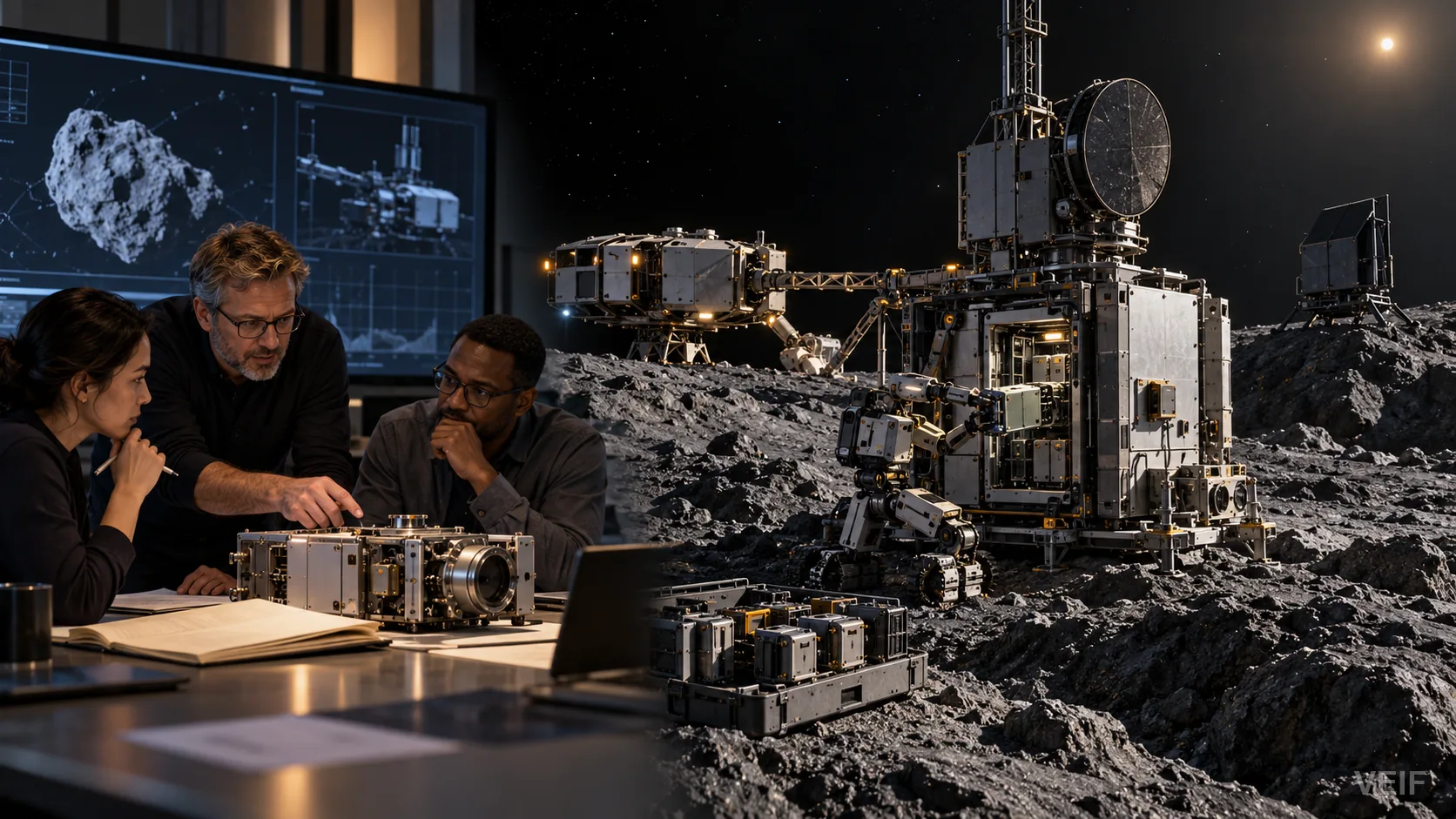
A payer buys agreed deliverables; supply, maintenance, renewal and exit still have to be funded. Artistic concept.
VIII. From Large Organizations to Specialist Teams and Individuals
The first planetary shepherd need not be a billionaire owning an entire asteroid.
They might be a space-facility operations engineer, a robot-fleet manager, a prospecting project lead, or an independent contractor responsible for several celestial worksites.
Initially, entry may demand extensive training and organizational support for authorization and supervision, launch access, insurance arrangements, technical assistance, and legal support.
Specialization might change those barriers. Standard services can reduce engineering complexity without necessarily reducing capital requirements, licensing obligations, or liability. Activity may remain concentrated in a few large organizations for a long time. Creating specialist jobs requires fewer conditions than enabling everyone to become an independent entrepreneur.
If transport, communications, mapping, robot maintenance, and mission control become standardized services, small teams would not have to build every system from scratch. They could purchase operating capabilities somewhat as firms now purchase cloud computing, warehousing, and logistics.
This does not make operating on an asteroid as simple as opening an online shop. It suggests that public infrastructure and specialization might reduce the complexity each operator must bear alone.
Governance remains essential.
Article II of the 1967 Outer Space Treaty prohibits national appropriation of outer space and celestial bodies by sovereignty claims, use, occupation, or other means. Article VI requires authorization and continuing supervision of nongovernmental space activities by the appropriate state.[4]
Operating facilities, using resources, holding rights in space objects, and claiming territory on a celestial body must therefore be distinguished. The treaty does not supply a complete, uniform commercial regime for extraction, trade, and operating-area arrangements. Article II alone cannot establish an unrestricted individual right to mine. “My asteroid,” in this scenario, is primarily an expression of working attachment or belonging, rather than an established title to a celestial body.
Article VII addresses international liability of the relevant launching states, while Article IX addresses due regard for other states' interests, harmful contamination, and potentially harmful interference.[4] Projects must also assign authority and responsibility among operators, contractors, and funders. Internal contracts cannot, by themselves, remove treaty obligations borne by states.
Who pays for damage, how conflicts and data rights are handled, how contamination is controlled, and who deals with facilities after failure all affect the profession's development. These questions belong within applicable authorization, supervision, and contractual arrangements. Machine autonomy cannot answer them by itself.
The planetary shepherd consequently depends on more than rockets, robotics, and AI. It also depends on arrangements that make long-term operations transparent and accountable.
Technology gives individuals the capacity to participate; industry provides opportunities; institutions can make participation a durable and predictable profession.
IX. A Profession Not Yet Established, but Worth Imagining Carefully
The planetary shepherd depends on at least three connected changes.
First, existing capabilities for long-term space operations must support stable, purchasable services around celestial worksites.
Second, AI and autonomous robotics must turn much on-site labor into coordinated tasks, extending individual operating reach beyond physical presence.
Third, infrastructure, payment relationships, and legal arrangements must enable specialist teams to carry continuing responsibility without building an entire industrial system independently.
Until those conditions are met, the planetary shepherd remains a hypothesis about a future profession.
It may begin as a remote operations role rather than long-term asteroid residence. Its operating object may be one facility, one worksite, or equipment in different orbits, rather than exclusive possession of a celestial body.
In many settings, entirely robotic on-site systems may remain the best option.
That does not prevent us from recognizing the idea's deeper significance.
From handling tools directly, to managing large machines, to operating distant facilities through autonomous systems, the continuing change is not in the human body's abilities. It is in the tools, knowledge, and organization a person can mobilize.
An old shepherd had to walk near the flock. A farm operator today can oversee extensive land with automation. A future planetary shepherd might manage distant facilities from Earth.
When some people finally become able to travel there themselves, work in space might also become a quiet, patient, responsible routine, rather than only a feat that attracts the world's attention.
An asteroid would then be more than a photograph transmitted home.
It would have operating logs, equipment awaiting maintenance, discoveries awaiting verification, and someone who has come to know it over time.
Perhaps this is where the word “shepherd” fits best.
They do more than develop resources or manage machines.
They establish an enduring working relationship with a distant world.
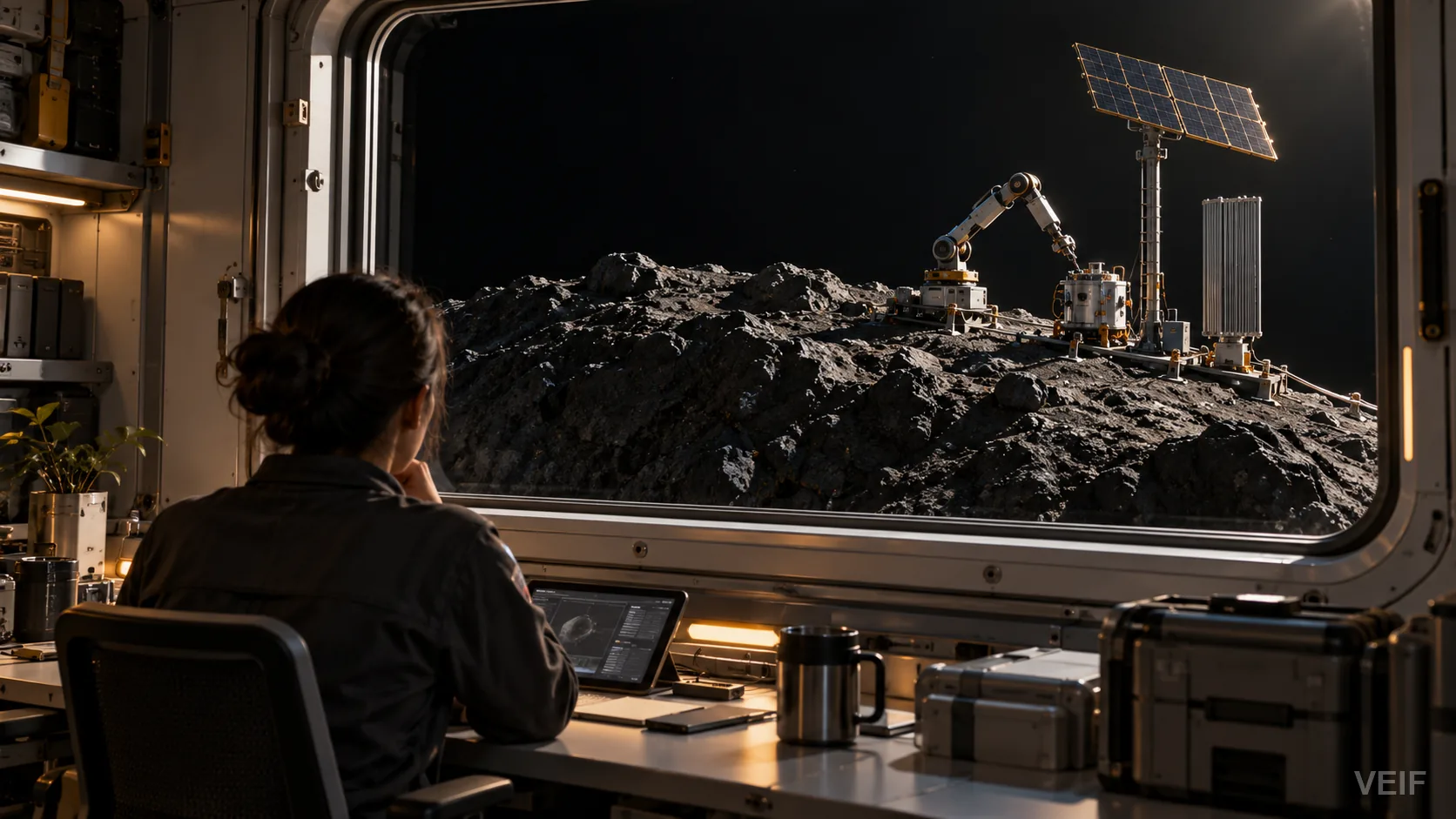
Machines can keep working; going in person remains a choice that needs its own reasons. Artistic concept.
Coda: If Machines Can Work, Why Would People Still Go?
If autonomous machines eventually perform most prospecting, mining, manufacturing, repair, and operational tasks, people on Earth might never need to reach the asteroid themselves.
That could even be preferable in safety, efficiency, and cost.
Yet what is the difference between managing an asteroid remotely and spending part of one's life there?
Engineering and economics can help assess whether a visit is useful. They cannot, alone, answer how people wish to live.
As machines take on more labor, how should we understand human value?
That is the subject of Part III of Planetary Shepherds: Rethinking the Value of Being Human.
References
- NASA, OSIRIS-REx Mission. Supports the Bennu sampling and return years, not the profitability of commercial mining.
- NASA Jet Propulsion Laboratory, CADRE. Supports the design for three-rover cooperation and mapping during roughly one lunar daylight period; it does not establish completion or multiyear reliability.
- NASA, Space Communications: 7 Things You Need to Know. Supports the Mars one-way and round-trip example, not a universal delay for asteroids.
- United Nations Audiovisual Library of International Law, Outer Space Treaty: Introductory Note and Documents, and the Outer Space Treaty text hosted by McGill University's Institute of Air and Space Law. Relevant to Articles II, VI, VII, and IX.
- NASA, Surprise – Again! Asteroid Bennu Reveals its Surface is Like a Plastic Ball Pit. Supports the unexpectedly loose surface and deeper penetration during sampling, without generalizing to all asteroids.
Read this series · Civilizational Frontiers · Planetary Shepherds
- Planetary Shepherds 1: An Imprint Buried Deep in Human Memory
- Planetary Shepherds 2: A New Profession in the Spacefaring Age
- Planetary Shepherds 3: Rethinking Our Value as Human Beings