Planetary Shepherds 1: An Imprint Buried Deep in Human Memory
Planetary Shepherds Trilogy · Part I
From ancient celestial myth to the next frontier of human civilization
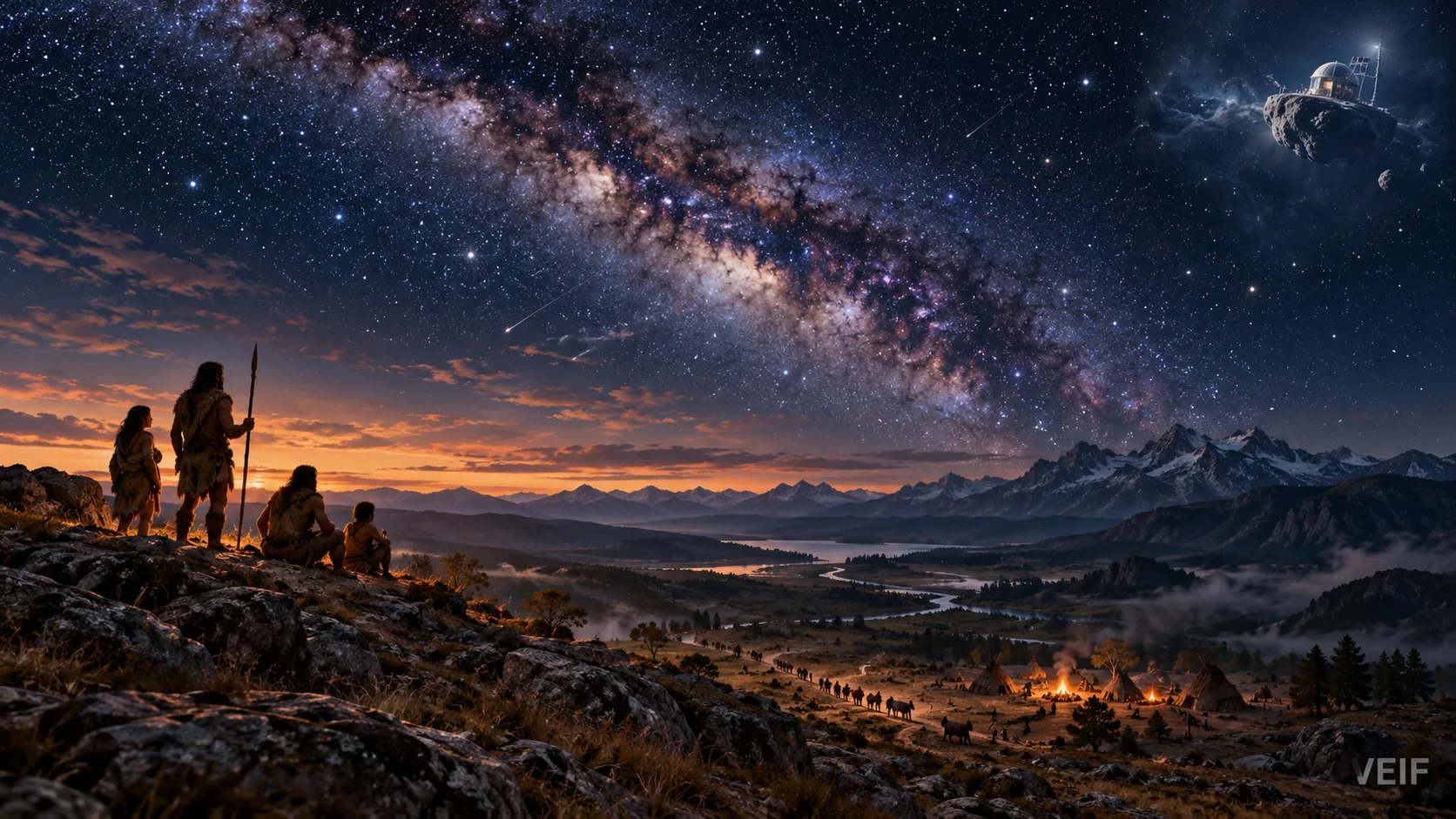
Looking upward brings distant worlds into imagination; tools make involvement possible. Artistic concept.
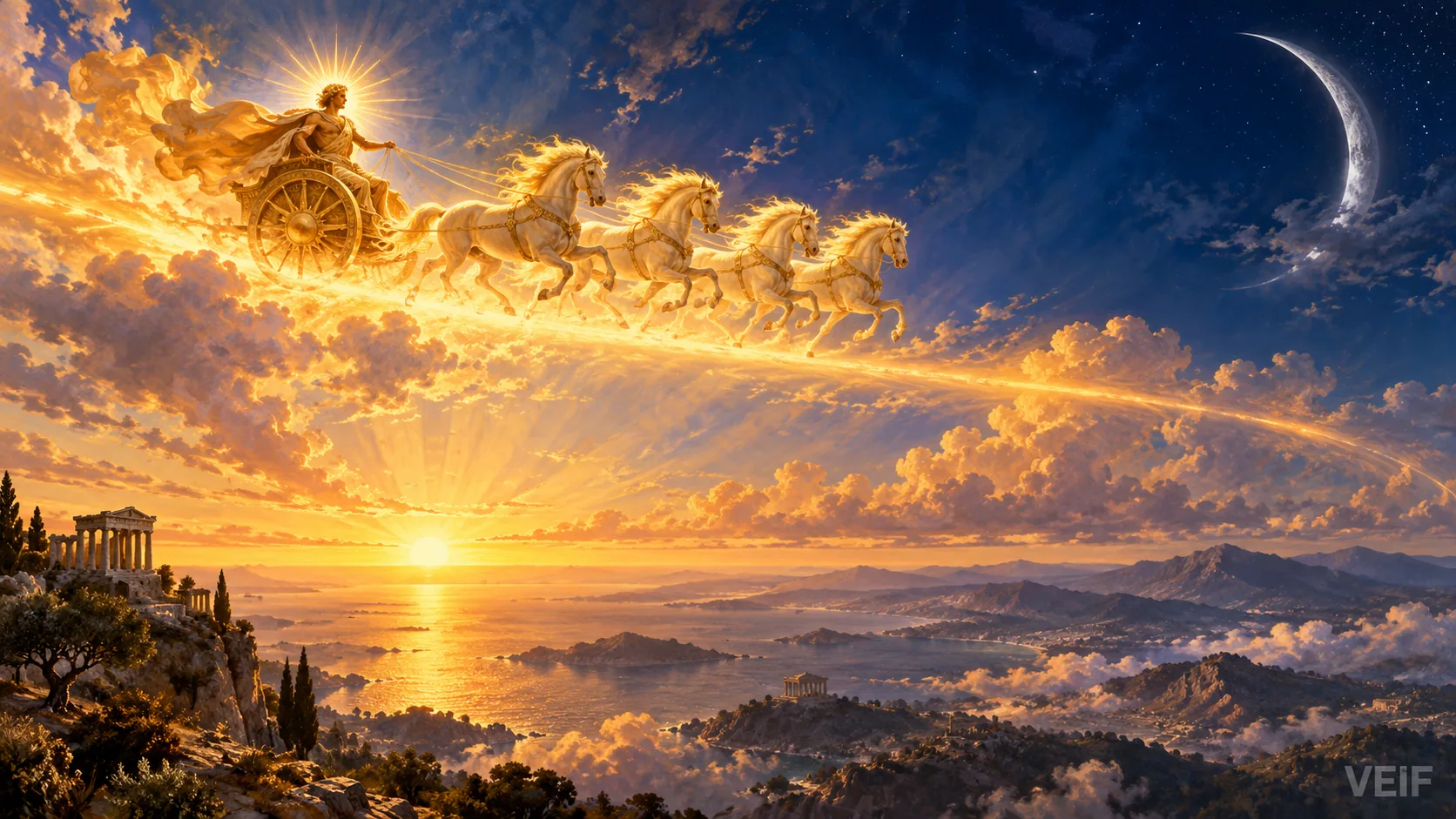
The chariot of Helios: celestial motion and duty in myth. Artistic concept.
I. Helios and the Pasture of the Sun
In ancient Greek imagination, the heavens were never merely an empty backdrop.
The Sun itself was personified. Helios crossed the sky each day in a radiant chariot, drawing the rhythm of time across the world. The Moon, too, was given a keeper in Selene, who traveled through the night in her own celestial course.
In these myths, the heavenly bodies were not distant lumps of matter suspended in an indifferent universe. They were living presences within an ordered cosmos—beings with roles, motion, and meaning.
That is what makes such stories worth revisiting.
Ancient people did not know stars and planets in the modern astronomical sense, nor did they propose anything like real interplanetary settlement or asteroid management. To read Helios or Selene as early “shepherds of the heavens” is a modern literary interpretation, not an ancient scientific idea.
Yet the interpretation itself is revealing.
Why did human beings, so early in civilization, begin assigning personality, duty, and narrative life to the distant lights above them?
Perhaps because from the first moment human beings looked up at the night sky, they were never satisfied merely to observe it.
We wanted to know the stars, to name them, to explain their motion, and to weave them into stories.
And then, in imagination, to move closer to them.
Thousands of years later, when we are already able to send spacecraft to asteroids and return samples of rock to Earth, these ancient images acquire an unexpected new meaning:
what was once tended only by gods is gradually entering the realm of human technical reach.
Naming the stars does not mean that humanity is destined to reach them. It does, however, reveal a recurring tendency: we draw unfamiliar worlds into our understanding; when our tools permit, that understanding may in turn lead to action and sustained involvement.
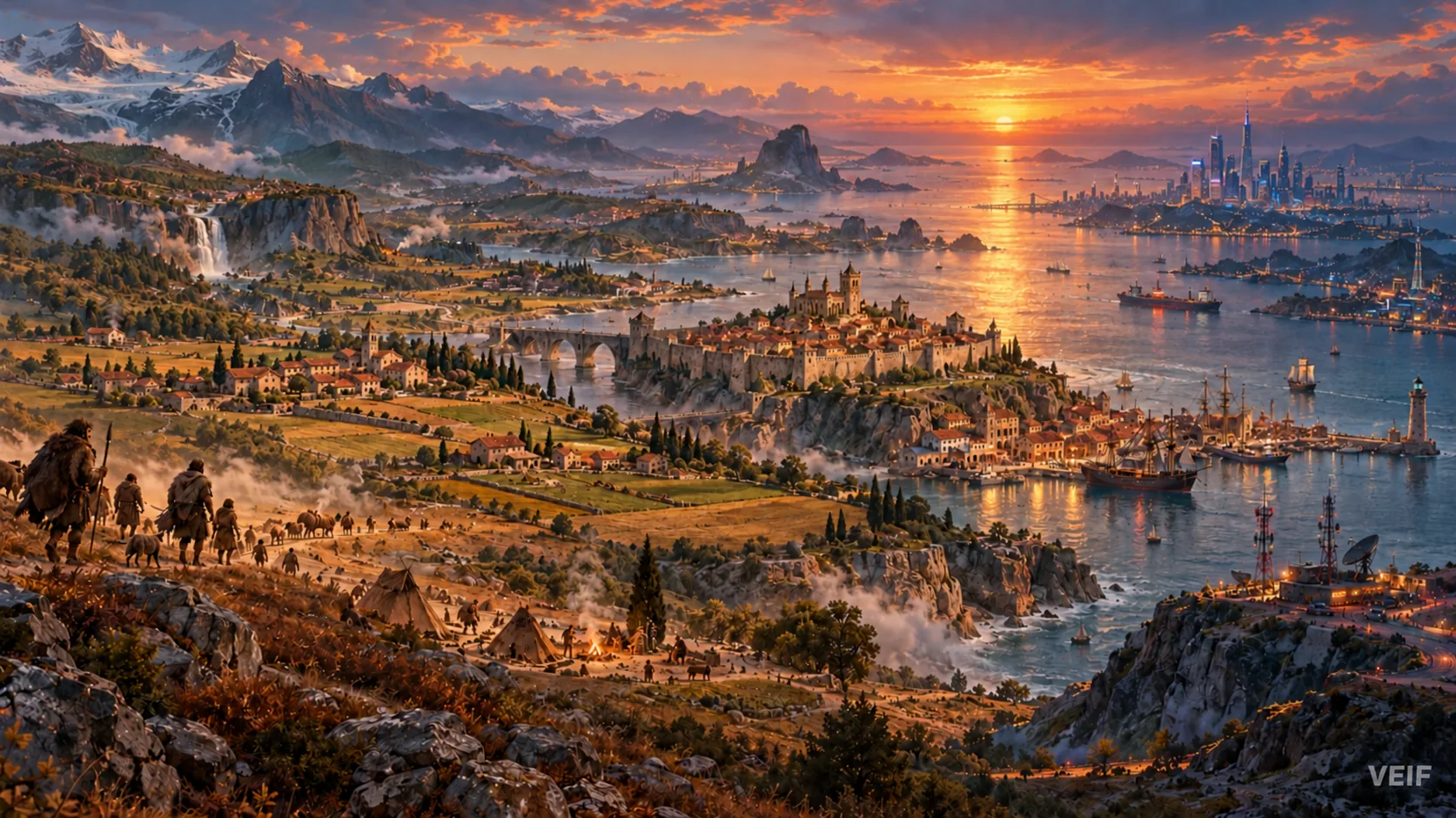
Knowledge, tools and cooperation reshape the boundaries of life along many paths. Artistic concept.
II. From Caves to Continents: Humanity Has Never Stopped Expanding Its World
The history of human civilization is also a history of repeatedly redefining the scale of habitable and manageable space.
For prehistoric people, places of shelter, sources of food, and routes of migration formed the environments on which life directly depended. This world was not confined to a single cave or patch of woodland; its boundaries depended on available knowledge, tools, and ways of working together.
As tools improved, knowledge accumulated, and social organization became more complex, human beings gradually learned to manage larger and more distant spaces.
From caves to villages, from fields to city-states, from cities to nations, from coastal sailing to ocean crossing.
This was not merely an increase in area.
Behind every expansion of space stood a corresponding change in organizational ability, production methods, and systems of knowledge.
Agriculture enabled humanity to reshape and manage land over long periods. Navigation connected distant continents. The Industrial Revolution gave human societies unprecedented power to harness energy, transport materials, and organize production at scale.
Information technology transformed the meaning of space yet again.
A modern person can sit in one room and, through communication networks, manage a factory thousands of miles away, operate distant equipment, or coordinate assets spread across the globe.
The body remains in one place, yet effective action extends far beyond where the body can physically go.
Civilizational expansion, then, is not merely the extension of footsteps. It is the expansion of the world that human beings can meaningfully understand, control, reshape, and manage.
That said, we should not conclude that humanity only expands.
Human beings also long to settle, depend on familiar environments, and often stop migrating because of risk, resource limits, or social conditions.
The history of civilization has never been a straight line of outward advance. It includes pauses, reversals, conflicts, and costs, often accompanied by damage to other peoples and to the natural world.
Yet across the long sweep of history, one pattern appears again and again:
when knowledge and tools open a new sphere of activity, human societies tend to enter it and gradually explore how life and production might be carried out there.
If this is one of the recurrent tendencies of civilization, then the cosmos may be its next frontier.
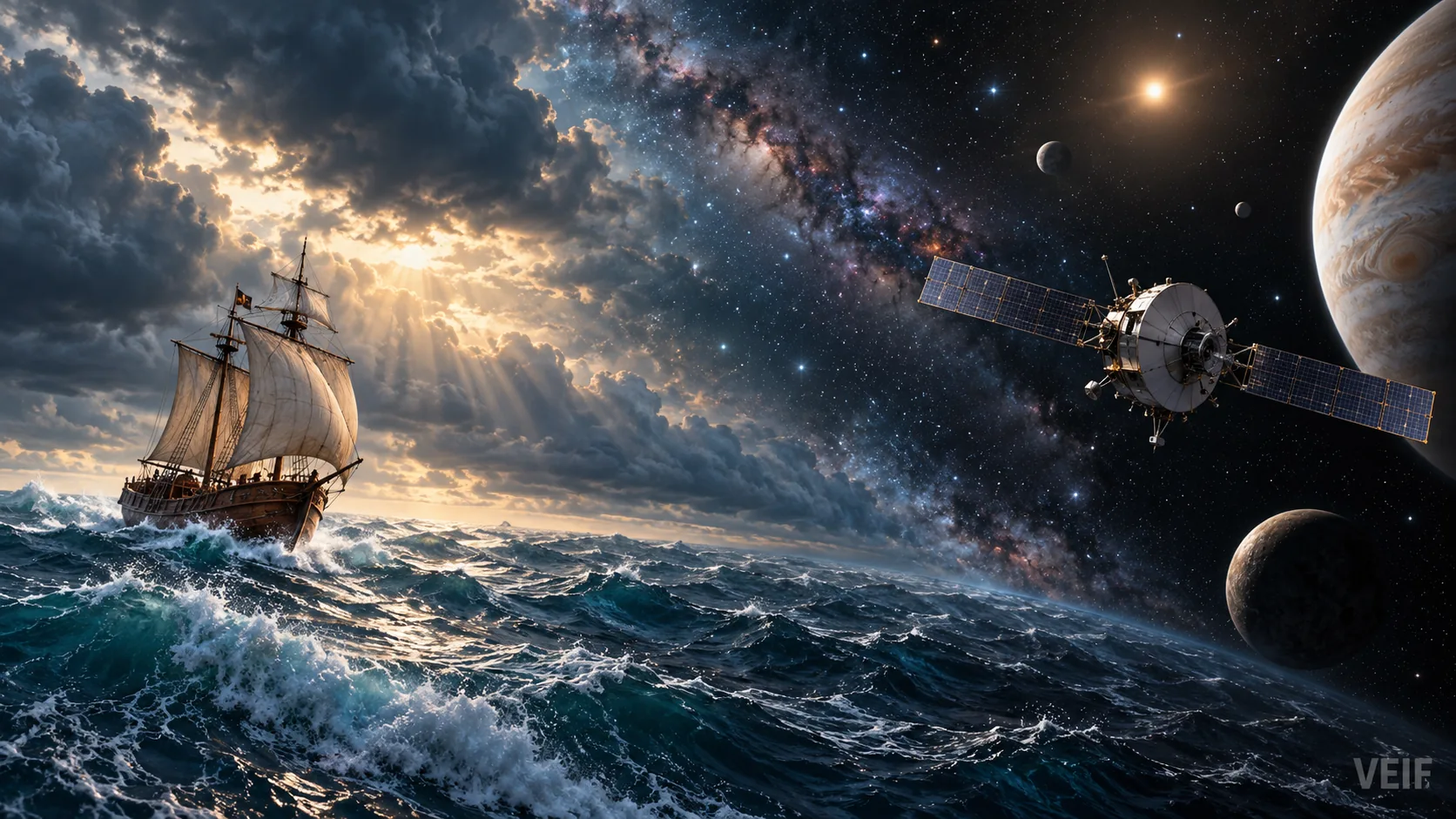
Oceans and interplanetary space: journeys with different conditions and costs. Artistic concept.
III. Has the Age of Exploration Ended?
In human history, the Age of Exploration occupies a special place.
Before it, vast geographic separations divided the continents. The seas both nourished human life and limited human movement.
Advances in shipbuilding, navigation, astronomy, and seafaring knowledge gradually transformed the ocean from a barrier into a corridor of connection.
The earliest voyagers may have been searching for trade routes, wealth, and knowledge.
But once navigation became repeatable, its consequences reached far beyond those original motives.
Ports flourished, trade networks expanded, populations moved, and new industries and forms of organization emerged.
Places that had once seemed remote were gradually absorbed into everyday economic and social life.
Of course, the Age of Exploration also brought colonial expansion, enslavement, war, and ecological damage. For those already living in those lands, the so-called “new worlds” were not empty spaces waiting to be claimed.
This history offers an important warning: technology may give civilization the ability to reach new spaces, but it does not automatically give anyone moral legitimacy to possess them.
Today, humanity faces another ocean.
It has no water, no shoreline, and no traditional sea lanes.
It is interplanetary space.
Once, the sea separated continents; now, immense distances, harsh conditions, and hostile environments confine human beings largely to the vicinity of Earth.
Spacecraft are the rough equivalent of the first ocean-going vessels. Orbital facilities may become the new ports. Systems of energy, communication, transport, and maintenance may form the infrastructure network of a future spacefaring civilization.
And yet this new expansion of the frontier differs from the maritime age in a fundamental way.
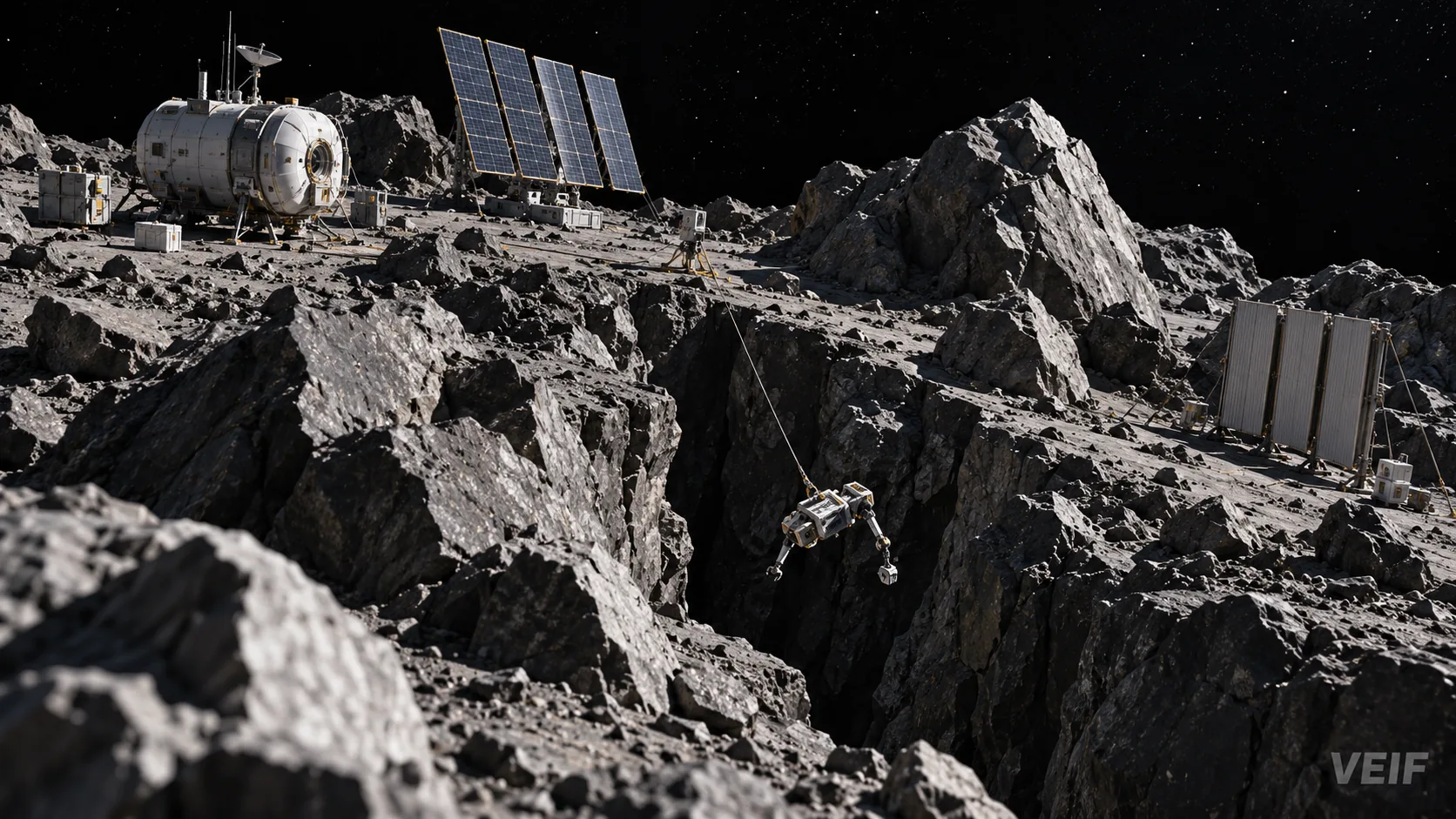
A new sphere of activity requires new conditions for work. Artistic concept.
IV. The Next New World
The continents of Earth, however distant from one another, still share broadly similar natural conditions.
People can breathe the air, rely on gravity, seek water, and build systems of production around sunlight and land.
Even in harsh conditions, there remains a common physical basis for life.
The cosmos is entirely different.
An asteroid may offer no breathable atmosphere and no gravity suitable for long-term human life. Vacuum, radiation, extreme temperatures, and isolation make it impossible simply to reproduce Earthly ways of living.
And yet, from another angle, such extreme conditions may also offer opportunities that are difficult to obtain on Earth.
Vacuum need not always be artificially created and maintained. Microgravity may alter the behavior of certain materials, fluids, and manufacturing processes. Remote orbital positions may hold special value for observation or infrastructure.
Of course, space is not automatically a cheap, stable, or easy industrial environment. Any potential advantage must be weighed against the costs of energy, transport, heat management, radiation protection, and equipment maintenance.
The truly important shift is this:
humanity is no longer merely entering previously unreached regions of Earth; it is beginning to enter spaces of production and life governed by different physical conditions.
This marks a move from the expansion of geographic territory to the expansion of usable physical environments.
On Earth, human beings have always reshaped their surroundings, but can usually draw on an existing atmosphere, water cycle, and ecosystems.
In space, many activities—especially long-duration human habitation—require life-support environments to be built from the outset and continuously maintained.
That makes expansion into the cosmos both far more difficult and potentially far more transformative.
What stands before us is not another broad landmass, but a range of celestial bodies with differing resources, orbital properties, gravity, and environmental characteristics.
So this is not a new continent in the ordinary historical sense.
But in terms of the changing scale and nature of civilizational activity, it may be something even greater.
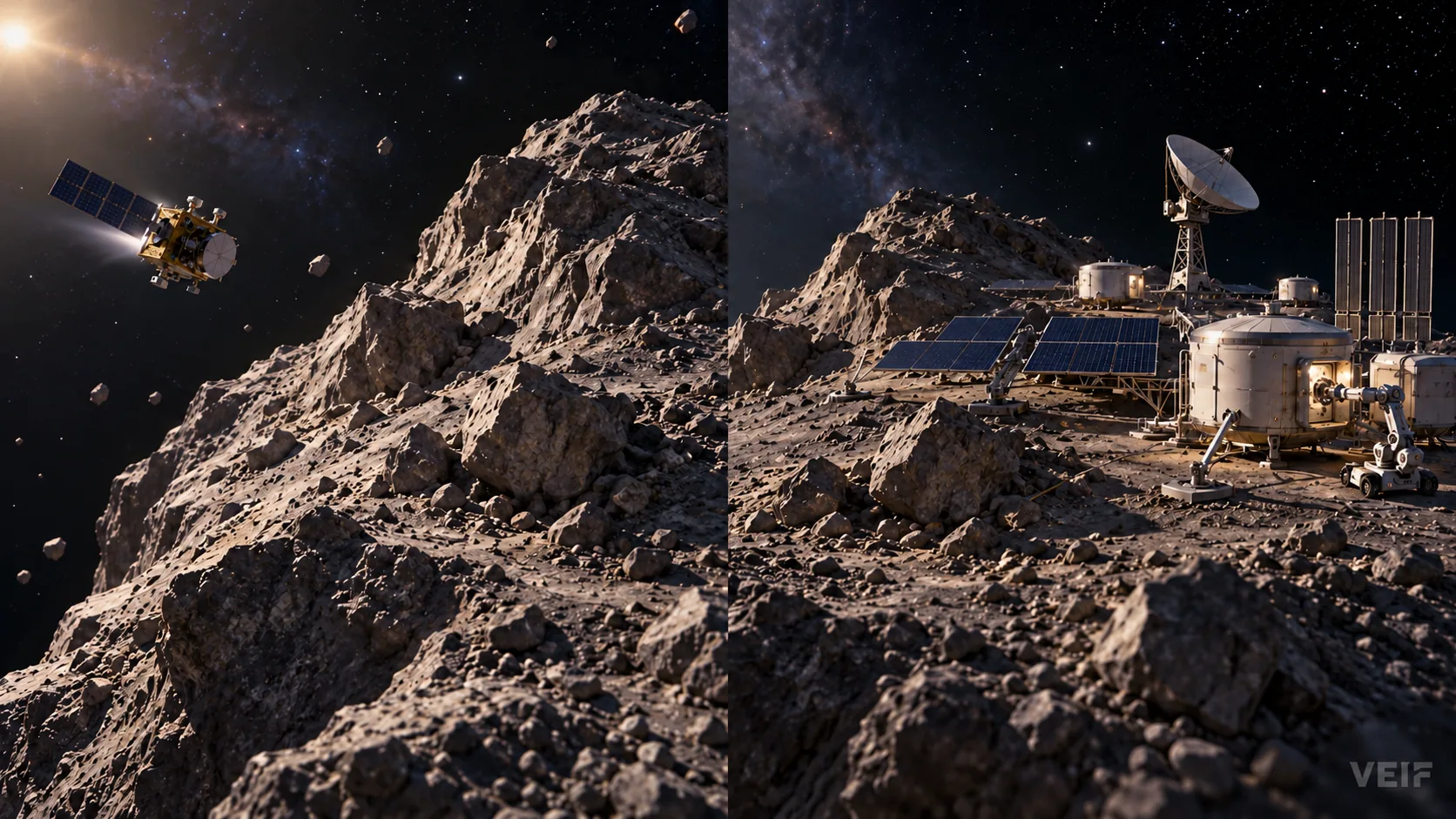
From discovery and understanding to sustained operation, resource allocation and responsibility. Artistic concept.
V. From Explorers to Operators
Human use of new spaces rarely ends with arrival.
Explorers first observe and record. Then come repeated routes of travel, persistent facilities, and groups of people and institutions devoted to ongoing activity there.
Space exploration may evolve in much the same way.
At first, humanity sent probes to distant bodies simply to gather images, measurements, and scientific knowledge.
Then exploratory missions began to pursue more complex goals.
In 2020, NASA’s OSIRIS-REx spacecraft collected samples from the asteroid Bennu and, in 2023, returned them to Earth.
This was still a scientific mission rather than a commercial resource operation.
But it demonstrated that humanity is already capable of conducting precise proximity operations, observation, and material collection on a specific asteroid across immense distances.
If transport, energy systems, robotics, and space manufacturing continue to advance, some celestial bodies may gradually shift from one-time scientific targets into sites of long-term maintenance and continuous operation.
An asteroid may one day host its own resource prospecting systems, power infrastructure, automated processing equipment, and long-duration observational instruments.
In such a place, activity will no longer end with one voyage or one sample return.
It may continue for years, even decades.
At that point, the nature of space activity changes:
exploration centers on discovery and understanding; operation also requires continuity, resource allocation, and responsibility.
That relationship need not mean ownership of the celestial body itself.
The Outer Space Treaty prohibits national appropriation of outer space and celestial bodies by claims of sovereignty, use, occupation, or any other means. Operating facilities, using resources, and owning a celestial body must be distinguished; specific arrangements for resource use and commercial operations must be considered within the relevant legal frameworks.
But whatever the legal and institutional arrangements, long-term activity will require someone—or some organized group—to plan, maintain, coordinate, and take responsibility.
The sailors of the maritime age gradually gave rise to merchants, captains, port operators, and many other professions.
The explorers of space may likewise give rise to new occupational roles.
One of them, perhaps, may be called the planetary shepherd.
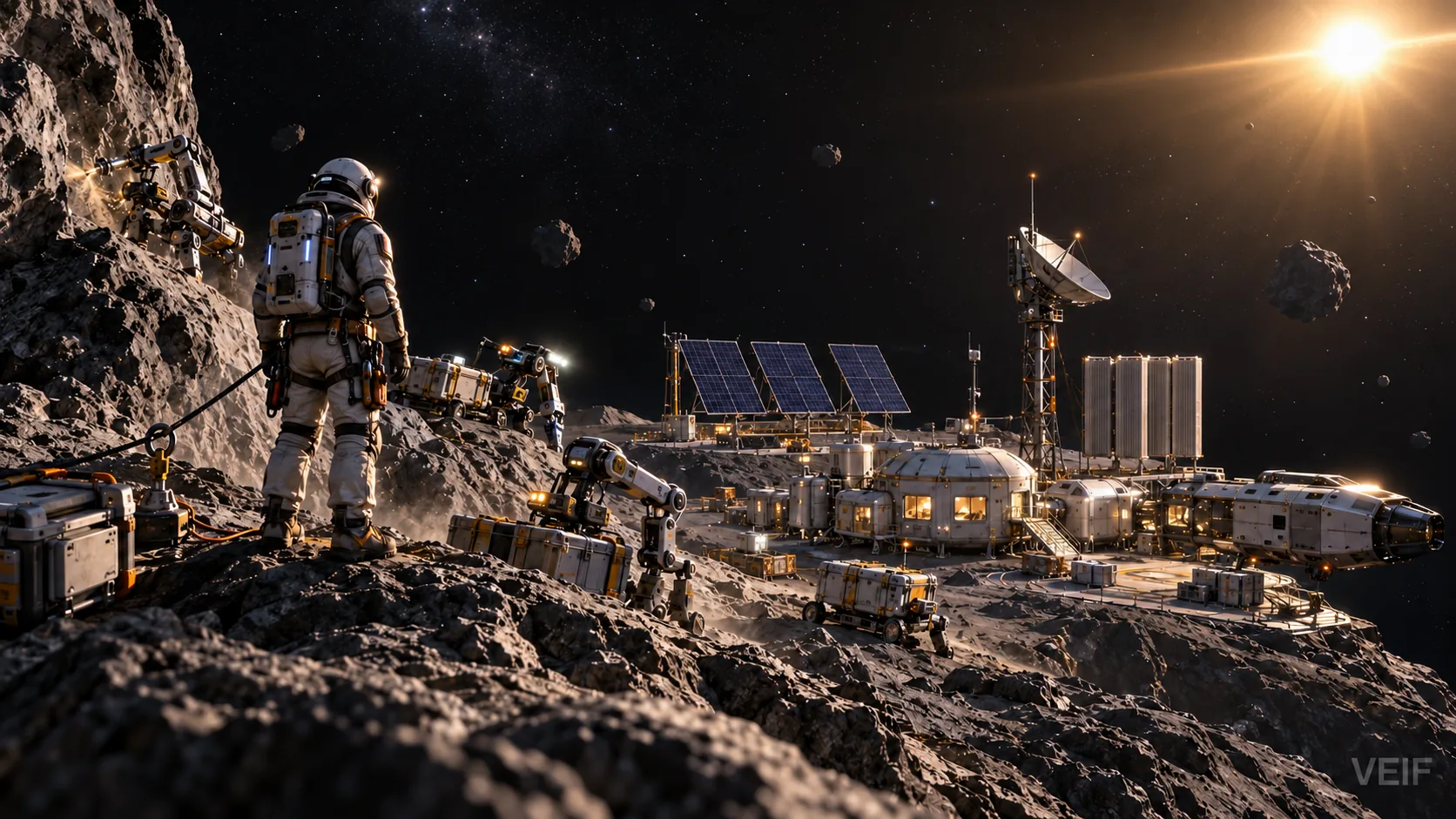
Machines and infrastructure together extend the scale of individual operations. Artistic concept.
VI. From a Pasture to a World
A shepherd is an ancient profession.
For long stretches of human history, shepherds moved with the seasons, grasslands, and water, tending their flocks, reading the weather, and guarding against danger.
Their work was never only about driving animals from one place to another.
It also involved familiarity with the environment, judgment about resources, long-term maintenance, and responsibility for what was being tended.
The planetary shepherd of the future may occupy a similar role.
Only now the flock has become a swarm of autonomous machines, and the pasture a distant asteroid.
Such a person may manage a set of extraction systems, maintain a scientific base, care for an experimental greenhouse, or oversee multiple facilities distributed across different orbits.
They may not need to live there all the time.
In the early stages, such activity is even more likely to be conducted remotely from Earth.
But as infrastructure matures and the technical and economic conditions for long-duration presence change, some people may choose to go in person.
In that era, the object of one person’s management may no longer be merely a shop, a farm, or a factory.
It may be an asteroid.
What matters most here is not that the area under management has suddenly become enormous.
After all, the economic value of an asteroid may not exceed that of a parcel of land on Earth.
The deeper change is that, with intelligent tools, an individual may acquire a scale of action previously available only to large states or industrial institutions.
That individual capacity would still depend on public or commercial infrastructure for transport, energy, communications, and maintenance. Being able to operate on an asteroid does not mean having to build every system needed to reach and support it alone.
The human body has not fundamentally changed.
What has changed is knowledge, tools, and forms of organization.
From stone tools to ploughs, from steam engines to computers, from automation to future autonomous robotics, each leap in tools has had the potential to redefine what an ordinary person can accomplish.
The planetary shepherd symbolizes that expansion of individual operating power onto a cosmic scale.
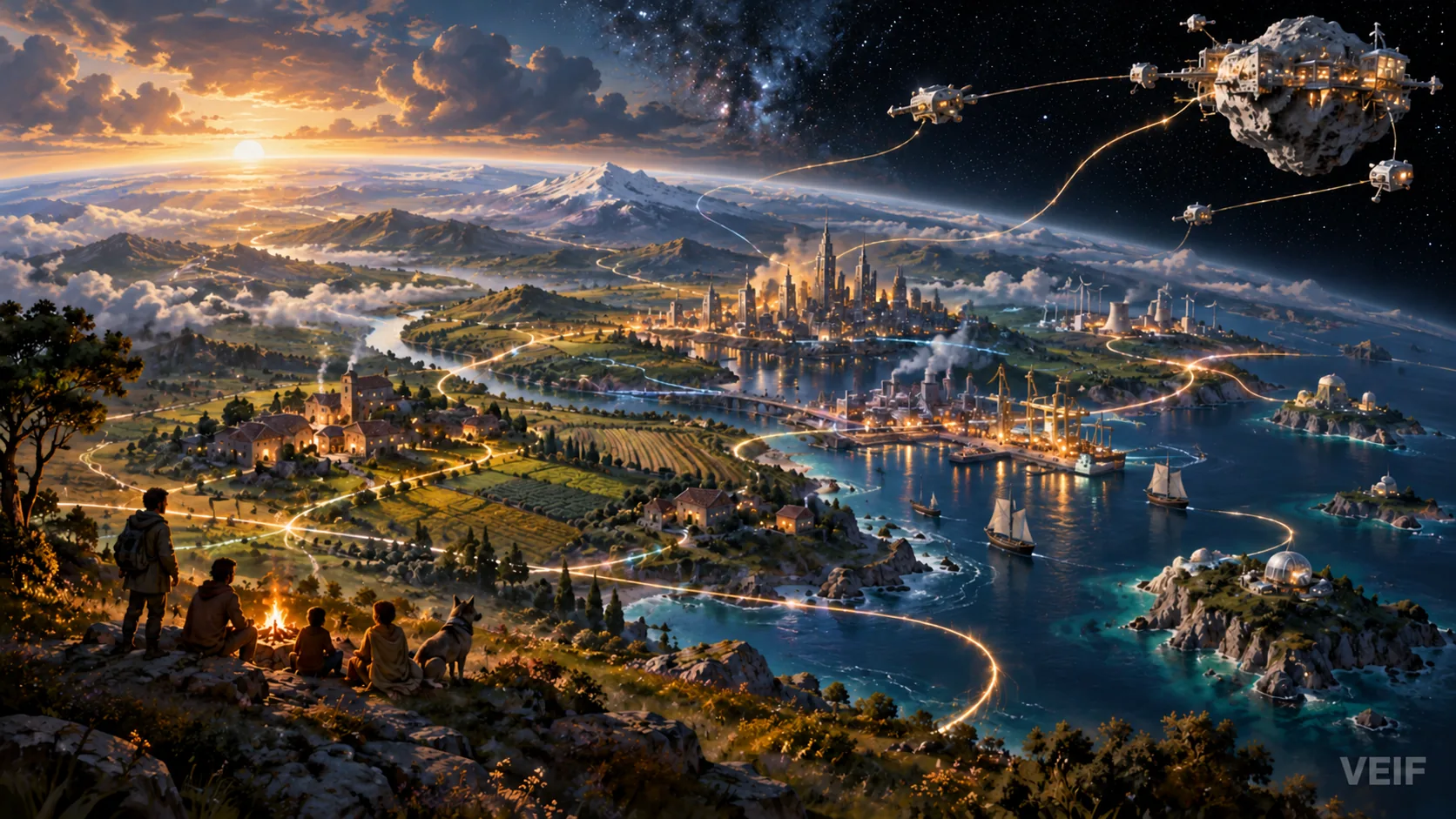
Capabilities open many paths; reaching into space is one possibility. Artistic concept.
VII. Why Civilization Keeps Reaching Farther
What forces might draw humanity toward space?
We cannot prove that a profession such as the planetary shepherd will certainly appear.
Space transport may remain expensive for a long time. Deep-space resource development may fail to offer sufficient economic advantage. Many tasks may be performed entirely by automated systems.
Human beings may continue, for a very long time, to live primarily on Earth.
Uncertainty about this particular future does not prevent us from examining the long-term forces that encourage civilization to reach outward.
Human beings continually seek knowledge, energy, resources, and resilience. We also continually try to enlarge our effective sphere of action through tools.
At the same time, human societies on Earth have developed complex systems of science, engineering, finance, and industry, making long-duration activity beyond Earth’s boundaries a serious subject of practical inquiry.
Once celestial bodies cease to be merely objects of observation and begin to possess usable resource, environmental, or positional value, sustained engagement with them may become a new form of economic and social activity.
This is a conditional path of civilizational development, not an unalterable historical destiny.
But it does possess an internal logic worth taking seriously:
the greater civilization’s capabilities, the larger the world it can participate in; and the larger the world it can participate in, the more likely its forms of activity are to diversify.
Planetary shepherds therefore represent more than a prediction about a future occupation.
They represent the possibility of a civilizational transition:
that some parts of the cosmos may be transformed, in human practice, from remote natural objects into places with which humanity maintains ongoing relationships of observation, maintenance, use, and care.
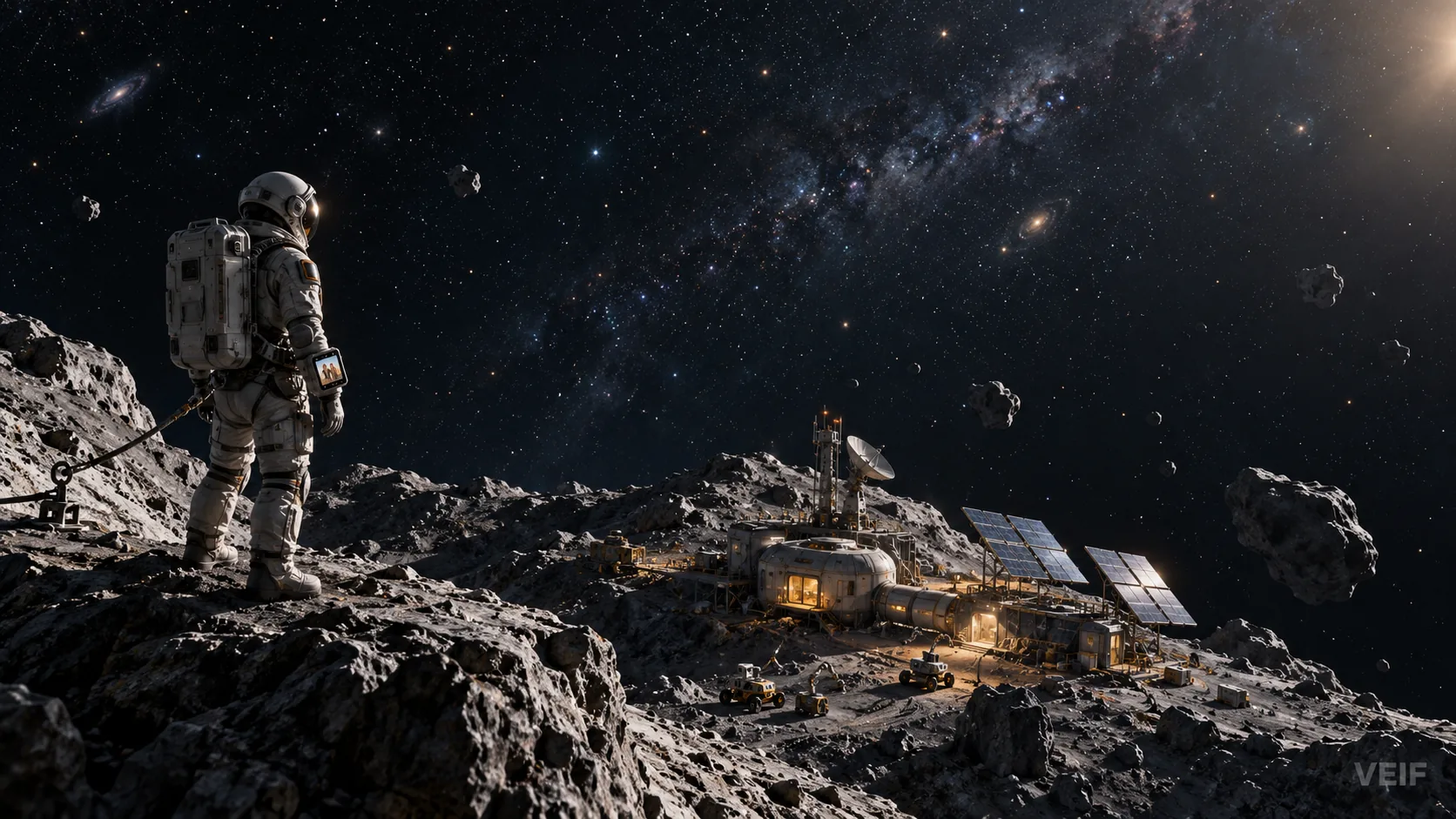
Know the world beneath your feet, care for what you operate, and look farther away. Artistic concept.
VIII. The Stars We Have Not Yet Reached
Let us return, then, to myth.
Helios drove the Sun across the sky. Selene kept her course through the night.
In imagination, the ancients drew the celestial bodies into a world that could be understood, approached, and invested with meaning.
Thousands of years later, we know what the Sun is, and we understand why the Moon changes its shape in the sky.
Science has stripped the heavens of some of their old mystery, but it has also given humanity the power to approach them in truth.
We no longer need to believe that a god drives the Sun in order to explain its motion.
Nor do we need myth in order to imagine ourselves reaching distant bodies.
Today, humanity can already send machines to the Moon, Mars, and asteroids.
One day, an asteroid that is now little more than a catalog number may host its own observatory, power systems, robotic workers, and the people responsible for tending and operating them over the long term.
That person may be a scientist, an engineer, or perhaps a small-scale operator supported by intelligent machines.
But their life and work may nonetheless become bound up with that celestial body in a durable way.
From caves to fields, from islands to continents, and from Earth toward the stars, the scale of the spaces humanity can meaningfully manage may continue to change.
Once, we imagined caretakers of the heavens only in myth.
In the future, we may become them ourselves.
What lies deep in human memory may not be some innate knowledge of interstellar life, but rather a recurring desire to make the distant world knowable, reachable, and intimate.
Ancient shepherds once walked over hills with their flocks and looked up into the night.
Future shepherds may stand on an asteroid and look back at the blue world that gave birth to human civilization.
They will be separated by countless generations.
And yet they may share the same impulse:
To know the world beneath their feet, to care for what has been entrusted to them, and then to look toward something farther away.
Coda: From Civilizational Desire to a Real Profession
Civilizational desire must still be tested against technology, economics, and institutions.
What conditions would allow a distant asteroid to become a place that an ordinary person could operate over the long term?
That will be the subject of Part II of Planetary Shepherds—A New Profession in the Spacefaring Age.
References
- Theoi Project, Helios: https://www.theoi.com/Titan/Helios.html
- Theoi Project, Selene: https://www.theoi.com/Titan/Selene.html
- NASA, OSIRIS-REx Mission: https://science.nasa.gov/mission/osiris-rex/
- Outer Space Treaty (1967), treaty text hosted by the U.S. Department of State: https://2001-2009.state.gov/t/ac/trt/5181.htm?safe=1
Read this series · Civilizational Frontiers · Planetary Shepherds
- Planetary Shepherds 1: An Imprint Buried Deep in Human Memory
- Planetary Shepherds 2: A New Profession in the Spacefaring Age
- Planetary Shepherds 3: Rethinking Our Value as Human Beings