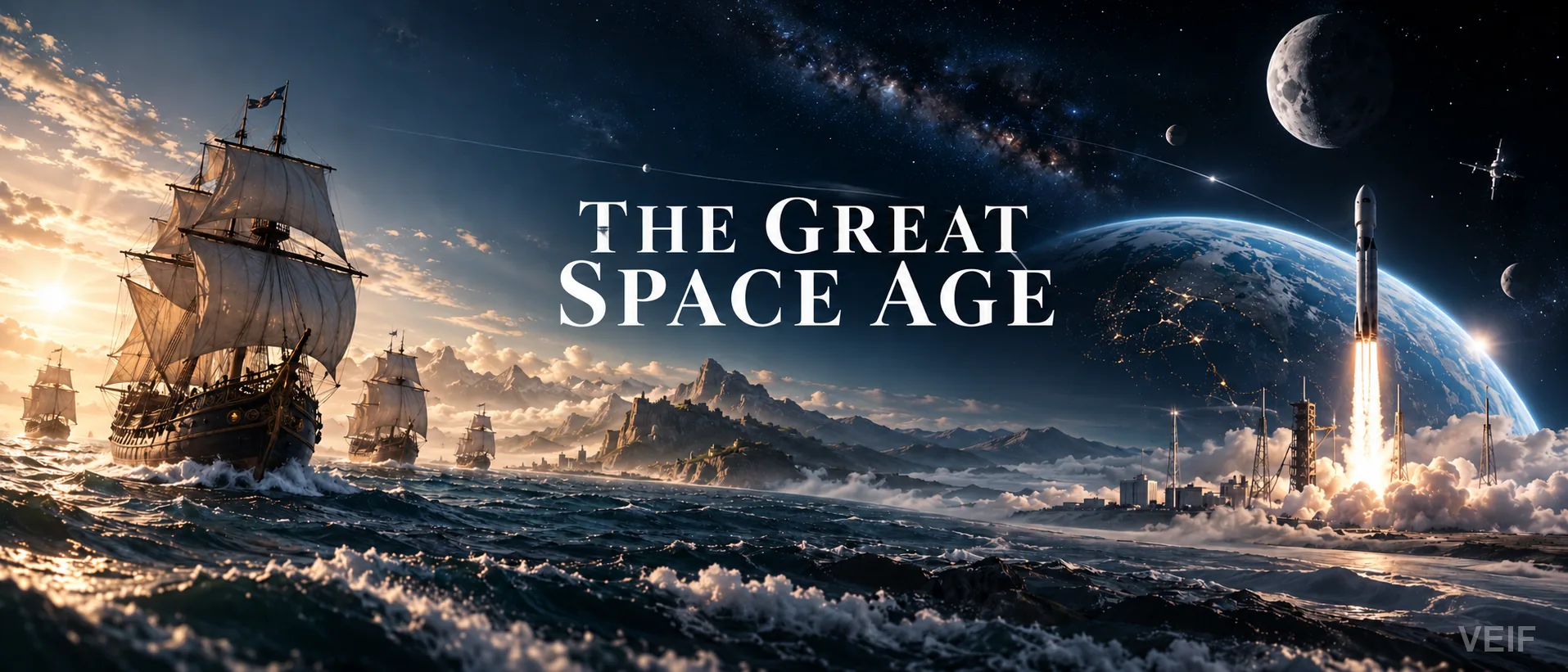
The Great Space Age: Humanity's Second Great Expansion
The Great Space Age · First Overview Essay
From the Age of Exploration to the Great Space Age: After the Prelude, the Era Begins
Twentieth-century space exploration was the great prelude to humanity's departure from Earth. After more than half a century of technological accumulation, strategic adjustment, and experimentation with business models, space activity is gradually evolving from a predominantly state-led exploration effort into economic activity involving governments, enterprises, and capital.
If the Age of Exploration opened the way to a global civilization, the Great Space Age may open the way to an interplanetary one.
Introduction: A Space Age Delayed by Half a Century
On July 20, 1969, Apollo 11 landed on the Moon. Humans stepped onto another celestial body for the first time. Many believed that a new space age had arrived. Lunar bases, orbital cities, and journeys to Mars seemed likely to become realities within a few decades.
History did not follow that imagined course. Human lunar landings stopped after Apollo 17 in 1972. Space activity continued to advance over the following decades, but its focus shifted from the interplanetary expeditions of the public imagination toward practical applications: communications, navigation, weather forecasting, remote sensing, military reconnaissance, and space science.
Enthusiasm faded, but technology did not stand still. Satellites became part of global communications and information systems. Global positioning transformed transportation and logistics. Space stations demonstrated that people could work in orbit for extended periods. Materials science, electronics, automatic control, and computing steadily improved. These developments, less romantic though they appeared, built the technological foundation for another expansion into space.
In the twenty-first century, particularly over roughly the past decade, commercial launch, reusable rockets, low Earth orbit constellations, automated manufacturing, and artificial intelligence have begun to form a mutually reinforcing technological system. Unlike the Cold War period, political and military competition between states is no longer the only driver. Market demand, commercial revenue, industrial specialization, and returns on capital are becoming important forces.
If the mid-twentieth-century space race was a great prelude, humanity may now, after more than half a century of accumulation, stand at the threshold of the Great Space Age itself.
This time, the objective extends beyond reaching space to developing the capacity for a sustained presence, sustained production, and sustained value creation there.
Historical terminology: The early twentieth century laid the foundations of modern rocket theory. The period from the first artificial Earth satellite in 1957 to the Moon landing in 1969 was the concentrated phase of the first wave of space enthusiasm. This article therefore refers to the first space boom of the mid-twentieth century, rather than the early twentieth century.
1. From Ocean Voyages to Spaceflight: The Spatial Logic of Civilization

Concept illustration · Not documentary photography
Throughout history, spatial expansion has been a major force in the evolution of economic structures and technological systems. Ancient civilizations relied on land, rivers, and regional trade networks. From the fifteenth century onward, increasingly capable ocean navigation allowed transoceanic trade, maritime mapping, ports, finance and insurance, and multinational commercial organizations to reinforce one another. The Age of Exploration also involved colonial conquest, enslavement, and resource plunder. Its historical costs must not be overlooked.
Its fundamental effect was to change the geographical boundaries of economic activity. Space technology now offers another opportunity to change those boundaries.
| Age of Exploration | Great Space Age: corresponding industrial functions |
|---|---|
| Ocean-going ships and shipping | Launch vehicles and orbital transportation |
| Nautical charts, lighthouses, and navigation | Remote sensing, navigation, and space situational awareness |
| Ports, shipyards, and supply stations | Orbital stations, maintenance, and refueling |
| Overseas trading networks | Earth–Moon logistics and communications networks |
| Resource development in newly reached territories | Exploration and use of lunar and asteroid resources |
| Overseas processing and production | In-space manufacturing and extraterrestrial industry |
| Commercial companies and state capital | Space enterprises, industrial alliances, and sovereign capital |
An analogy does not make historical repetition inevitable. The ocean naturally supports ships. Space requires active solutions for energy, radiation, thermal control, orbital motion, and life support. The meaningful similarity is this: when transportation overcomes existing geographical constraints, space previously excluded from economic circulation may become a new factor of production.
2. The First Space Boom: Technological Triumph Without a Complete Economic System
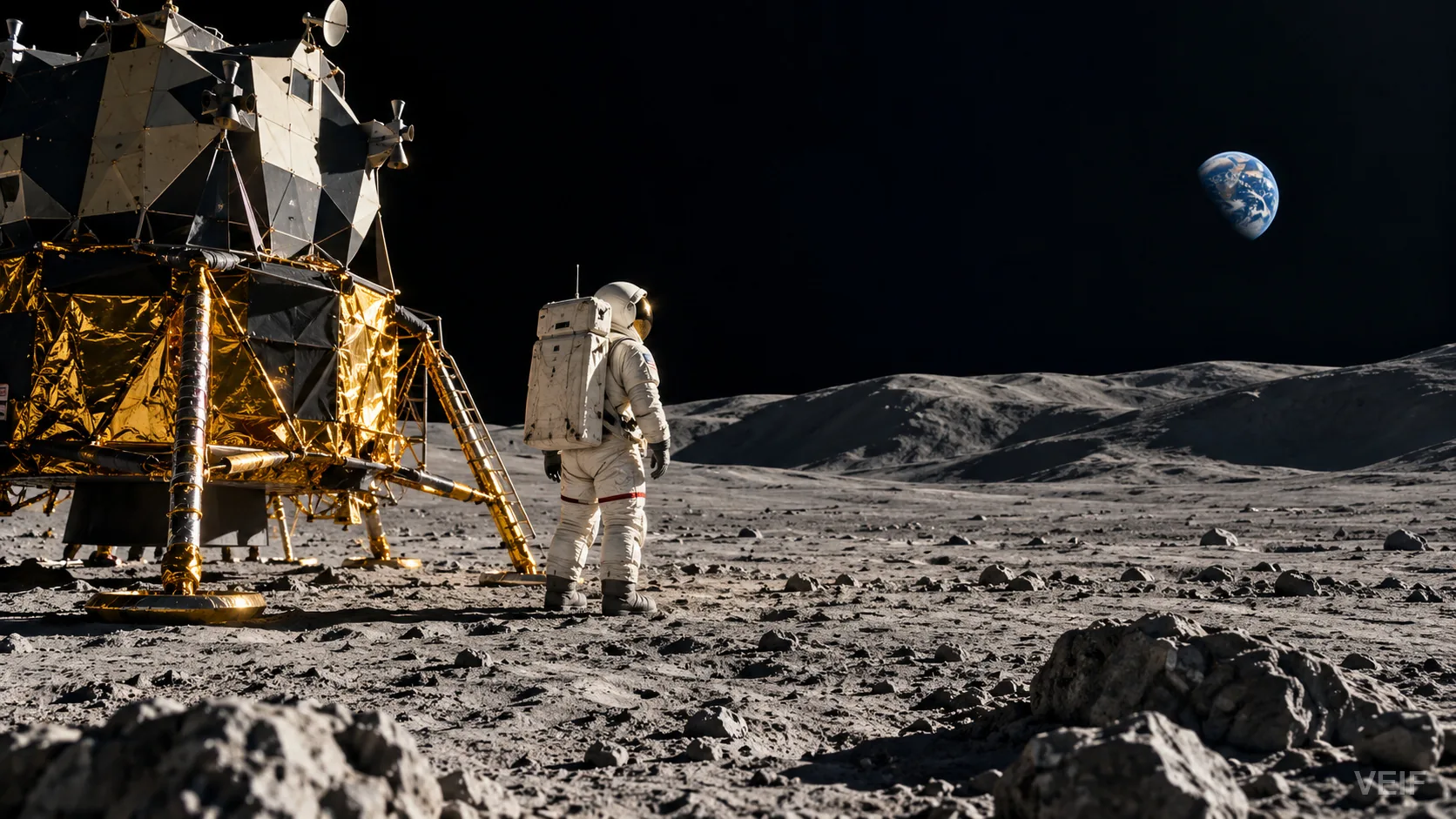
Concept illustration · Not documentary photography
The mid-twentieth-century space race proved that humans could enter space, but did not establish a complete commercial economy to match that capability. Early spaceflight primarily served national strategy. Political and military objectives could justify extremely high costs without requiring commercial revenue to recover investment. Launch costs, reliability, highly customized missions, and a shortage of downstream markets constrained broader space industry development.
This does not mean early spaceflight produced no economic benefits. Satellite communications, weather services, navigation, and remote sensing created real markets and became integrated into Earth's economy. The earliest large-scale value delivered from space came as information and services, rather than minerals or physical goods.
The subsequent period of relative quiet therefore refers to declining public enthusiasm for crewed deep-space expeditions, rather than a halt in space capabilities.
3. The Second Wave: From National Projects to an Industrial Ecosystem
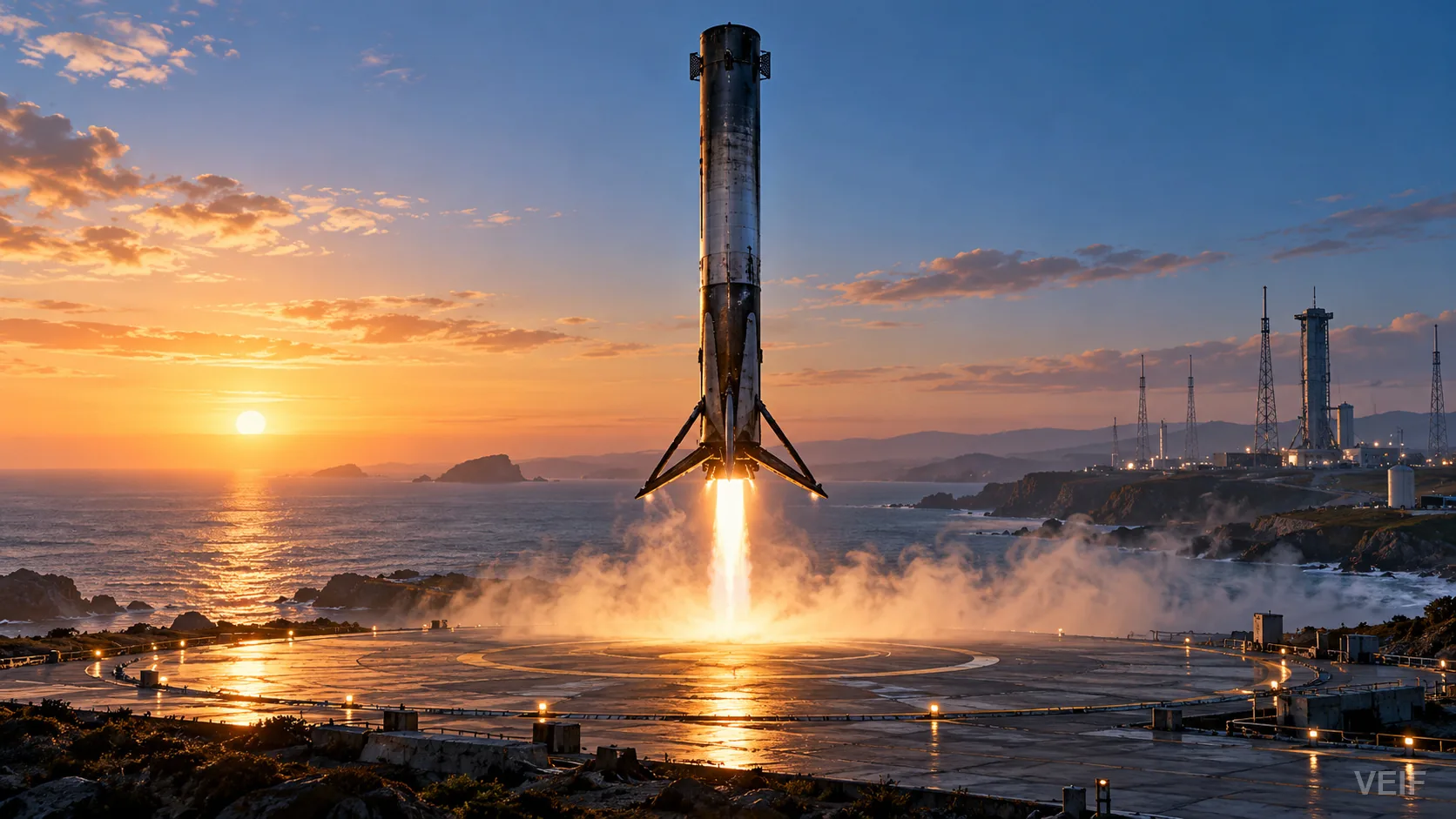
Concept illustration · Not documentary photography
Several changes characterize the new wave. Reusable launch systems are reshaping launch economics. Smaller, more standardized satellites support mass production. AI, robotics, and autonomous control reduce reliance on people for some space operations. Established communications and remote sensing markets provide continuing demand.
A potential industrial flywheel is:
Lower transportation costs and greater capability → expanding commercial applications → growing demand for orbital infrastructure → deeper scale and specialization → further technological iteration.
This is a potential cycle worth studying, rather than a fully validated feedback loop. Its viability depends on real customers, long-term reliability, total costs, and returns on capital. Space activity is gradually evolving from exceptional missions conducted by a few institutions into an industrial ecosystem involving more companies.
4. Space as a Production Environment
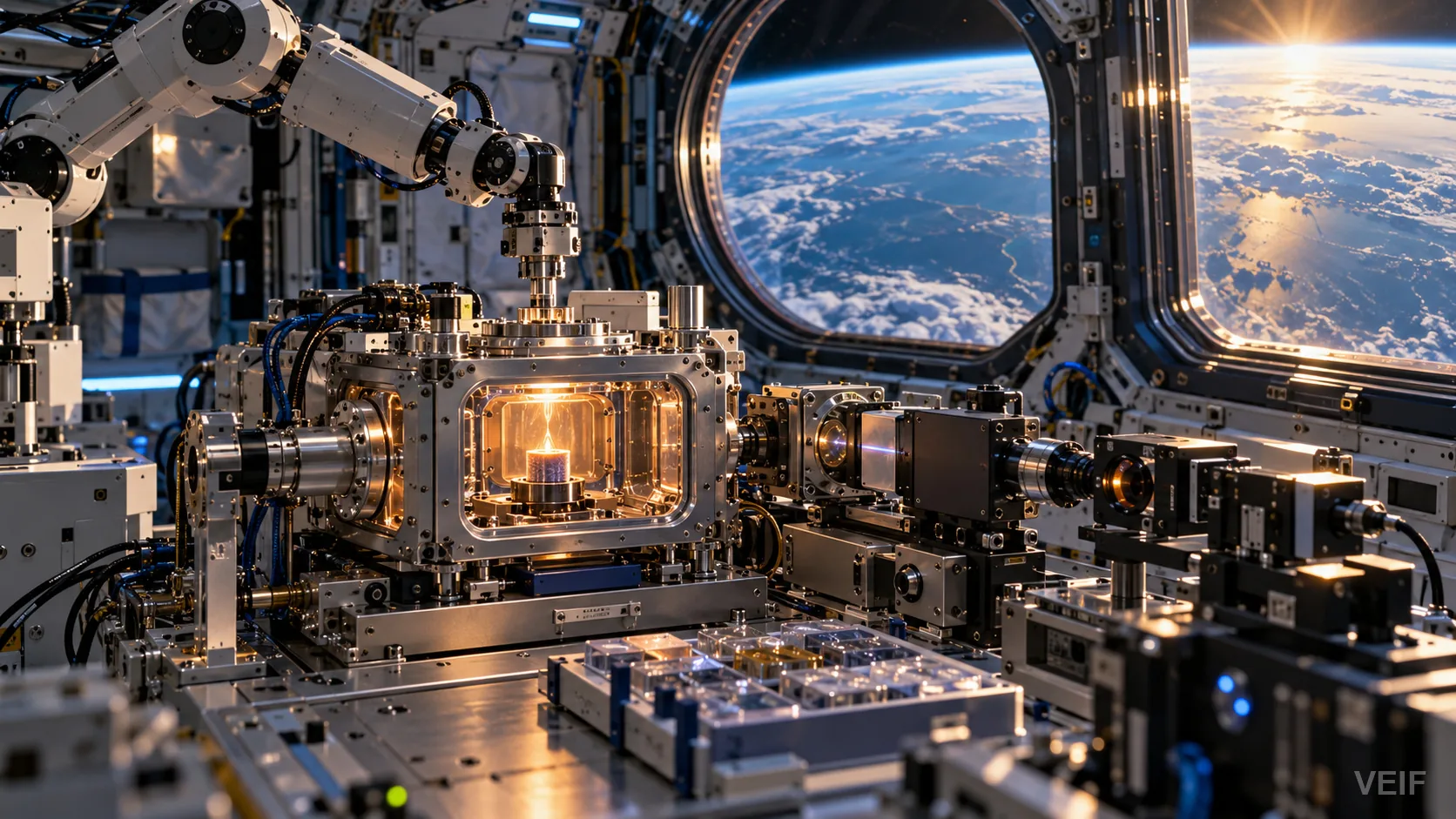
Concept illustration · Not documentary photography
Vacuum, microgravity, extreme temperature differences, and radiation are usually seen as obstacles. Yet some of these conditions may create advantages for particular processes.
- Microgravity: Changes crystal growth, fluid behavior, and some materials preparation processes.
- High vacuum: Offers distinctive conditions for certain thin-film deposition, surface experiments, and materials processes.
- Distinctive thermal conditions: Allow the use of radiative heat rejection and solar irradiation with appropriate thermal design.
- Autonomous uncrewed production: Robotics and remote control may reduce dependence on complete human life-support systems.
A terrestrial process might require solutions to ten environmental control problems, while a carefully selected space environment might naturally satisfy seven of them. However, launch, energy, thermal management, maintenance, and radiation introduce new constraints. Physical advantages do not automatically produce a total-cost advantage.
The central research question is which products gain distinctive technical value or a verifiable economic advantage from production in space, rather than simply which products can be made there.
5. Space Prospectors: Who Will Organize the New Industries?
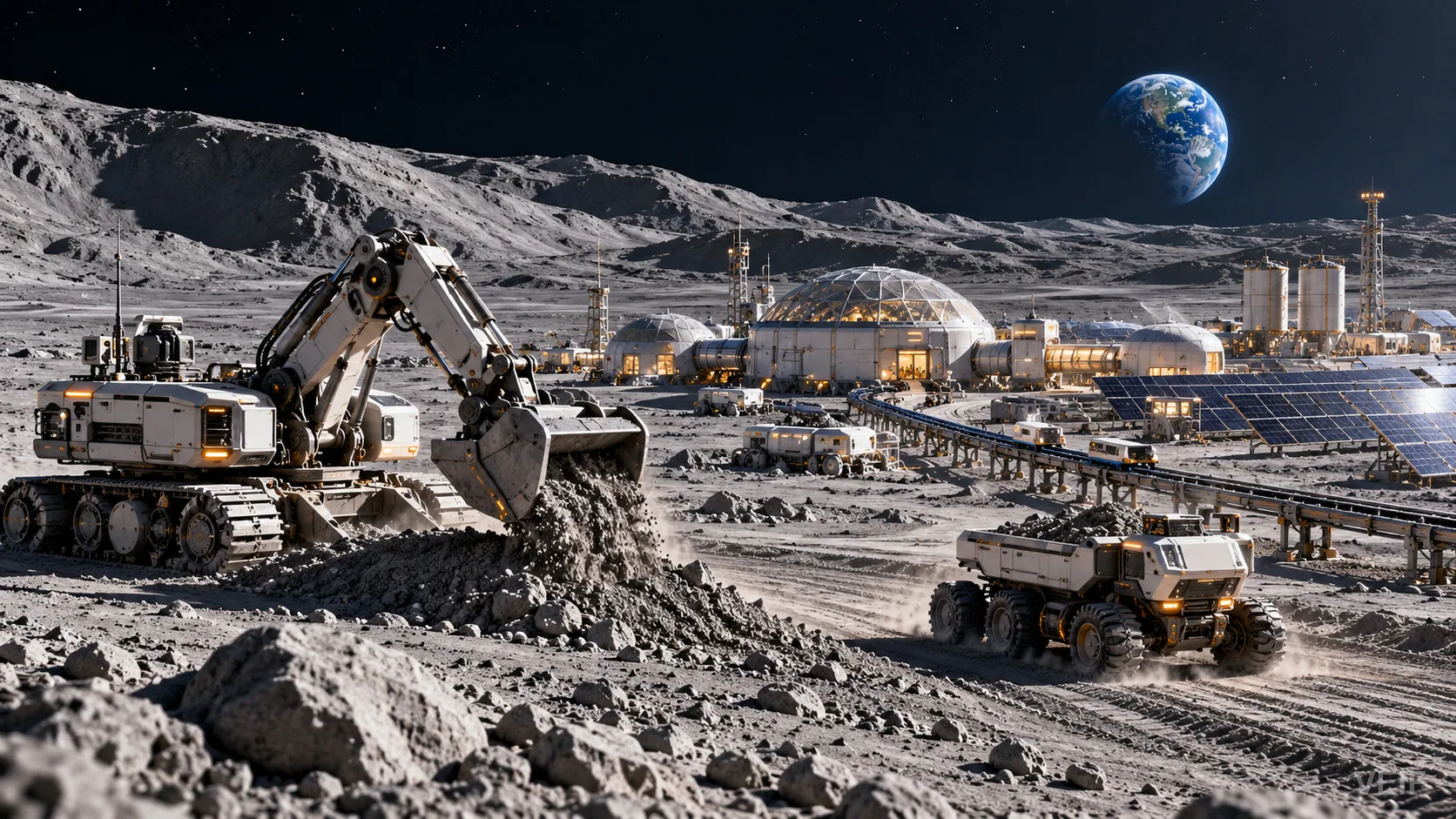
Concept illustration · Not documentary photography
Wealth in the Age of Exploration did not accrue entirely to shipbuilders. Ships and shipping provided access to new space, while trade, processing, finance, and resource development also generated value.
Similarly, rocket transportation may be the pick-and-shovel business of the Great Space Age without necessarily becoming the largest ultimate source of value. Value may extend from transportation into communications, energy, in-space services, resource development, and manufacturing.
Future space prospectors may be high-technology companies with capabilities across engineering disciplines, established energy and mining companies entering new fields, or industrial consortia supported by sovereign capital. They may not be today's most famous rocket companies. Their shared characteristics would include patient capital, the ability to organize complex engineering, technology integration, supply-chain control, and sustained tolerance for uncertainty.
High financial and technological barriers may encourage concentration, but do not guarantee monopoly profits. Competition between states, technology diffusion, open standards, and policy constraints can also reshape market structure.
Control of critical space infrastructure may confer substantial influence over the next stage of industrial specialization.
6. From Earth Supporting Space to Space Supporting Space
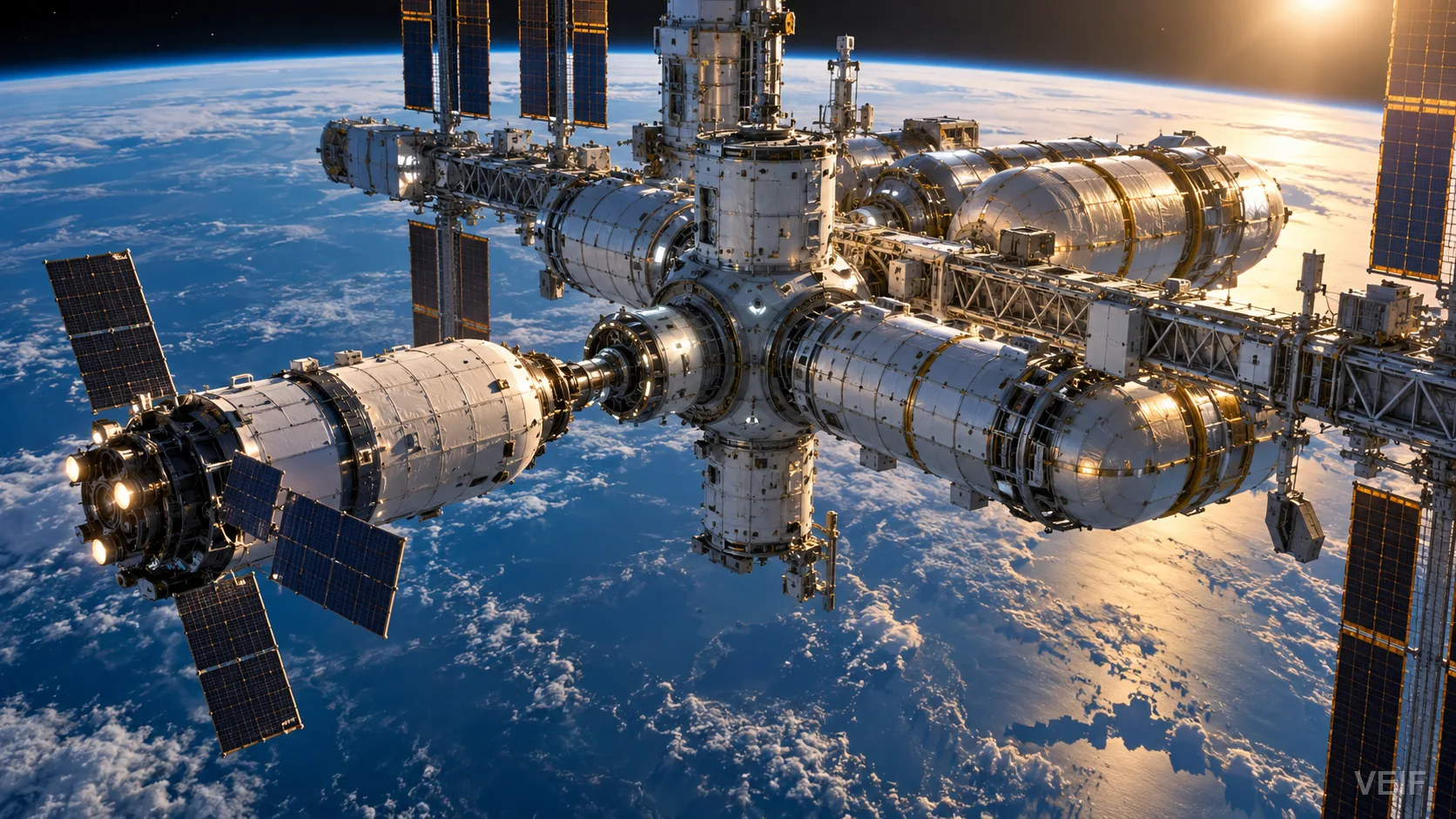
Concept illustration · Not documentary photography
Launch counts and lunar landings alone cannot establish the maturity of the Great Space Age. A deeper indicator is whether space gradually develops its own supply chains and economic activity.
| Stage | Economic characteristics | Representative activities |
|---|---|---|
| Stage 1: Earth supplies space; space returns information | Physical inputs come from Earth; returns mainly take the form of services | Communications, navigation, remote sensing, and scientific research |
| Stage 2: Earth supplies space; space conducts production and services | More commercial transactions occur within space | In-orbit maintenance, replenishment, manufacturing, and energy services |
| Stage 3: Extraterrestrial resources support economic cycles beyond Earth | Some supplies, propellants, and raw materials become available within space | In-situ resource utilization, extraterrestrial manufacturing, and local supply chains |
A major civilizational turning point may come when extraterrestrial resources can continuously support production and services beyond Earth. This would not mean complete independence from Earth. It would mean the space economy had acquired some capacity to sustain itself.
7. Value Evolution: Finding the Next Industries Through Infrastructure
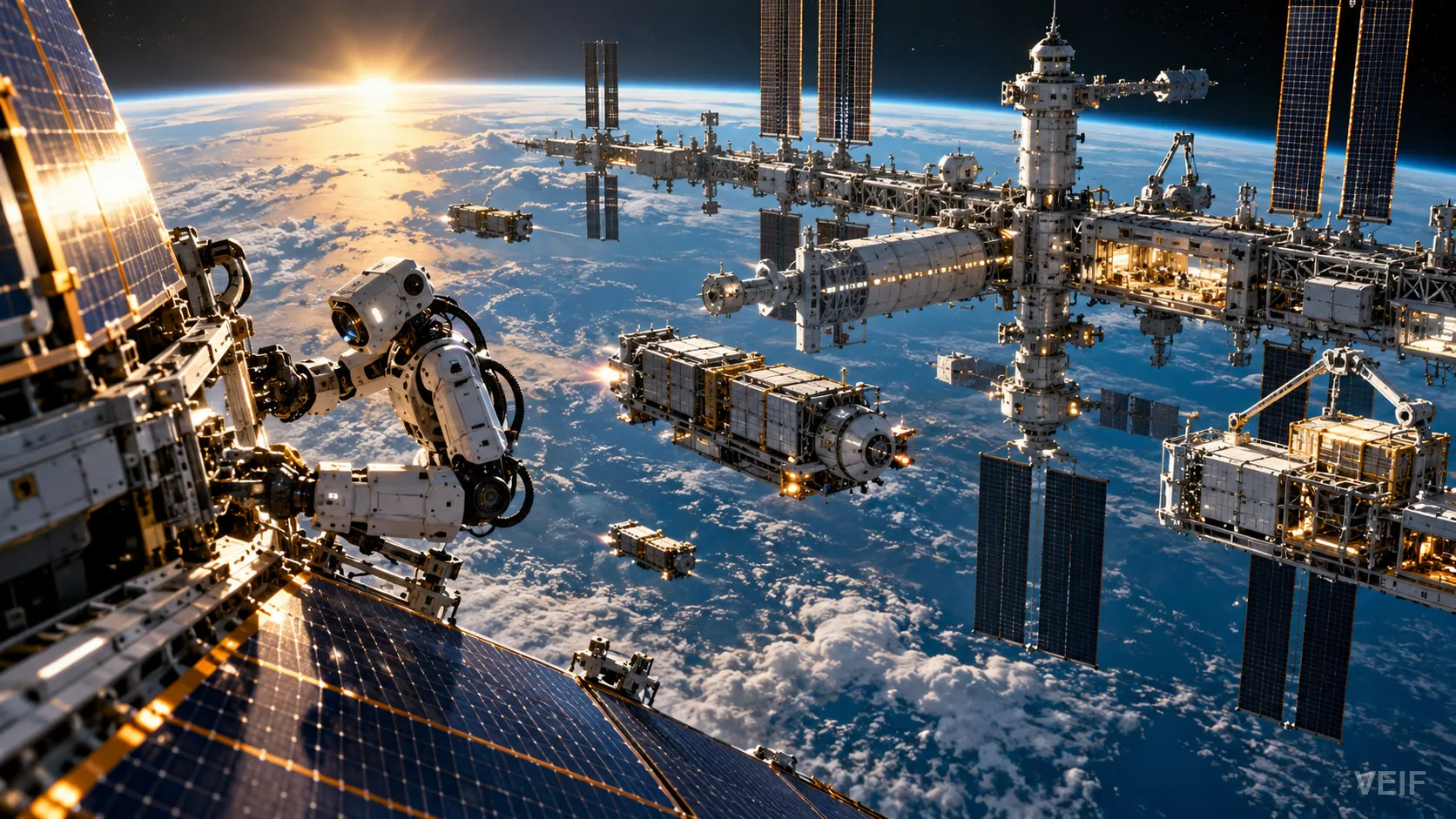
Concept illustration · Not documentary photography
For the Value Evolution Investing Framework (VEIF), the Great Space Age is a research subject spanning decades. The questions are where value arises, how it migrates, which companies can capture it, and how far market prices already anticipate those changes.
One possible research pathway is:
Transportation capability → satellites and orbital infrastructure → communications and data services → in-space services and manufacturing → extraterrestrial resources and industrial organization.
This pathway is neither a strict sequence nor a return forecast. Different activities can develop in parallel, and some business models may ultimately fail.
VEIF poses three core questions: What to buy—which companies can capture future value? How to buy—do valuation and technical conditions provide a sufficient margin of safety? How to sell—has the value thesis broken down, or has the price moved far beyond what the thesis supports?
8. Signs That the Great Space Age Is Taking Shape
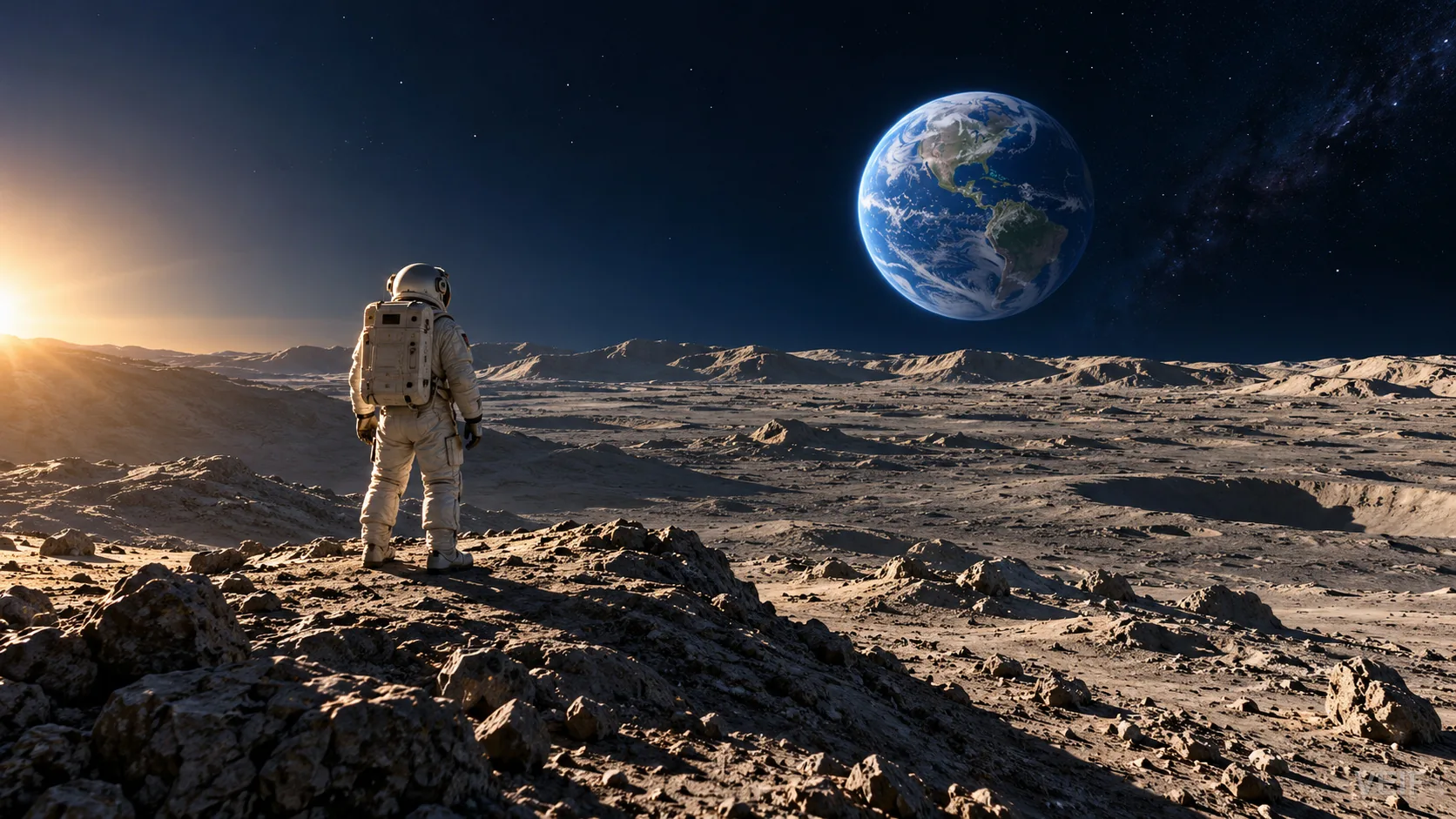
Concept illustration · Not documentary photography
The space age has arrived, but a complete space economy is still forming. Five indicators deserve continued monitoring:
- Space transportation develops into reliable, repeatable services that can operate at scale.
- Space infrastructure gains a broad and enduring base of commercial customers.
- In-orbit maintenance, replenishment, manufacturing, and related activities become markets with repeat transactions.
- Extraterrestrial resources begin to replace some supplies launched from Earth.
- Industrial organizers spanning transportation, energy, resources, manufacturing, and applications mature.
As of 2026, the first two show varying degrees of progress. The remaining three still involve enormous uncertainty. Humanity is better understood as being in the early formation of the Great Space Age than as already inhabiting a mature era of extraterrestrial industry.
Conclusion: The Era Begins After the Prelude
The Age of Exploration was not inaugurated by a single ship's voyage. It emerged through interaction among transportation technology, commercial demand, competition between states, capital accumulation, and organizational institutions.
Likewise, no single launch, lunar landing, or Mars mission will announce the Great Space Age on its own.
Twentieth-century pioneers took the hardest first step: proving that humans could leave Earth. More than half a century of quieter progress then accumulated capabilities in communications, navigation, computing, materials, control, and space engineering. Today, the combination of reusable launch systems, robotics, AI, and commercial capital creates the possibility that these capabilities will generate new industries.
Space may become a resource frontier, production environment, and arena of economic activity as well as an object of scientific exploration. As civilization's boundaries expand, technological systems, economic structures, and industrial power will also be reorganized.
The twentieth-century space boom was humanity's first declaration to the universe.
The twenty-first-century Great Space Age may be when humanity begins to make good on that declaration.
The significance of the Great Space Age lies in how much of the universe humanity can turn into a sustainable sphere of civilizational activity, as well as in how far we can travel.
Editor's note: This article is part of a long-term study of civilizational and industrial evolution. Discussion of future economic structures consists of analytical hypotheses and is not investment advice. Subsequent articles will separately examine technical economics, commercial demand, and companies' competitive positions.
Read this series · The Great Space Age
- The Great Space Age: Humanity’s Second Great Expansion
- The Great Space Age: On the Expansion of Civilizational Frontiers
- The Great Space Age: Interplanetary Technology Diffusion