The Space Gold Rush 1: Who Will Build and Control the Next Industrial Frontier?

As the cost of reaching space continues to fall, space may become a new frontier for industrial civilization as well as a destination for scientific exploration. The real prospectors may be the players able to organize capital, technology, resources, and industrial systems, rather than those who arrive on the Moon first.
1. From the Age of Exploration to a Space Gold Rush
Every expansion of the geographical frontier has accompanied the discovery of wealth, technological progress, and changes in industrial organization. Wealth in the Age of Exploration flowed to shipbuilders, ports, traders, and financial organizers as well as explorers. Likewise, gold rushes rewarded railways, equipment makers, energy providers, and commercial services as well as miners.
Opening a frontier first requires a way to reach it. Who ultimately captures its wealth depends on who can develop, organize, and operate there over time.
Reusable rockets and large launch systems could continue to lower the cost of accessing space. The direction represented by Starship deserves attention, but the scale economics of full reuse, frequent launches, orbital refueling, and deep-space transportation still require validation. As transportation costs fall, the industry's central question will gradually shift from how to get there to how to create value after arrival.
2. Space Is a New Industrial Environment

Space offers physical conditions different from those on Earth: microgravity or low gravity, low external pressure, different thermal radiation conditions, and settings suited to uncrewed operations. These may open experimental and production pathways in precision materials, optics, life sciences, quantum sensing, specialized manufacturing, and resource development.
However, space is not a free vacuum chamber or refrigerator. Process atmospheres, contamination control, thermal management, energy, radiation protection, maintenance, transportation, and return costs remain. Lunar low gravity also differs from microgravity in low Earth orbit.
The question worth asking is: Which industries must solve ten engineering problems on Earth, but only three in a particular space environment? Environmental advantages create commercial value only when they outweigh costs across the full life cycle.
3. Transportation Is the Entry Ticket, Not the Entire Gold Rush
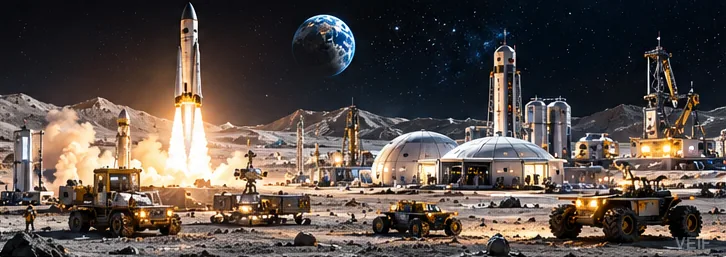
Moving from transportation to resource development requires links between space infrastructure, planetary mapping, remote sensing and geological analysis, embodied AI, robotics, beyond-line-of-sight control, energy systems, resource extraction, and industrial processing.
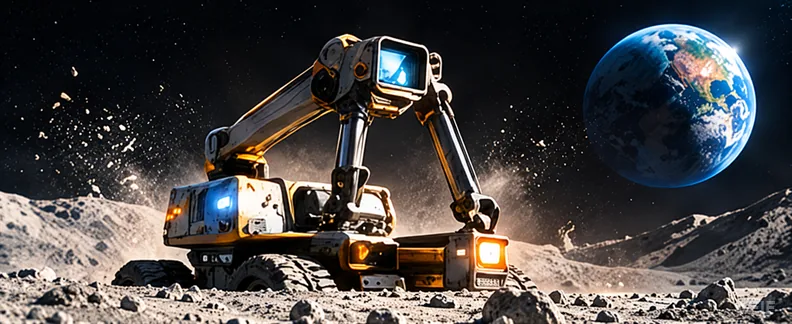
Round-trip communications with the Moon involve delays measured in seconds. One-way delays to Mars can range from several minutes to more than twenty minutes. Controlling equipment action by action from Earth is therefore difficult to scale into industrial operations. Future systems will need stronger environmental perception, task planning, coordination, exception handling, and autonomous maintenance.
Players that master end-to-end autonomous development may move from participating in space activities to actually developing resources.
4. What Future Space Prospectors May Look Like
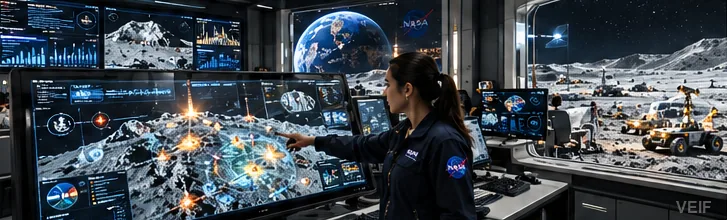
Future prospectors may be technology companies, aerospace firms, energy and mining groups, sovereign investors, or alliances spanning industries. Their defining capabilities include:
Patient capital: The ability to fund substantial upfront investment, long development cycles, and repeated failures.
Core technology: Key capabilities in robotics, AI, energy, communications, and resource processing.
Access to and control of infrastructure: Reliable transportation, navigation, communications, energy, and operating platforms.
Autonomous operations: Sustained task execution under extreme conditions and communications delays.
Commercial viability: Converting resource discoveries into deliverable products, paying customers, and cash flow.
Industrial organization: Coordinating supply chains, research institutions, capital, governments, and long-term procurement.
Capital is only an entry ticket. The real competitive advantage is converting it into technology, productive capacity, and influence over industrial systems. As scale increases, leaders may establish a feedback loop linking capital, technology, lower costs, expanding demand, and reinvestment. Yet concentration is not inevitable: specialization, open platforms, competition, and institutional rules may also constrain control.
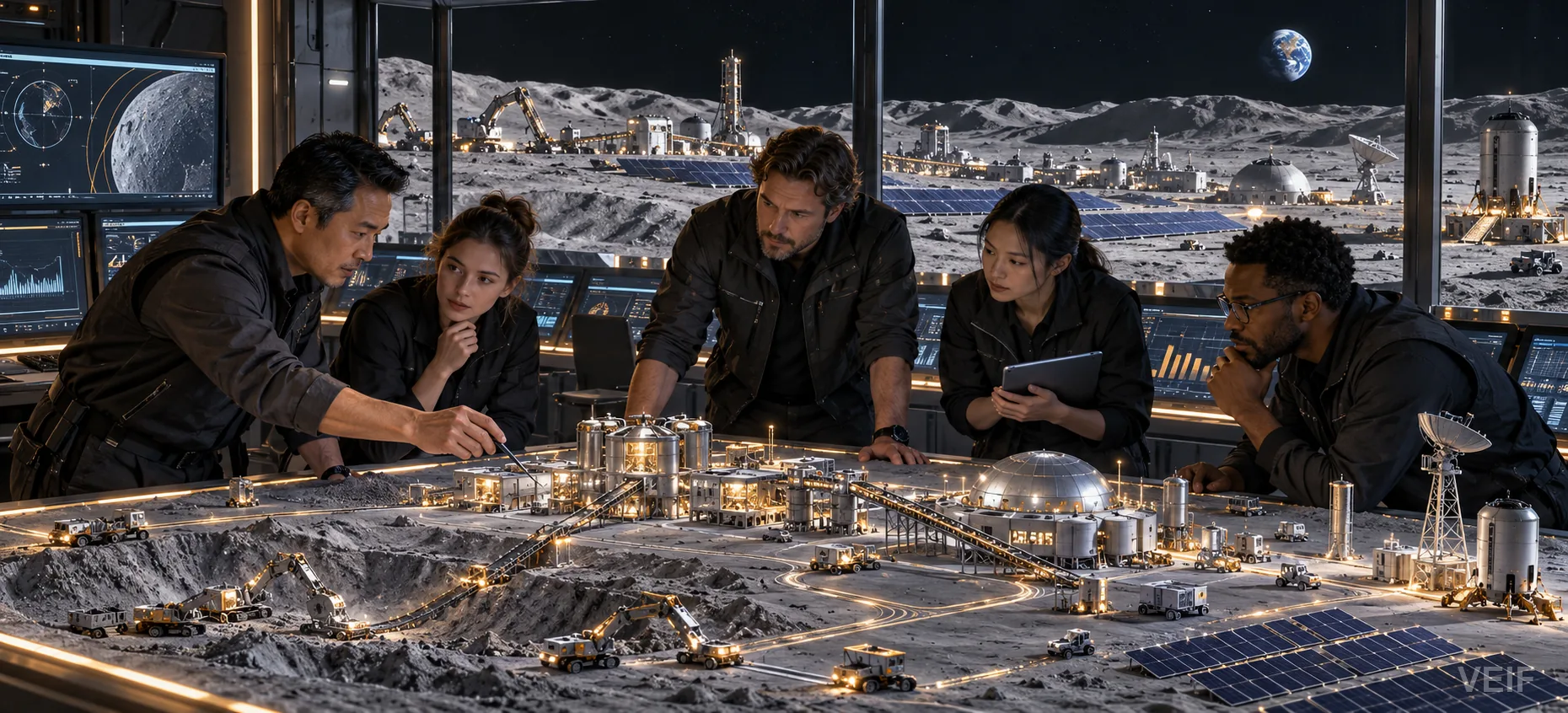
5. Three Types of Future Players
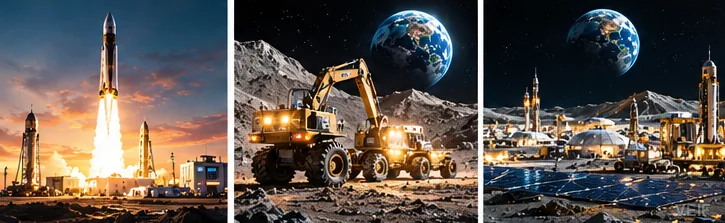
First: the pick-and-shovel suppliers. They provide rockets, spacecraft, satellites, communications, energy, robotics, materials, and industrial equipment. They may receive orders before resource development matures, but still face heavy capital expenditure, price competition, and capacity utilization risks.
Second: the resource developers. They attempt to discover, assess, extract, and process water ice, minerals, and other raw materials on the Moon or other celestial bodies. The presence of a resource does not establish that it can be extracted economically. Reserves, grades, energy consumption, transportation costs, and paying demand must all be validated.
Third: the integrated industrial organizers. They secure infrastructure and bring together technology, resources, funding, and customers to build enduring industrial systems across multiple stages. They may gain stronger advantages at the system level, but also face the greatest capital and organizational risks.
6. Sovereign Capital May Become a Major Force

Space resource development is long term, capital intensive, and strategic. Communications, navigation, energy, critical resources, and deep-space infrastructure may serve national objectives as well as commercial purposes. Sovereign wealth funds, government procurement, national development agencies, state-owned energy and mining companies, and multinational industrial alliances may all participate in early industrial development.
Cooperation, competition, and negotiation between private and sovereign capital are more plausible than exclusive control by a single category of investor. Policy changes, investment efficiency, and noncommercial objectives also warrant scrutiny.
7. Companies Worth Watching Over the Long Term
In industrial organization, SpaceX and Blue Origin offer reference points for integrating transportation and infrastructure. Rocket Lab, MDA Space, Intuitive Machines, and Redwire represent different mission and system capabilities. Planet Labs' remote sensing capabilities suggest a potential extension from Earth observation into planetary mapping. Interlune is directly exploring lunar resource development. These groupings are research hypotheses and should not be confused with established revenue from space resources.
The following companies are research candidates based solely on industrial potential. Their inclusion does not imply that relevant resource businesses are mature and is not a recommendation to buy securities. Listing status and ticker symbols should be checked again before any actual investment.
| Company | Existing capability base | Potential role | Key validation point |
|---|---|---|---|
| SpaceX | Launch, satellite communications, transportation systems | Integrated space industry organizer | Frequent transportation, deep-space operations, and commercial costs |
| Blue Origin | Launch, lunar landing, infrastructure | Lunar infrastructure organizer | Reliable delivery and enduring customers |
| Rocket Lab (RKLB) | Launch, spacecraft, systems integration | Space industrial systems supplier | Expansion of systems activities and earnings quality |
| MDA Space (MDA) | Space robotics and satellite systems | Autonomous operations and space infrastructure | Repeatability of robotic services |
| Intuitive Machines (LUNR) | Lunar transportation and mission services | Lunar infrastructure operator | Mission success and repeat orders |
| Redwire (RDW) | Space infrastructure and manufacturing | Industrial equipment and manufacturing supplier | Commercial scale and cash flow |
| Planet Labs (PL) | Earth observation and geospatial data | Potential technology extension into planetary mapping | Evidence of a real connection to deep-space business |
| Interlune (unlisted) | Exploration of lunar resource development | Early resource developer | Resource economics and customer demand |
Particular attention should also go to companies outside today's space industry that possess capabilities in automated mining, industrial robotics, energy, advanced materials, and autonomous control. Technology transfer may allow them to enter the industry. However, terrestrial capabilities cannot automatically be treated as lunar or Martian mission capabilities.
8. The Real Wealth May Lie Beyond the Resources Themselves
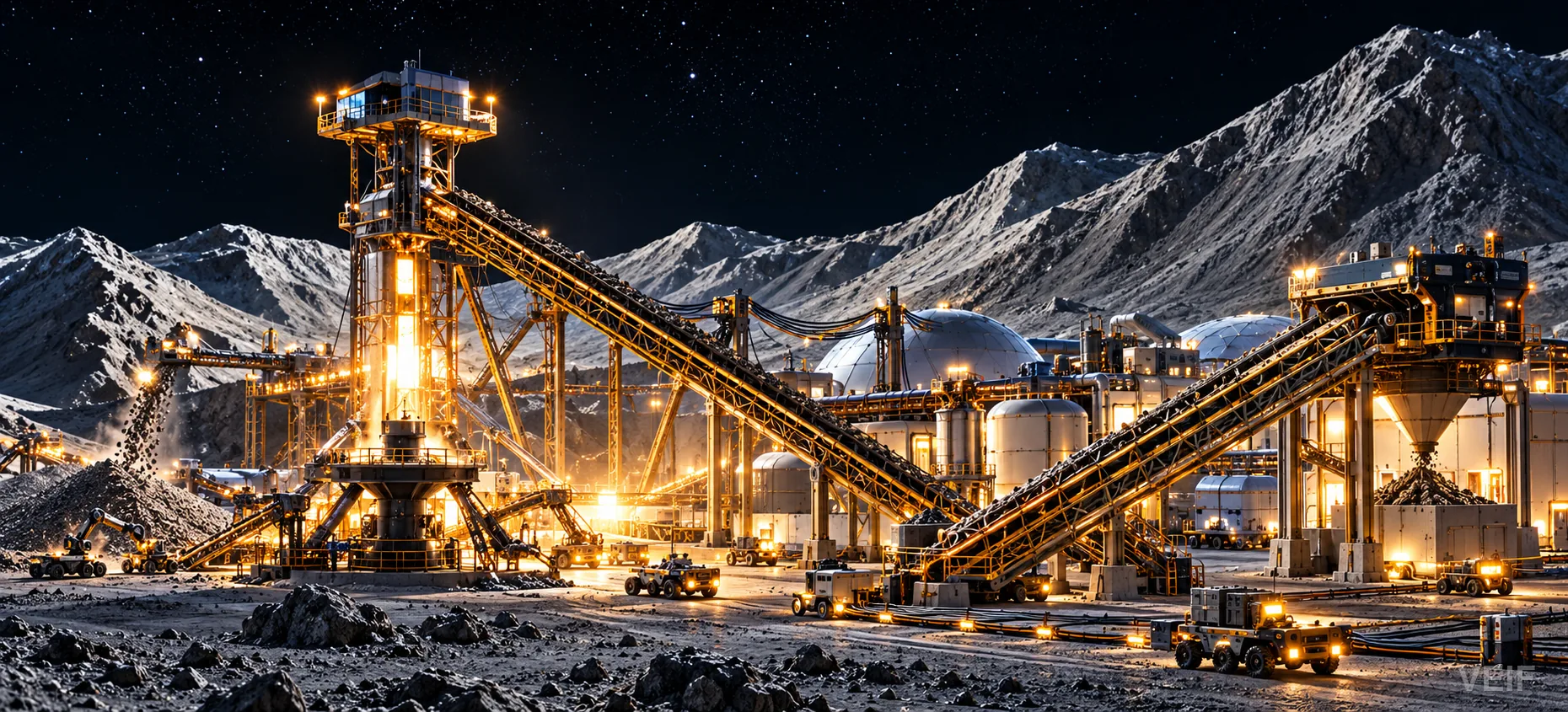
During early space industrialization, resources themselves may not be the scarcest assets. Scarcer capabilities may be those that make resources usable: reliable access, continuous energy, exploration, extraction, processing, maintenance, and customer acquisition.
Value capture may develop at three levels: access, development, and organization. Possession of minerals does not automatically establish undisputed resource rights. Resource use is also shaped by applicable law, national authorizations, contracts, and international rules.
9. When Will a Space Gold Rush Truly Begin?
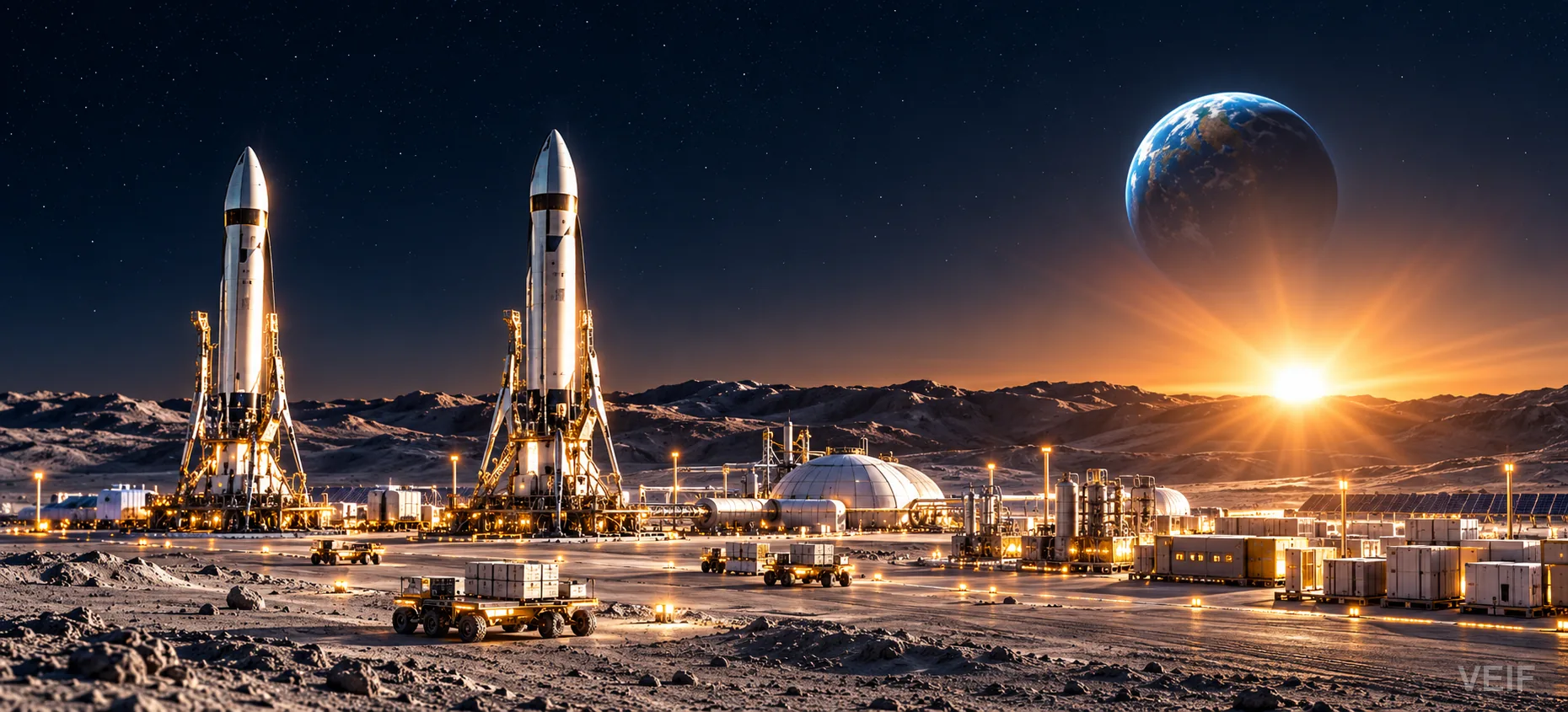
Five conditions deserve monitoring:
Predictable transportation costs and launch frequency.
Autonomous robots moving from demonstrations into sustained operations.
Verifiable unit economics for resource extraction and processing.
Customers that pay consistently, beyond reliance on one-off scientific missions.
Financing, procurement, and industrial partnerships suited to long-term projects.
Until these conditions emerge, the industry may remain primarily in an infrastructure-building and technology-development phase. Different commercial applications will mature at different times.
10. Following Value Migration Through the VEIF Lens
The Value Evolution Investing Framework asks: Where will future value migrate, and which companies can capture that migration?
Early value may concentrate in transportation, satellites, communications, and spacecraft, before moving into robotics, energy, remote sensing, exploration, and industrial equipment. Industrial platforms and a resource economy may develop only when resource use and space manufacturing generate sustained demand.
Investment research must distinguish three questions:
Is it technically possible? Technology pathways, system capabilities, and engineering maturity.
Is it economically viable? Real demand, unit costs, cash flow, and returns on capital.
Is it an attractive investment? Valuation, financing dilution, competition, and value capture.
An industry can change civilization without every participating company generating attractive shareholder returns.
Conclusion: Who Will Sustain the New Frontier?
Future space prospectors may be companies and alliances with patient capital, critical technologies, and industrial organizational capabilities. They will compete over the capacity to reach new space, develop unfamiliar environments, and operate complete industrial systems as well as over mineral deposits.
Transportation determines who can reach the frontier. Technology determines who can develop it. Capital and industrial organization will play a major role in determining who can operate there sustainably.
The real space gold rush may begin when humanity first demonstrates that an industrial system far from Earth can create value continuously, autonomously, and economically, rather than with the discovery of the first lunar mine.
VEIF · Vision | October 18, 2026. This article presents long-term industry research and forward-looking hypotheses. It is not investment advice. Illustrations are conceptual scenes and research visuals, not photographs of actual space facilities.
Read this series · Expansion into Space · The Space Gold Rush
- The Space Gold Rush 1: Who Will Build and Control the Next Industrial Frontier?
- The Space Gold Rush 2: The Real Wealth of the Great Space Age