Interstellar Planners 1: The Homeworld Lifeline
The Great Space Age series · Interstellar Civilization Planners, Part I
Following The Great Space Age: On the Expansion of Civilization’s Interstellar Frontier

Figure 1. Every journey outward gives humanity a new view of home.
Prologue: The Voyager’s Home
Those who set out on a journey look toward distant horizons. They also look back along the way they have come, toward the blue planet suspended in the vastness of space.
It is more than their point of departure. It is the home that has nurtured the whole of human history.
As humanity moves from Earth into space, its spacecraft carry knowledge, energy, and materials accumulated by an industrial civilization over generations. These may seem to belong to the voyagers, yet tracing their origins reveals their dependence on the homeworld’s support.
Ocean-going fleets remain within Earth’s material cycles. People and equipment sent beyond Earth may never return. More importantly, the factories, energy facilities, research organizations, and societies that remain on Earth must continue to bear the costs of distant exploration.
When a civilization learns to send life far from home, should it also learn to account for the changes that journey leaves behind?
Beginning with present and foreseeable activities beyond Earth, this essay considers responsibilities toward the homeworld that will remain relevant as civilization enters an interstellar era. The “homeworld lifeline” means the full set of conditions that sustain life and civilization on the planet: materials and ecosystems, usable energy, industrial and knowledge systems, and, over longer timescales, the planetary environment and the stability of celestial systems.
The central test of whether this lifeline is being damaged is whether exploration weakens the homeworld’s foundations for sustaining life, restoring its environment, reproducing essential capabilities, and responding to major risks—and whether those effects can be reversed.
The homeworld lifeline is more than the support provided at departure. It is the root a civilization cannot afford to lose before it has become truly independent of its birthplace.
1. Invisible Support: What Does the Homeworld Contribute?
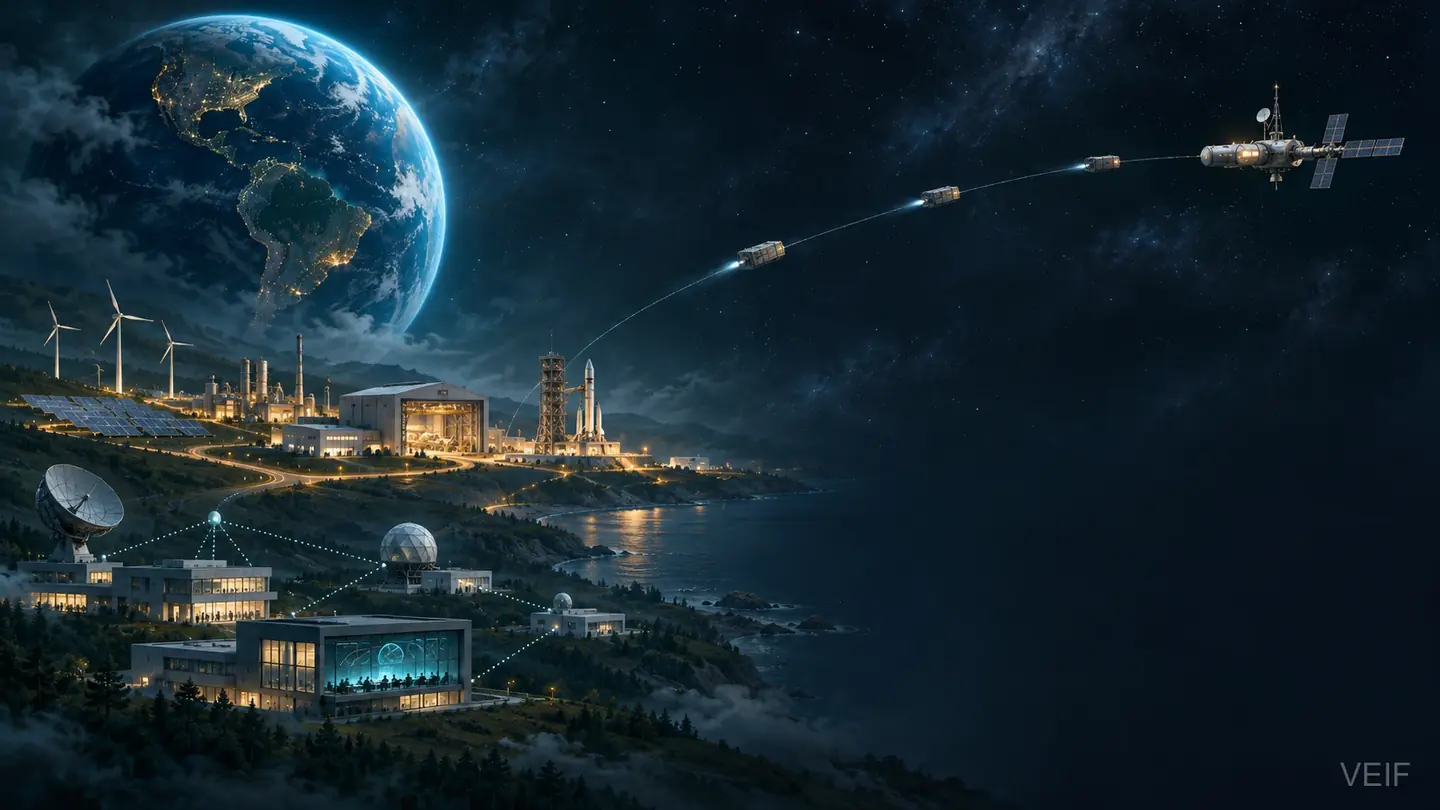
Figure 2. Distant journeys depend on material transport, as well as energy and civilizational capabilities invested through the homeworld’s production system. Lines do not represent quantities, and launch does not imply permanent net loss.
Relationships shown: material transfer / energy inputs / investment of civilizational capabilities.
Imagine a distant interstellar outpost. Its shell, life-support systems, engines, computers, and medicines may all come from Earth. Even if it can obtain water and energy locally, it may still need engineering designs, software updates, specialized materials, and a continuing supply of trained people.
An off-world base consists of more than the materials that reach its destination. Behind it stands an entire homeworld industrial network. At least three categories of contribution need to be distinguished: material transfer, energy inputs, and investment of civilizational capabilities.
1.1 Material Transfer
Spacecraft, equipment, construction materials, propellants, and supplies are sent beyond Earth. Yet launch mass does not equal a permanent net loss to the homeworld: materials may return to the surface, remain in Earth orbit for long periods, or be transferred to other celestial bodies.
Accounting therefore requires explicit boundaries. A reduction in materials available at the surface, whether those materials remain within the Earth system, and whether they can eventually be recovered are different questions. Resource availability and celestial mass balances need separate records.
Nor does material export remove equal proportions of every substance on Earth. Space industries select materials that create value or meet demanding performance requirements: high-purity metals, alloys, rare elements, precision components, water, and other volatiles. These may represent a tiny share of Earth’s total mass while still being difficult to replace or obtain again.
We therefore need to record not only how much leaves, but what leaves, where it comes from, and whether it can be recovered.
1.2 Energy Inputs
Every stage requires energy, from mining, smelting, and manufacturing to launch, long-distance communications, and the maintenance of space facilities.
These inputs include both the energy carried beyond Earth in fuels and equipment and the energy consumed by terrestrial production and support systems. Together, they make up exploration’s energy bill.
Even when the amount of material ultimately sent into space is small, the energy bill behind it may be substantial.
1.3 Investment of Civilizational Capabilities
Researchers, engineering teams, industrial facilities, capital available to society, and organizational capacity are harder to weigh directly than a rocket’s payload.
These contributions enable voyagers to build, operate, and continue developing. Through technological accumulation and resource allocation, their effects also become part of the homeworld’s own development.
Mass, energy, and civilizational capabilities are different kinds of resources. They cannot simply be converted into a single total. Together, they constitute the homeworld’s invisible support for those who travel outward.
2. The Echoes of Departure: How Three Kinds of Contribution Change the Homeworld
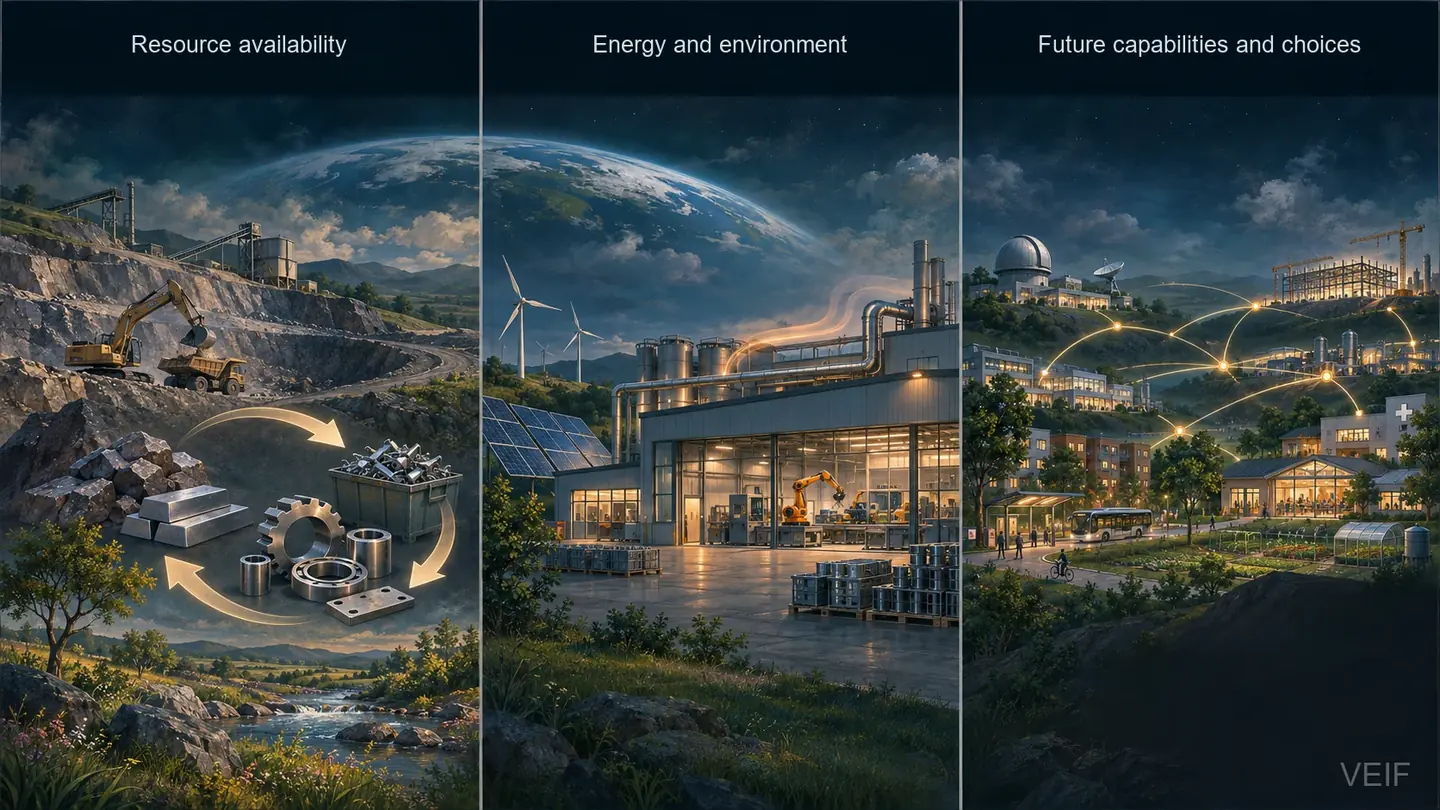
Figure 3. The three kinds of contribution affect the homeworld’s resources, energy and environment, and future choices. Celestial dynamics in the distant future require separate research; this image does not suggest that present spaceflight has altered Earth–Moon stability.
Left to right: resource availability / energy and environment / future capabilities and choices.
The homeworld’s costs extend beyond the cargo that leaves at launch. These contributions affect Earth’s material stocks, usable-energy systems, and civilization’s future choices through different mechanisms, at different scales, and over different periods.
2.1 Changes in Materials: From Critical Resources to Celestial Mass
For homeworld resource planning, the first concern is that material exports are selective.
Humanity does not extract raw materials in the natural elemental proportions of Earth’s lithosphere. It preferentially mines and processes materials with particular industrial value. High-quality mineral deposits depend on geological processes; high-purity materials require energy, technology, and industrial effort. Permanently transporting these materials away from Earth may reduce more than a number of kilograms. It can also diminish accessible reserves and the future industrial options they support. The extraction needed to obtain them may, in turn, alter land, water systems, and ecosystems.
The consequences of extraction, processing, and permanent export therefore need to be distinguished. Elements do not disappear through mining. Materials that remain on Earth may enter recycling loops, while permanent export may remove them from the homeworld’s production system for long periods. The environmental effects of large-scale extraction also require independent assessment; they cannot be measured solely by the mass shipped away.
Over longer timescales, celestial mass balances also become relevant. Earth has a mass of approximately 5.97 × 10²⁴ kilograms, compared with the Moon’s 7.35 × 10²² kilograms.[1][2] Net mass transfers from present and foreseeable space activities are extremely small relative to Earth as a whole. They provide no basis for concluding that the Earth–Moon system already faces a significant threat.
In a sufficiently distant future, if civilization can move celestial materials on a vast scale, changes in mass and its distribution will become dynamical variables requiring assessment. Earth–Moon gravitational interactions, their common center of mass, and tidal evolution could be affected. But the direction and magnitude of those effects would also depend on how materials are moved and on the associated transfers of momentum and angular momentum. Safety cannot be inferred from mass gain or loss alone.
The materials ledger thus needs two columns: the composition and availability of critical materials, and celestial mass balances. The former may affect civilization’s development much sooner; the latter concerns responsibility for dynamics over extremely long timescales.
2.2 The Effects of Energy Use: From Lost Work Potential to the Support of Life
For some exploration missions, the economic and environmental consequences of energy inputs may matter more than the mass of payload permanently transported away.
“Energy dissipation,” however, does not mean that energy vanishes from the universe. Energy is conserved. What changes is its form, distribution, and capacity to perform further work. High-quality chemical or electrical energy often becomes more dispersed heat after use. The irreversibility of this process is expressed primarily as a decline in usable energy.
Earth’s biosphere depends mainly on a continuing inflow of solar energy, while Earth releases energy to space through radiation. NASA’s account of the global energy budget gives a global average incoming solar flux at the top of the atmosphere of about 340 watts per square meter.[5] The homeworld’s energy issues therefore need to be understood through continuing inputs, conversion and use, and outward heat loss.
The relevant questions are these: Where does exploration’s energy come from? Does it draw on energy and materials that could otherwise support the biosphere, agriculture, and human needs? Do extraction, combustion, and manufacturing change greenhouse-gas concentrations, ecosystems, or the surface energy balance? How much energy is carried beyond Earth in useful forms, and how much becomes waste heat and pollution burdens along the terrestrial production chain?
This means that the energy ledger must account for sources, conversion efficiency, the dissipation of usable energy, and ecological costs—not just total energy consumption. As off-world industries become able to use local sunlight or other energy sources, their continuing energy burden on the homeworld may gradually decline.
2.3 Changes in Civilizational Capabilities: How Exploration Reshapes the Future
The people, funding, facilities, and organizational capacity committed to exploration have competing uses during the same period.
Interstellar exploration therefore changes not only how much material remains on the homeworld or how much energy is consumed, but also where civilization directs its capabilities. Space exploration may build expertise in materials, energy, automation, and life support, strengthening civilization on Earth in return. It may also limit development in other important fields through excessive dispersion of effort, prolonged dependence on resupply, or a lack of intermediate achievements.
These effects are not necessarily negative. Scientific discoveries and technological spillovers have value that cannot be fully anticipated at the outset of a project. Exploration should therefore not be judged solely by short-term financial returns. Equally, a lofty purpose does not remove the need to assess resources and opportunity costs.
What civilization truly loses may be more than a shipment already launched: it may be a path once open to the future that today’s commitments make unavailable.
All three dimensions converge on one question: as interstellar exploration reaches farther outward, does it weaken the homeworld’s ability to sustain life and continue developing, or does it create new growth in that ability? This is the question the homeworld lifeline must answer over time.
3. Does Compensation Mean Bringing the Lost Mass Back?
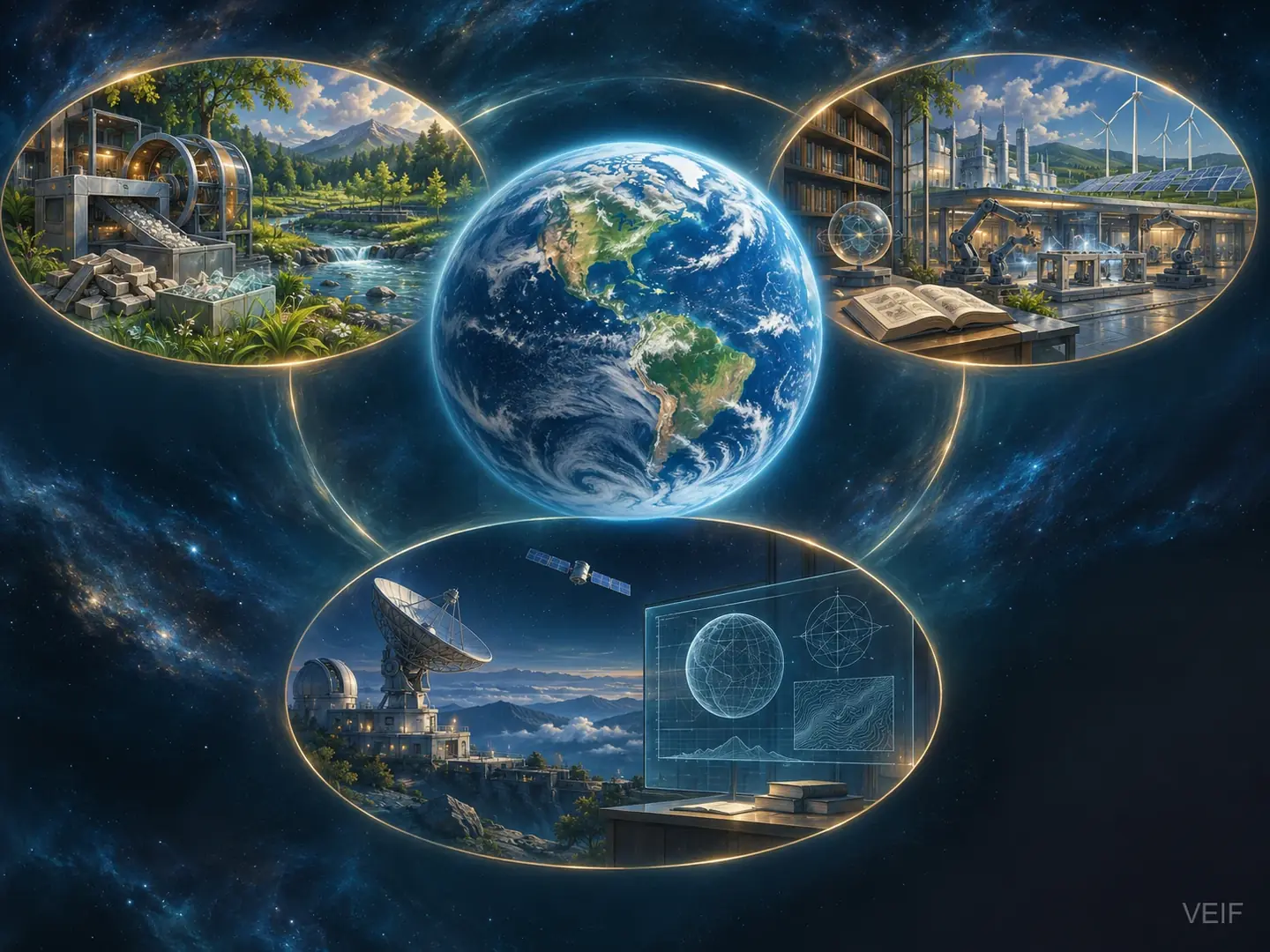
Figure 4. Compensation concerns the maintenance of homeworld resources, development capabilities, and system safety. These three dimensions do not automatically offset one another.
Three dimensions of maintenance: resource compensation / capability compensation / system-safety compensation.
“Return as much material to the homeworld as is sent outward” initially sounds like a fair and straightforward principle.
For a real planetary system, however, it may be neither necessary nor safe.
Moving large quantities of asteroid material toward Earth to compensate for mass loss could introduce additional impact risks, energy costs, and ecological pressures. Even if equal mass were returned, the replacement material could differ entirely in composition, arrival velocity, deposition location, and environmental effects. Conservation of mass does not guarantee ecological balance or dynamical safety.
Compensation to the homeworld should therefore begin with repairing, replacing, and preventing actual damage and systemic risks, rather than with mass-for-mass repayment.
This responsibility has at least three dimensions.
Resource compensation: Manage renewable and nonrenewable resources differently, emphasizing material circulation, industrial efficiency, and the restoration of essential ecological and productive resources. Not every instance of resource consumption requires an equal input of external material to compensate for it.
Capability compensation: Use the knowledge, technologies, and infrastructure created through space exploration to strengthen the homeworld’s energy use, manufacturing, environmental management, and ability to respond to risks. An expedition that leaves behind reusable industrial capabilities may create far greater value than a shipment of raw materials returned home.
System-safety compensation: When verified activities increase a particular long-term environmental or dynamical risk, take preventive, corrective, or management measures proportionate to that risk. Specific forms of material replenishment should be considered only when there is a genuine need and their safety and effectiveness have been established.
These dimensions are not interchangeable. Technological benefits, for example, do not automatically offset irreversible ecological damage in a particular region. Nor does replacing a material automatically establish that a long-term risk has been eliminated.
The homeworld lifeline calls for more than mechanical balancing of inputs and outputs: the gains from expansion in one domain must not conceal real losses borne by the foundations of civilization’s survival.
4. The Best Compensation May Be to Ask Less of the Homeworld
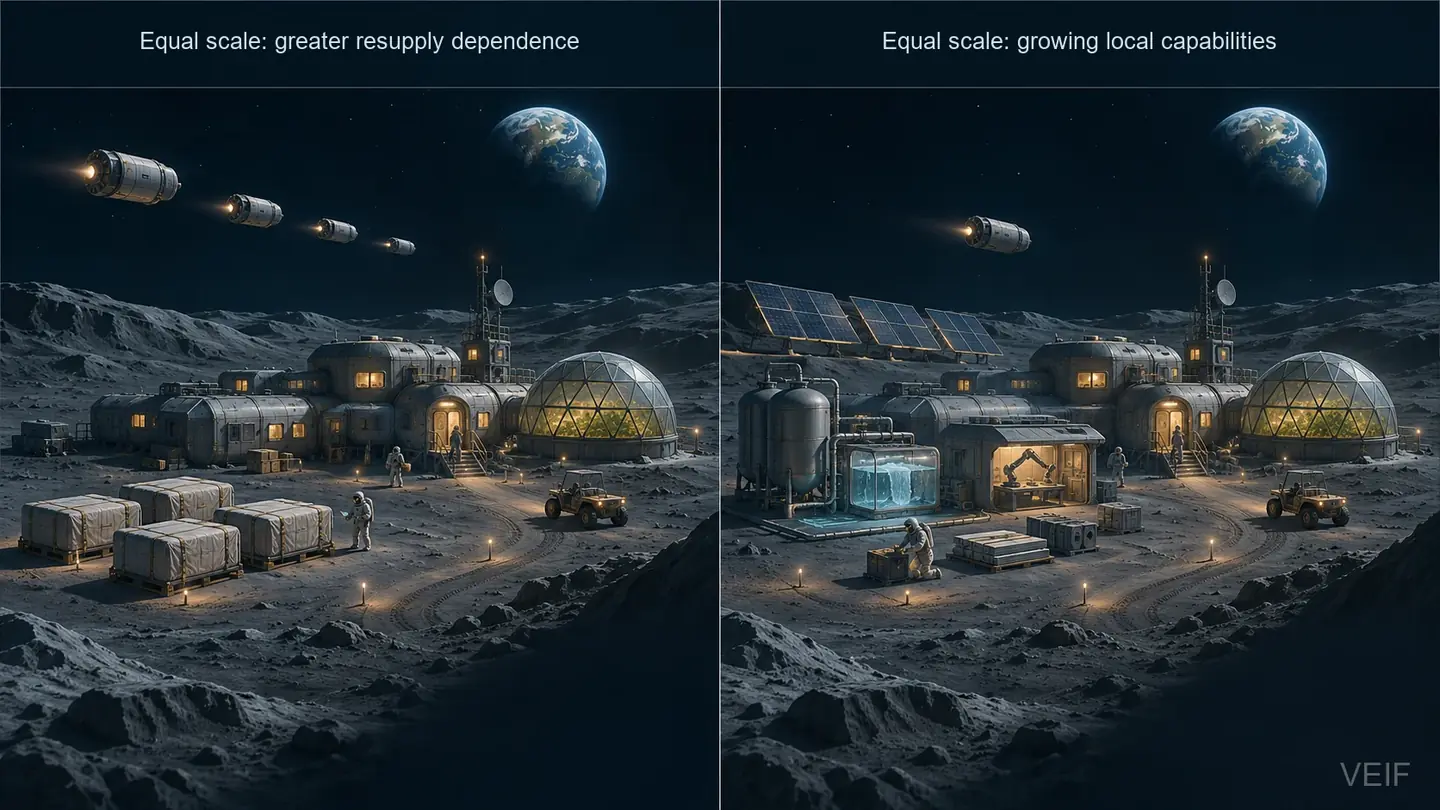
Figure 5. At the same scale of activity, local production and maintenance may reduce homeworld inputs. If expansion proceeds faster, the total burden on the homeworld may still increase. This is a conditional illustration.
Equal scale of activity: greater dependence on resupply on the left; growing local capabilities on the right.
If an off-world base needs food, water, fuel, and construction materials shipped from Earth every year, its growth may extend the supply chain supported by the homeworld.
If it can instead obtain water locally, use sunlight, manufacture some materials, and gradually maintain its own equipment, the same scale of activity may require fewer supplies from Earth.
This is the strategic significance of in-situ resource utilization, or ISRU. NASA treats it as an important technological direction for sustained lunar and Martian exploration and for reducing transport requirements from Earth. It includes the local extraction and processing of resources such as water, oxygen, propellants, and construction materials.[3]
Local resource extraction does not, however, establish industrial independence. A base that produces oxygen may still depend on critical imported machinery. A mining facility may be unable to manufacture the precision parts needed to replace its own equipment.
From the perspective of the homeworld lifeline, a meaningful test of progress is this: as off-world capabilities grow, can the net burden on the homeworld required to sustain the same level of activity gradually decline?
Lower dependence per unit of activity does not guarantee a lower total burden. If off-world activity grows faster than autonomous production capabilities improve, Earth’s commitments to resupply, manufacturing, and energy may continue to rise. The total burden and its changes must therefore be tracked as well. Here, too, materials, energy, and civilizational capabilities need separate assessment; they cannot simply be combined into a single number.
This also changes the direction of “compensation.” Rather than sending large amounts of terrestrial material far away and then struggling to return an equal mass, it is preferable, wherever possible, to help the new frontier obtain suitable local resources and gradually establish its own production base.
The growth of an off-world base should increasingly be reflected in its own capacity to produce and maintain what it needs.
Off-world resource use nevertheless brings energy demands and risks to extraterrestrial environments and the space environment. Reducing Earth’s burden does not make other celestial bodies resource piles that can be consumed without limits. The awareness of limits learned on the homeworld should travel with civilization to its new frontiers.
5. Developing Lifeline Awareness for a Civilization Yet to Come
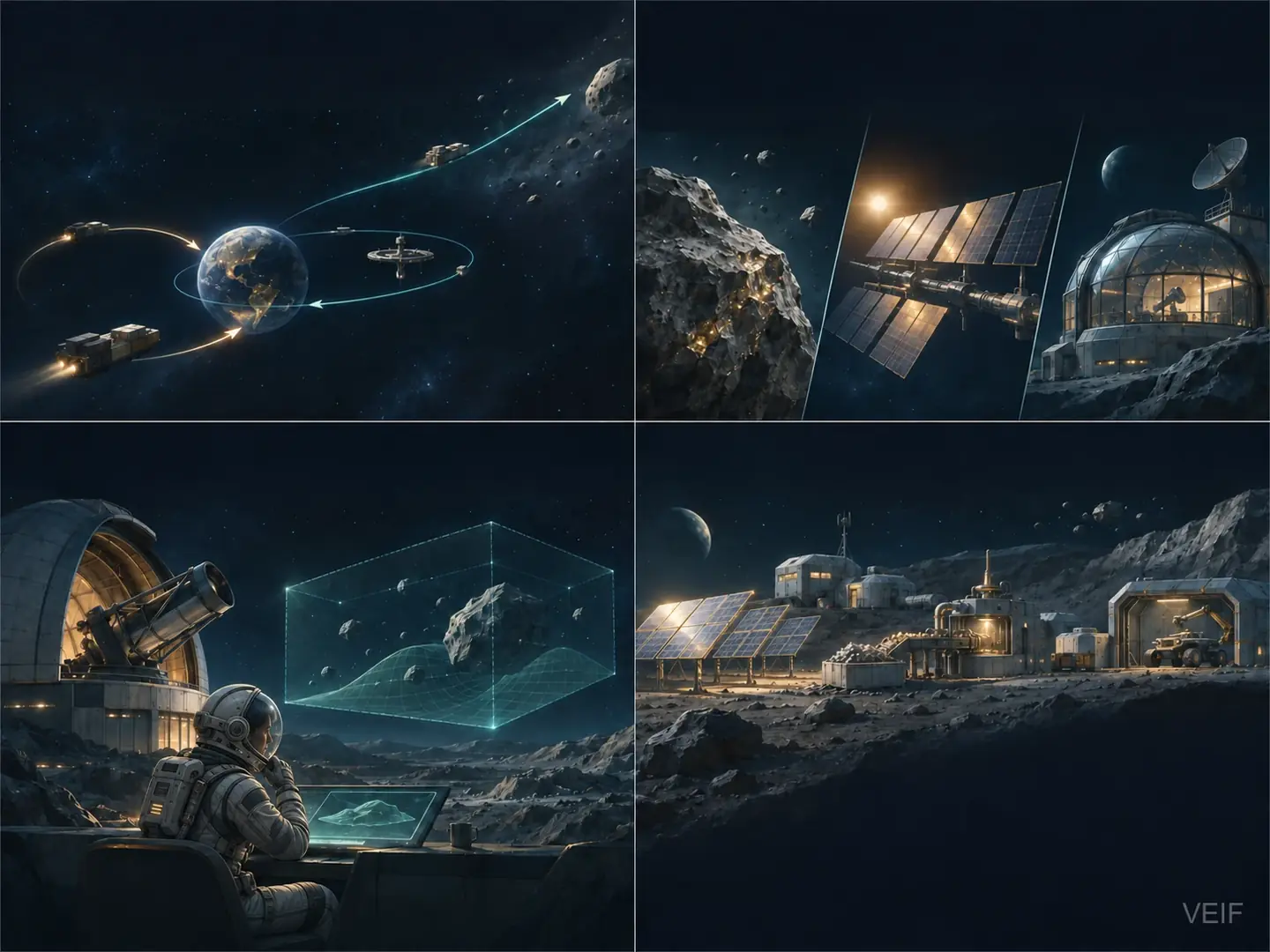
Figure 6. Lifeline awareness begins with recognizing dependence and understanding costs, then revising plans as evidence and capabilities grow.
From upper left to lower right: trace the flows / understand the costs / establish boundaries / cultivate new sources of support.
Looking toward an interstellar civilization that has yet to emerge, we can begin developing a planning perspective that evolves with technological capability. It starts by identifying dependencies and tracing effects, then gradually establishes appropriate constraints as evidence and capabilities accumulate.
First, trace the flows. Distinguish materials launched, placed in orbit, transferred to other celestial bodies, and returned to Earth. Record their origins, uses, and long-term destinations, while also tracking critical resource consumption and ecological burdens. This is the foundation for understanding what the homeworld actually contributes.
Second, understand the costs. Look beyond transport mass and financial expense to resource scarcity, environmental effects, demands on industrial capacity, and long-term maintenance burdens. Different costs cannot offset one another through a single total tonnage.
Third, establish boundaries. Apply verifiable engineering and environmental standards to known risks. For celestial-dynamics questions in the distant future, begin with modeling, observation, and scenario research, avoiding predetermined compensation obligations where evidence is insufficient.
Finally, cultivate new sources of support. Convert some of exploration’s achievements into local resource use and autonomous production capabilities, enabling new frontiers gradually to move from receiving support toward contributing it.
These principles do not imply that every scientific mission must generate direct economic returns. Knowledge itself is a resource for civilization’s future. What needs to be avoided is treating the homeworld’s long-term capacity to sustain life and civilization as something that can be drawn down indefinitely, without planning or assessment.
Epilogue: Carrying Home into the Future Without Exhausting It
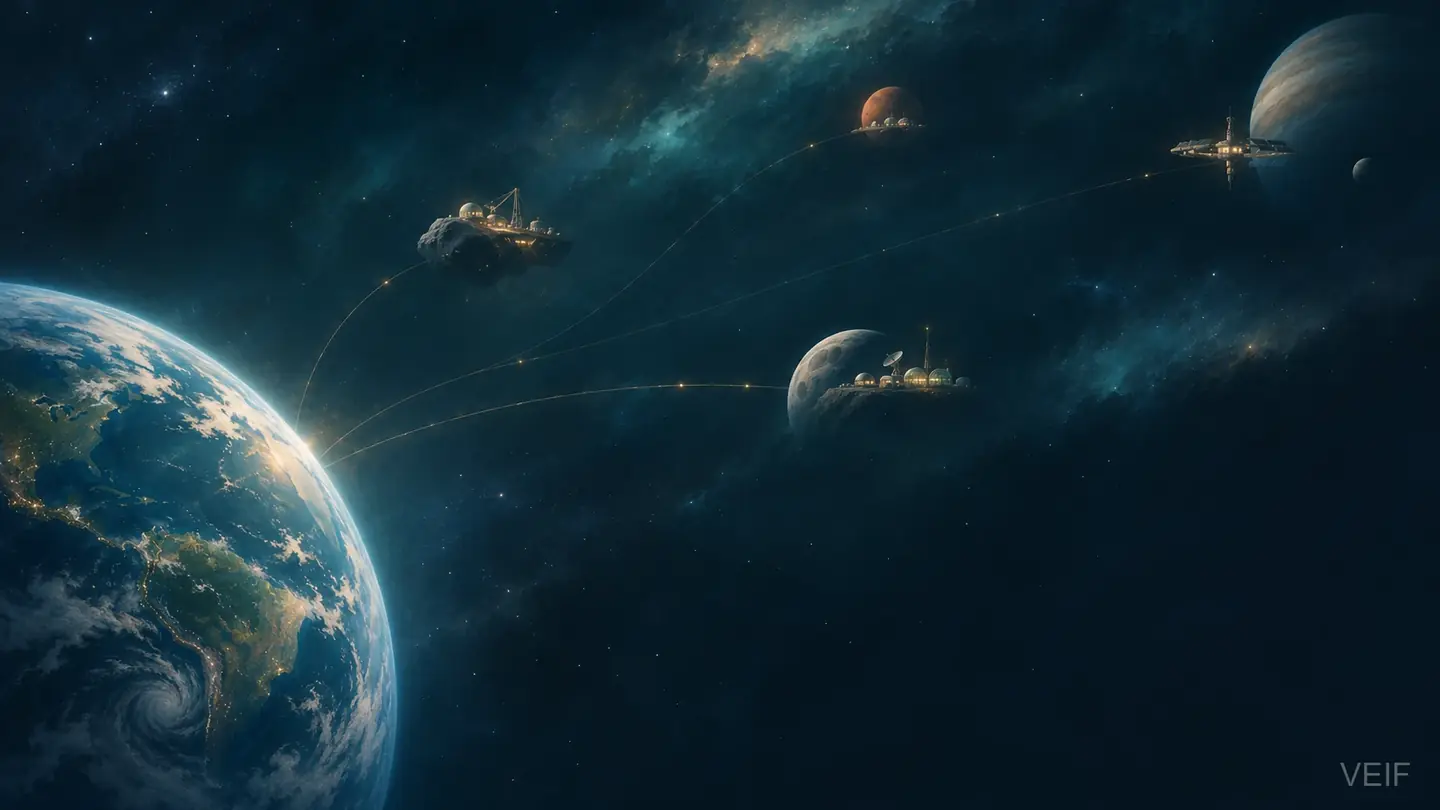
Figure 7. Distant horizons are worth pursuing; home is equally worth protecting. This image presents a long-term vision of gradually growing off-world capabilities.
The greatness of interstellar exploration lies not only in how much darkness humanity can cross, but also in whether it can carry life, knowledge, and creativity to new places and enable them to endure there.
The homeworld is not a launch vehicle to be discarded after use. It is the starting point of all human history and the common foundation on which still-developing off-world civilizations depend.
Ultimately, the homeworld lifeline does not demand that every journey return exactly the materials it took away. It asks civilization, at departure, to understand what it depends on, consumes, and changes—and how to ensure that those changes do not destroy its capacity to keep setting out.
A mature interstellar civilization should be able to establish new productive and self-sustaining capabilities far from home while protecting the homeworld’s foundations for continued development.
Distant horizons are worth pursuing. Home is equally worth protecting.
The illustrations are conceptual artistic interpretations, not photographs of actual facilities. Links and node arrangements do not represent quantities, distances, or a predetermined future trajectory.
Scope and Limits
This essay is part of the Interstellar Civilization Planners project within The Great Space Age series. It is a conceptual and forward-looking discussion of long-term responsibility for homeworld resources, rather than a scientific conclusion that present space activities have already endangered Earth’s mass balance or orbital stability.
- Established physical facts: Material transfers change the mass balances of the celestial bodies concerned. Planetary gravity is related to mass distribution. Celestial bodies are coupled through gravity and tides.
- Judgments requiring constraints on magnitude: Net mass exports from present and foreseeable space activities are extremely small relative to Earth’s total mass and do not justify claims of a significant threat to Earth–Moon dynamics.
- Hypotheses requiring independent research: Under extremely large future transfers of material between celestial bodies, which changes in mass and angular momentum would create measurable long-term risks, and which forms of compensation would be safe and necessary?
- The normative position proposed here: Civilization bears a responsibility for the prudent stewardship of the homeworld’s resources, environment, and long-term system safety, and should prioritize off-world capabilities that reduce continuing dependence on homeworld support.
- Limits concerning the geomagnetic mechanism: Earth’s global magnetic field is maintained primarily by the motion of electrically conducting fluids in the liquid outer core. Exporting minerals from the crust cannot be equated directly with weakening the global magnetic field.[4] Any discussion of future engineering effects on that field would require separate evidence that the engineering could disrupt the relevant deep-Earth processes.
References
- NASA, Earth Fact Sheet. Earth’s mass and basic physical parameters. Source.
- NASA, Moon Fact Sheet. Earth–Moon mass comparison. Source.
- NASA, Overview: In-Situ Resource Utilization. Local resource use and sustained deep-space exploration. Source.
- USGS, How does the Earth’s core generate a magnetic field? The outer-core dynamo mechanism. Source.
- NASA Earth Observatory, Climate and Earth’s Energy Budget. Global radiative balance and incoming solar energy. Source.
Place in the series: This essay focuses on what the homeworld contributes, how those contributions change it, and how to understand and maintain its lifeline. The gradual self-sufficiency of exploration nodes, the pace of civilizational expansion, and windows of resource opportunity will be addressed in subsequent Interstellar Civilization Planners essays.
Read this series · Civilizational Frontiers · Interstellar Planners
- Interstellar Planners 1: The Homeworld Lifeline